KPMB remembers Robert G. Hill
Article content
March 2, 2026
KPMB is saddened by the loss of friend and colleague Robert G. Hill, who passed away on February 21, 2026, following a short illness.
As an architect and historian, Robert made invaluable contributions to both KPMB and Canadian architecture throughout his singular career, which was propelled by his deep intellect and curiosity.
Career at KPMB
Beginning in 1987, Robert played a unique role at KPMB as a research consultant, librarian, photographer, and archivist. With an unparalleled understanding of heritage building provenance, his research and analysis directly informed how we approach the design of new architectural interventions to coexist with historic structures.
Across three decades, Robert contributed archival documentation to inform significant KPMB architectural projects including the University of Toronto’s Woodsworth College, the Royal Conservatory of Music, the Munk School of Global Affairs, the Rotman School of Management, Canada’s National Ballet School, the Gardiner Museum, the Art Gallery of Hamilton, the Park Hyatt Toronto, and others.
Today, KPMB’s expansive architectural library exists due to Robert’s decades of diligent collecting, curating, and cataloguing.
Biographical Dictionary of Architects in Canada 1800–1950
The Biographical Dictionary of Architects in Canada 1800–1950 was Robert’s passion project. First conceived as a book in 1977, the research initiative evolved into a comprehensive online resource containing detailed biographies, lists of major works, and extensive bibliographies for thousands of Canadian architects, along with information on foreign architects who worked in the country. A richly detailed archive of Canada’s built history, the website proved an indispensable resource for countless researchers.
David Winterton, a principal at ERA Architects and the author of Toronto Edwardian: Frank Darling, Architect of Canada’s Imperial Age, recently reflected on Robert’s influence:
“On the front page of the online Biographical Dictionary of Architects in Canada, Robert Hill lamented that a monograph on one of Canada’s most important architects had yet to be written. When I returned to Toronto in 2017, I took that observation as both a challenge and an invitation and began work on what became the Frank Darling book project.
Somehow, I earned Robert’s carefully bestowed trust, and from that grew a nine-year collaboration. We were privileged to have him take such a deep and personal interest in the project. He insisted that it be done properly, and I felt the pressure!
The BDAC was created for precisely this purpose: that researchers might gather and synthesize the extraordinary welter of information it contains, expand upon it, and — ideally — publish more books on Canadian architecture. I believe that was Robert’s hope, and it was a passion we shared.
I take comfort in knowing that he saw this particular gap in Canadian architectural history filled: Toronto Edwardian is a book fully inspired and profoundly shaped by his example, his scholarship, and his generosity.”
Between 2010 and 2012, Robert received an Award of Excellence from Heritage Toronto, the Order of da Vinci from the Ontario Association of Architects (OAA), and was inducted into the Royal Architectural Institute of Canada (RAIC) College of Fellows for his contributions to research, scholarship, and professional standing. In 2016, the Architectural Conservancy of Ontario presented Robert with its highest honour, the Eric Arthur Lifetime Achievement Award.
Craven Road House and Studio
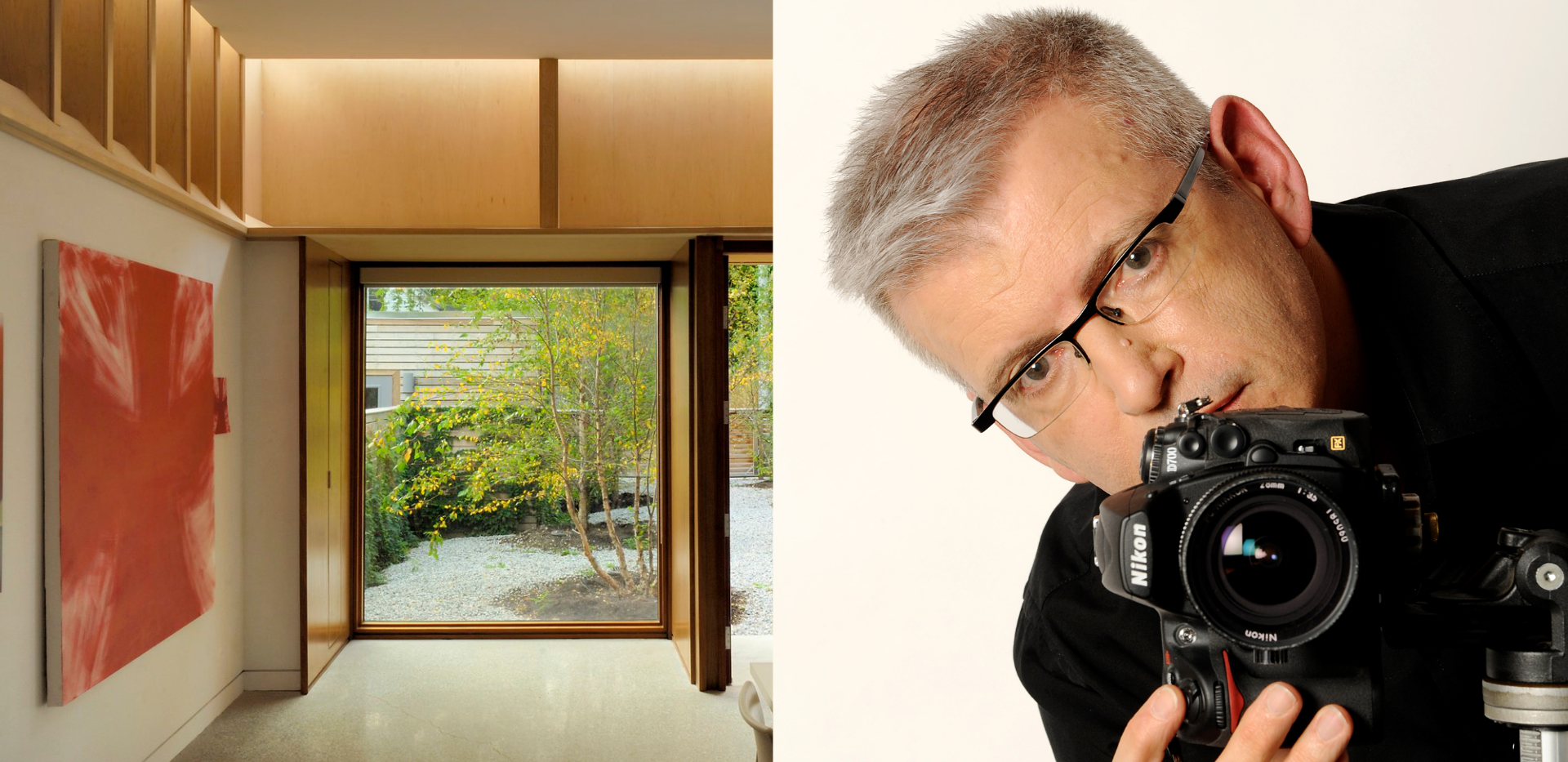
In the early 1990s, Robert commissioned his own house in Toronto’s east end. Designed by Shim-Sutcliffe Architects, the Craven Road House has since emerged as an icon of Canadian residential architecture, demonstrating that distinctive and significant projects can be accomplished on modest budgets.
In 2006, the house was followed by the Craven Road Studio, similarly designed by Shim-Sutcliffe, to house Robert’s research and archival collections of architectural drawings, prints, publications, photographs, posters, lithographs, and postcards. The studio reinterprets a garage or ancillary outbuilding as a private gallery or archive, lit by indirect light from maple-clad coffered skylights to protect historical documents from sun damage and fading.
Both the house and studio were awarded Governor General’s Medals in 1997 and 2010, respectively. Only 25 years after construction, the property received heritage designation. The City of Toronto’s report from 2022 recognized the project’s achievements on a compact scale and limited budget, along with its innovative model for urban infill and densification within Toronto.
The Craven Road House and Studio have been published more than 44 times and graced several magazine covers. However, the property was accessible in ways beyond magazine pages. Eager to share his life’s work, Robert regularly opened his studio to interested historians, archivists, colleagues, and students.
In 2011, Robert’s RAIC Fellowship citation summarized his contributions to Canadian architecture:
“Robert’s passion for architecture — in practice, education, and patronage — establishes him as one of our profession’s national treasures. He has demonstrated a rare balance between reverence for and commitment to preserving knowledge about Canada’s architectural heritage and to carving out a unique role in daily practice to give architecture a more expansive role and meaning in contemporary life.”
Robert made lasting contributions to KPMB, and his scholarship continues to shape research in Canada. He generously shared his knowledge, passion, and curiosity with the world around him.
 (Portrait: Tom Deacon; Craven Road Studio: Derek Nicholson)
Related News
Laura Alexim to share career advice in BAC webinar
April 7, 2026)
)
)