Swansea Mews
- Location Toronto, Ontario
- Client Toronto Community Housing
- Architects KPMB
- Size 797,000 ft² / 74,000 m²
- Project type Residential
A new chapter for public housing in western Toronto
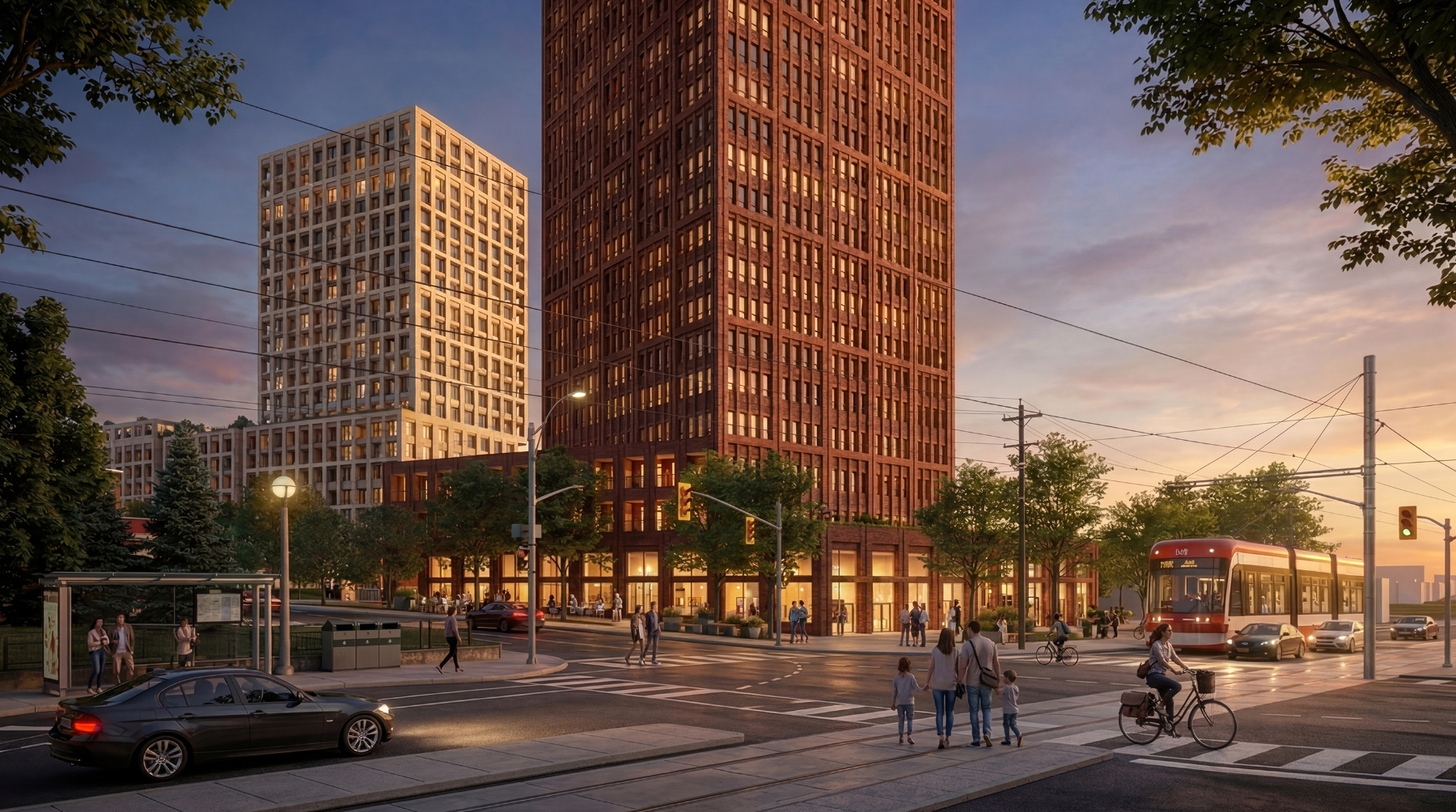
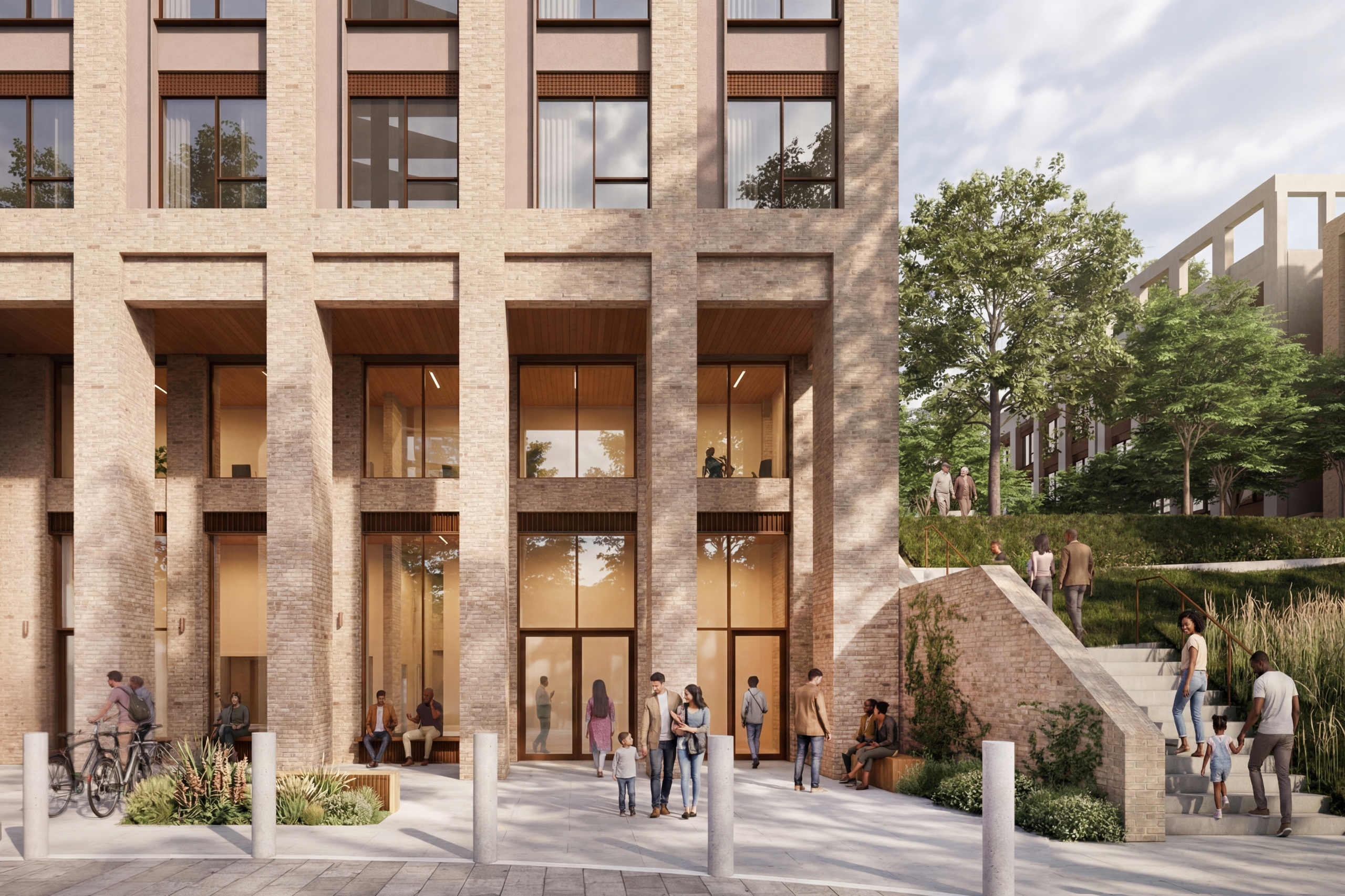
The renewed Swansea Mews is expected to become one of Toronto’s largest public housing communities. Led by Toronto Community Housing (TCHC), the proposed redevelopment will transform the site — home to a 1970s townhouse complex — with new family-oriented housing, expanded community amenities, and improved access to outdoor spaces.
Spread across a courtyard block and a pair of towers, KPMB’s design will deliver 154 rent-geared-to-income replacement units while introducing 495 new affordable and market-rate rental homes. This intensification aligns with the City of Toronto’s housing strategy, increasing residential density on public lands and supporting the development of diverse, mixed-income communities.

Housing density scaled to the neighbourhood
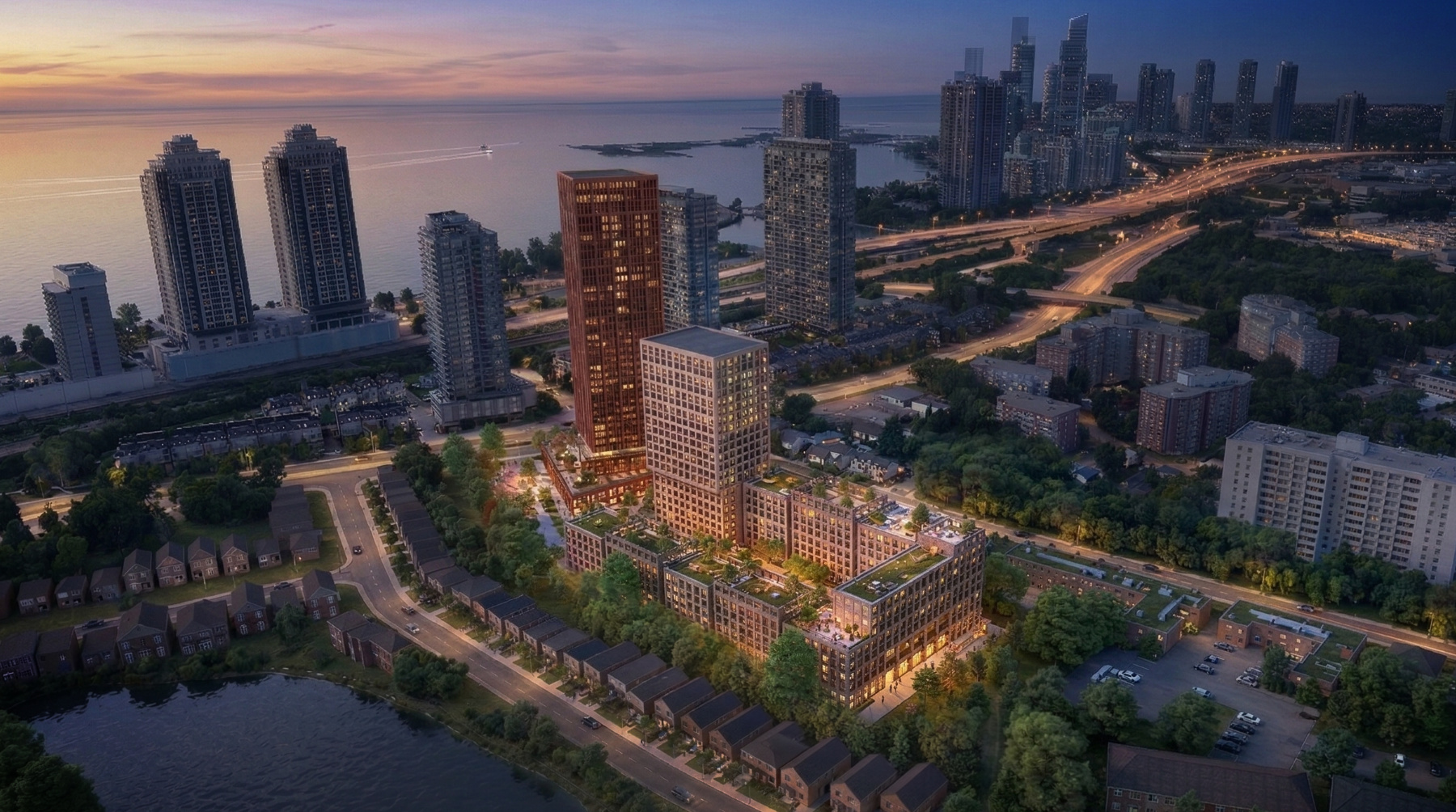
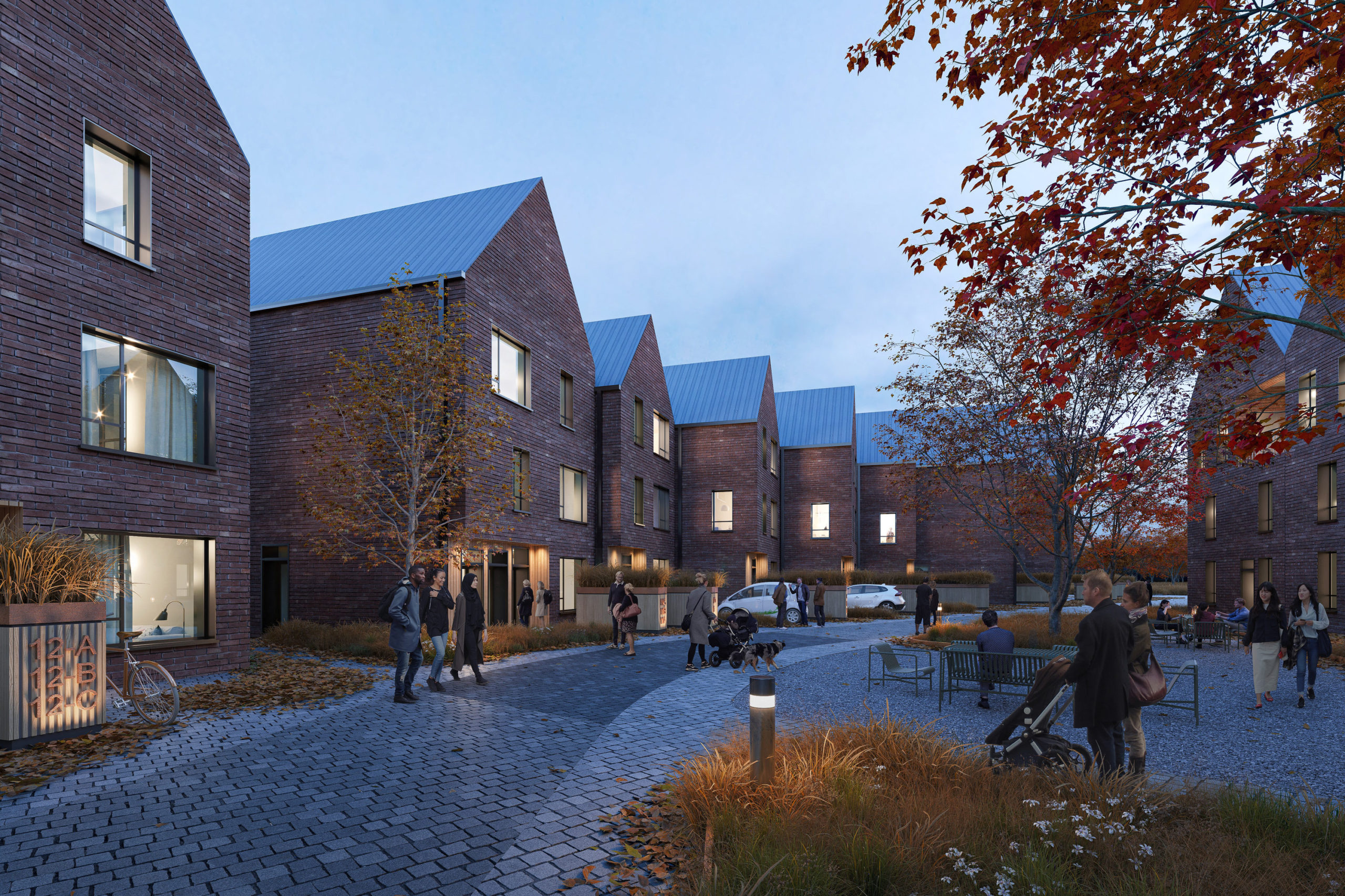
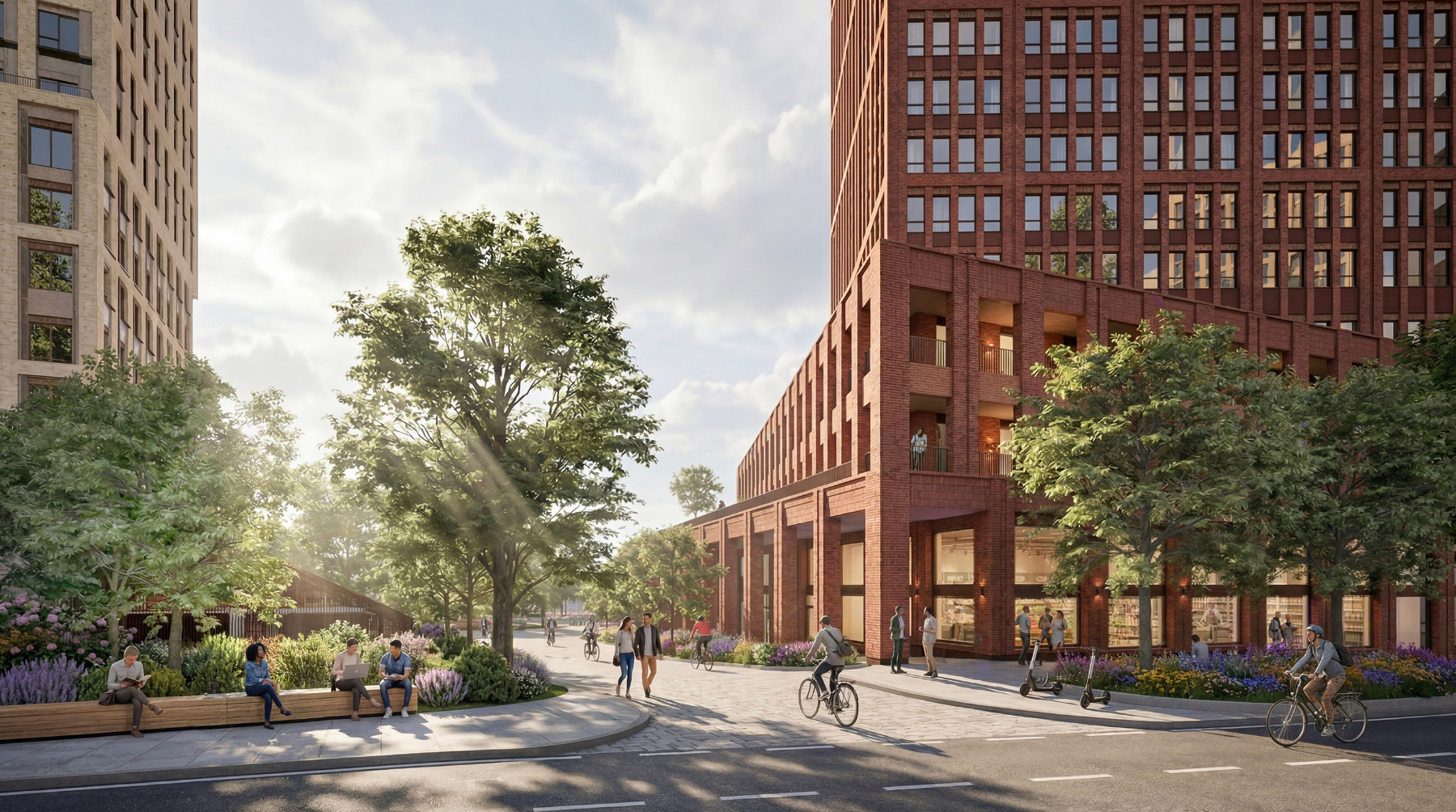
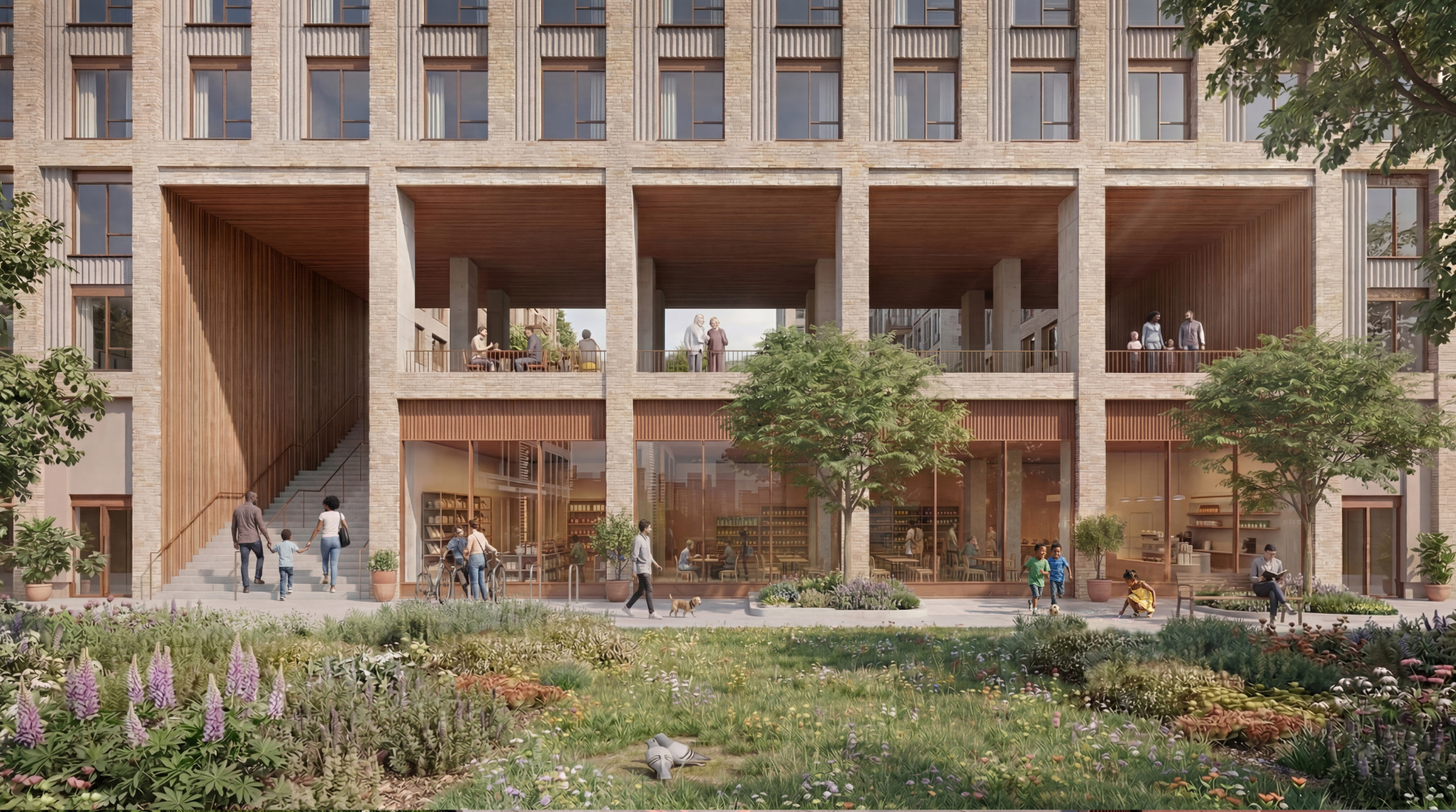
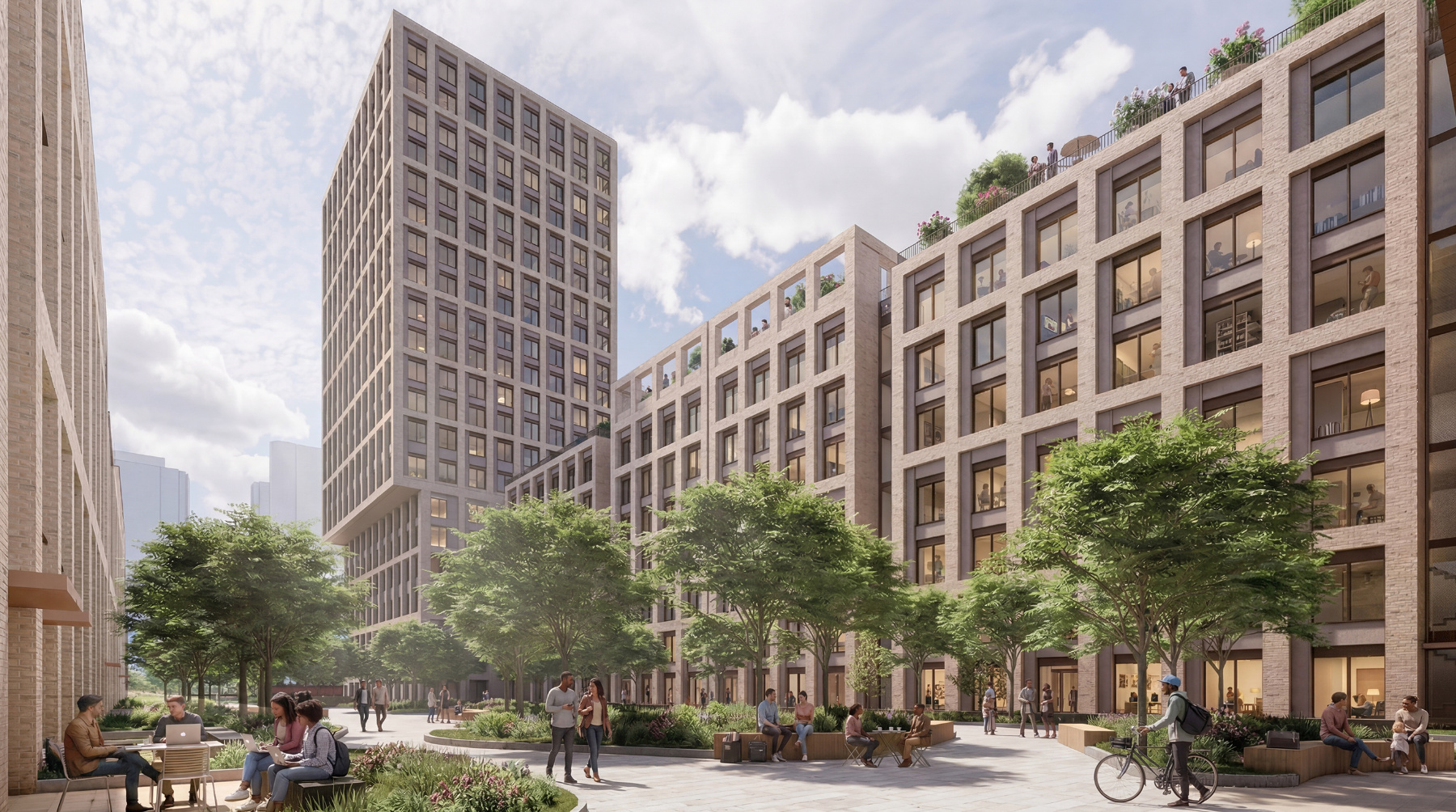
Swansea Mews responds sensitively to its transitional context between low-rise homes to the north and east and high-rise apartment towers to the west and south. A brick-clad north courtyard block establishes a village-like scale that echoes the original complex and steps down to five storeys where it fronts single-family homes.
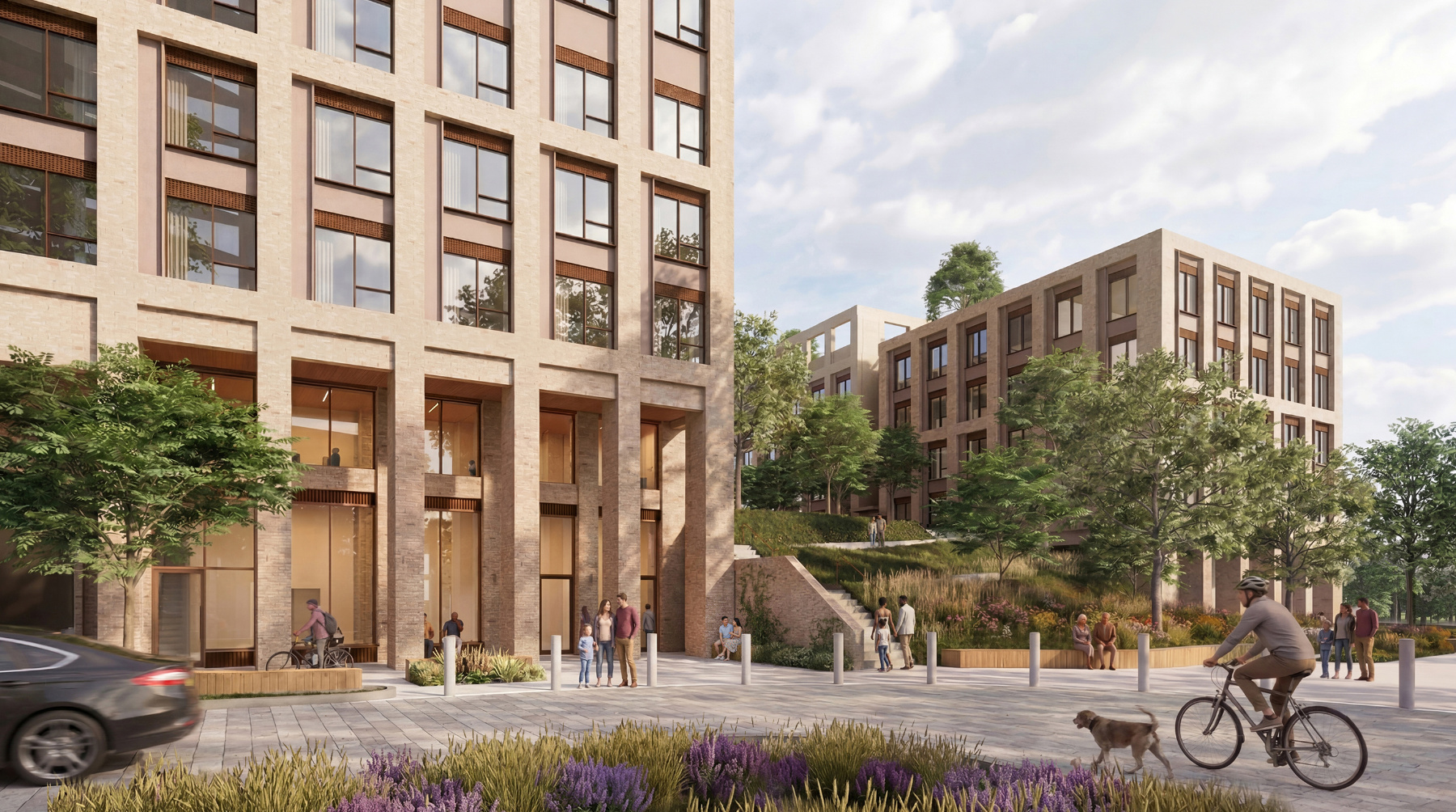
Point towers of 20 and 35 storeys are proposed for the site’s denser southwest corner, adjacent to existing apartment buildings. Both towers are designed to maximize access to sunlight and minimize shadow impacts on the existing park and proposed open spaces.
Prioritizing families with spacious and flexible homes
When much of Toronto’s new housing stock consists of small studio and one-bedroom units, Swansea Mews emphasizes family living with flexible and spacious layouts. Nearly 70 percent of homes are designed as two-to five-bedroom units, including 20 percent that are accessible and 5 percent fully accessible.
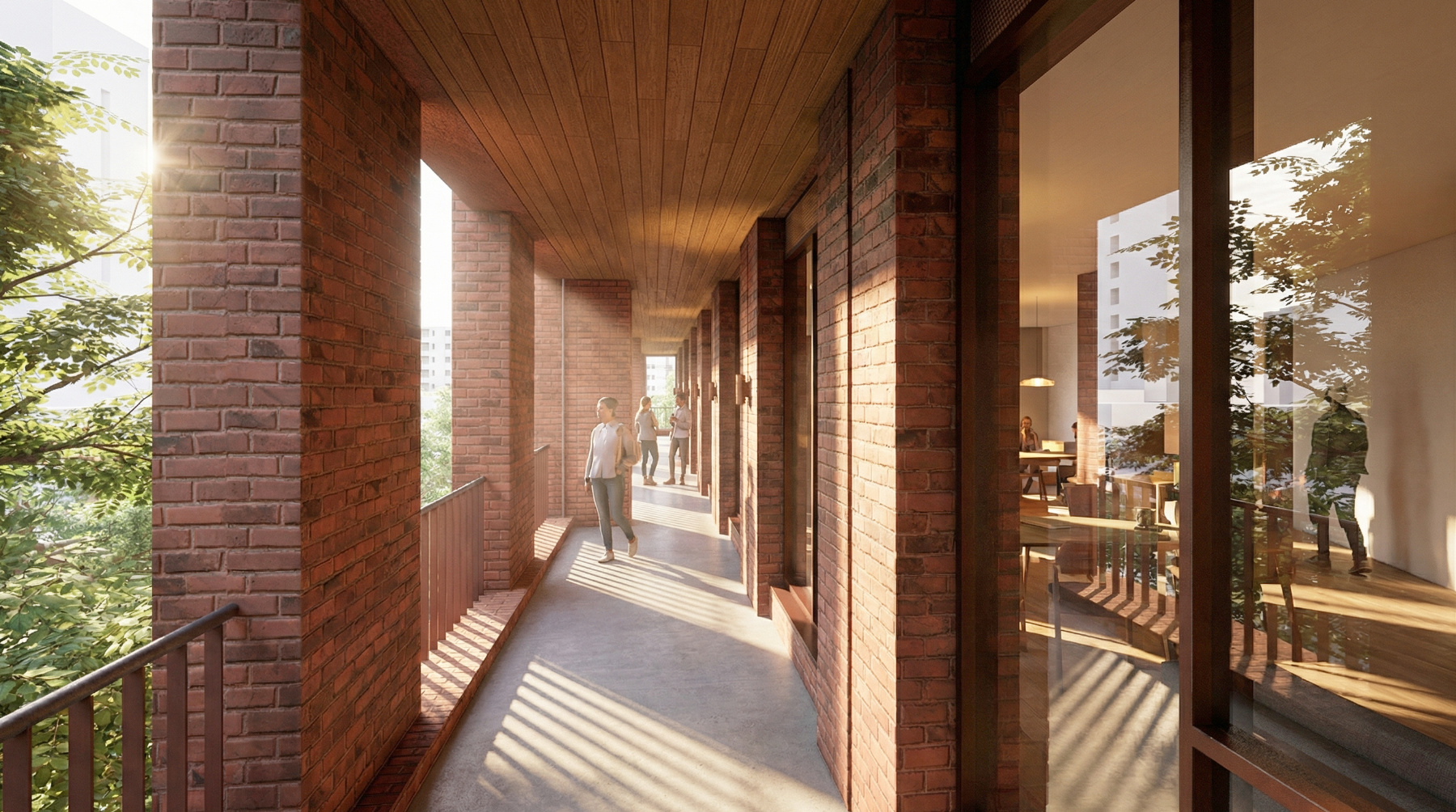
The high proportion of multi-bedroom layouts is enabled by the towers’ efficient and streamlined forms, which reduce the need for space-consuming structural transfers. Skip-stop units increase natural light and cross-ventilation by eliminating the need for double-loaded corridors on every level.
Reimagined green spaces and community connections
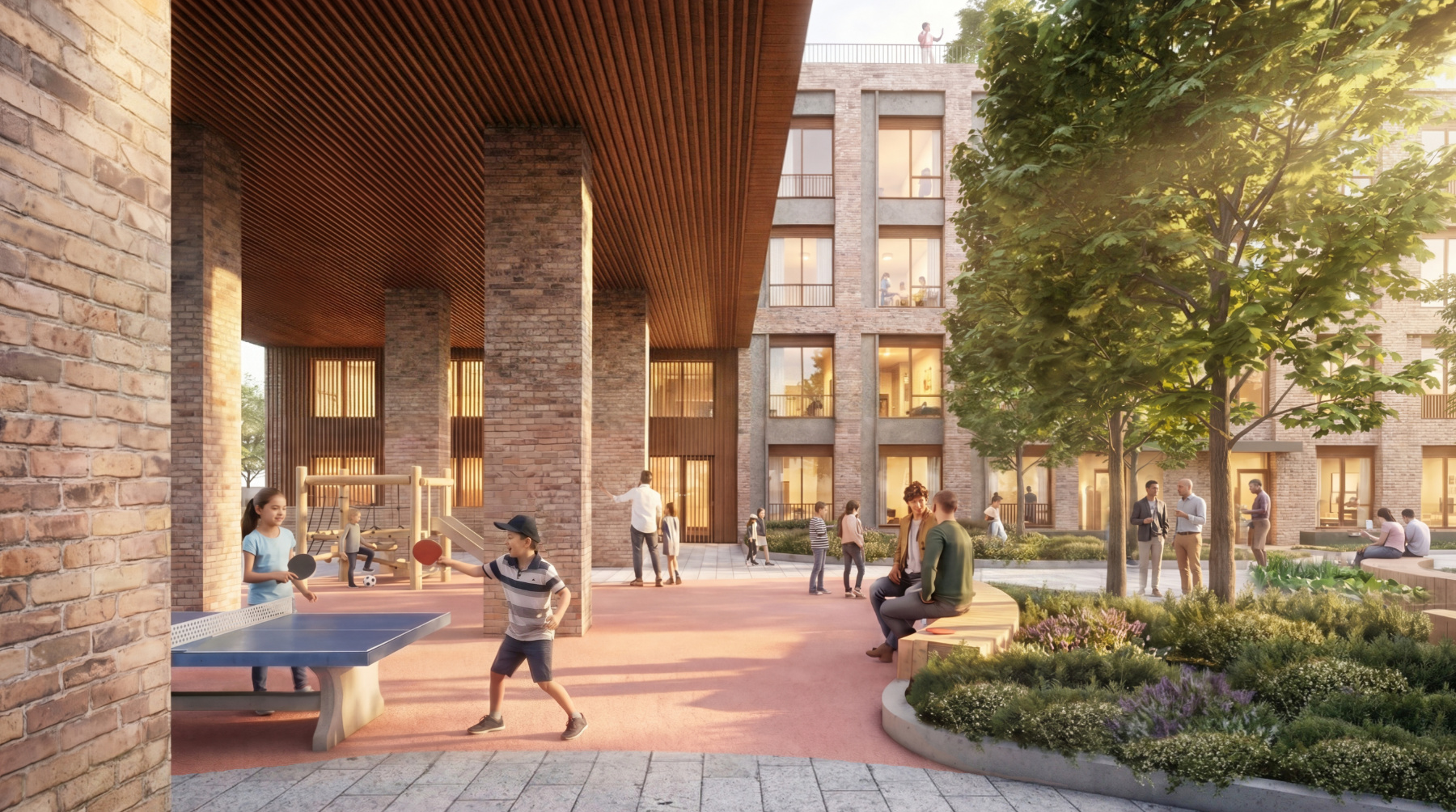
The original Swansea Mews offered limited access to greenery and outdoor space. The redevelopment introduces a network of expanded landscapes designed to strengthen connections between residents, neighbours, and nature.
Both residential blocks frame a series of generous open spaces, including a central courtyard, a shared entry forecourt between towers, and planted landscapes along the site’s north, east, and south edges.
The community is designed to be almost entirely car-free. An above-ground parking lot is concealed beneath an elevated green courtyard. This cost-efficient solution reorients the site’s historic focus from cars to people and recasts parking infrastructure as an opportunity for recreation and community-building.
Low-carbon design
Adhering to Toronto Green Standard (TGS) Version 4 Tier 2 and TCHC’s own rigorous environmental requirements, Swansea Mews will operate entirely on electricity, eliminating the use of fossil fuels for heating and hot water.
Operational carbon and heat loss will be reduced through the complex’s simplified rectilinear forms, triple-glazed windows, and thermally broken balconies. The central courtyard will maximize access to daylight and natural ventilation inside units, easing reliance on mechanical systems.