Banff National Park Visitor Centre
- Location Banff, Alberta
- Client Parks Canada
- Architects KPMB and Hindle Architects (architecture), PFS Studio (landscape and Indigenous design)
- Completion Competition
- Size 23,500 ft² / 2,200 m²
- Project type Civic & Government, Community, Culture, Mixed-Use, Residential
Inviting nature back into Banff’s town centre
As part of Parks Canada’s international competition for a new Visitor Centre in Banff National Park, KPMB envisioned not only a point of arrival, but a teacher — a place dedicated to fostering stewardship of local ecosystems, honouring Indigenous knowledge, and deepening our shared respect for the natural world.
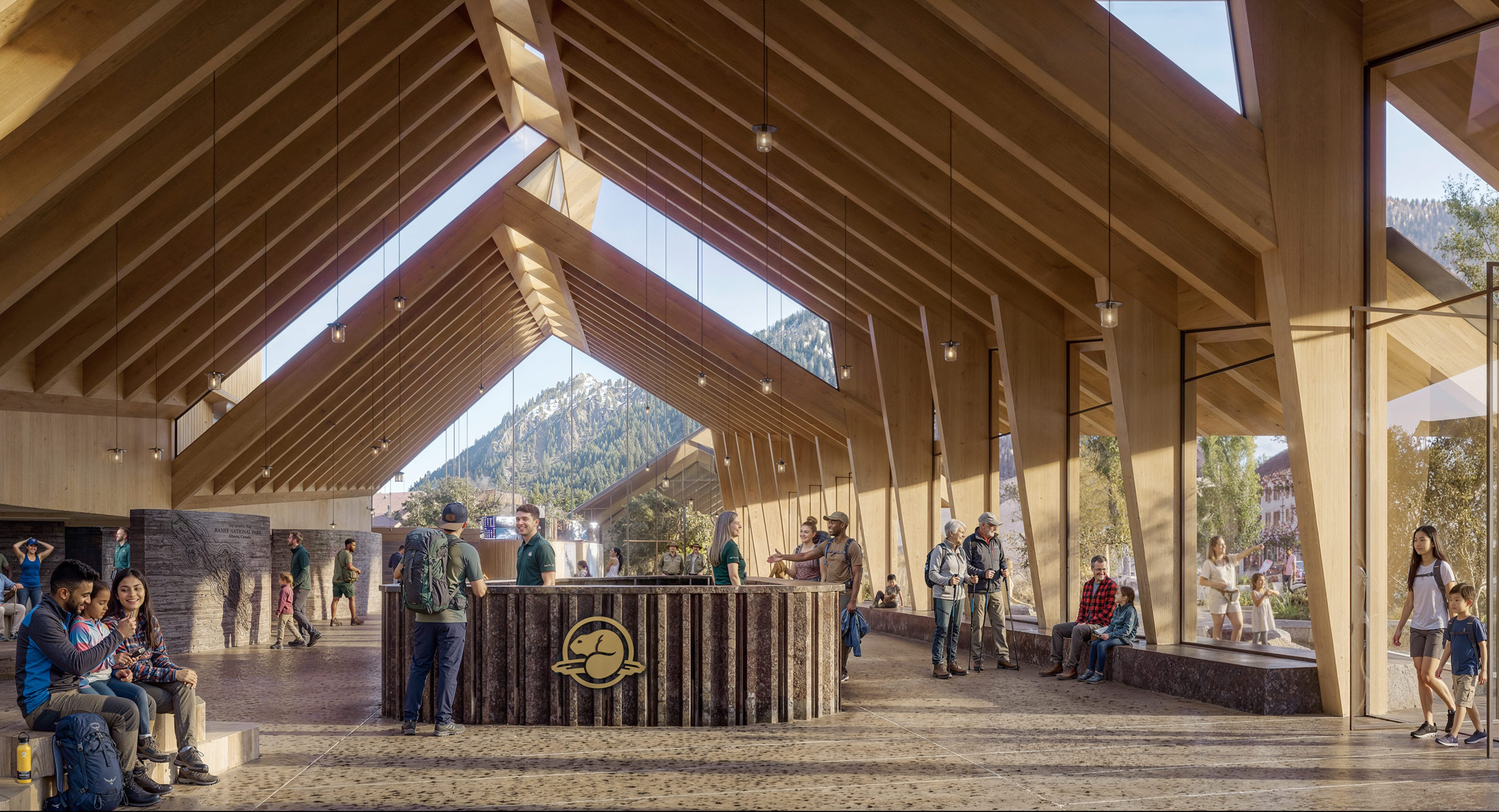
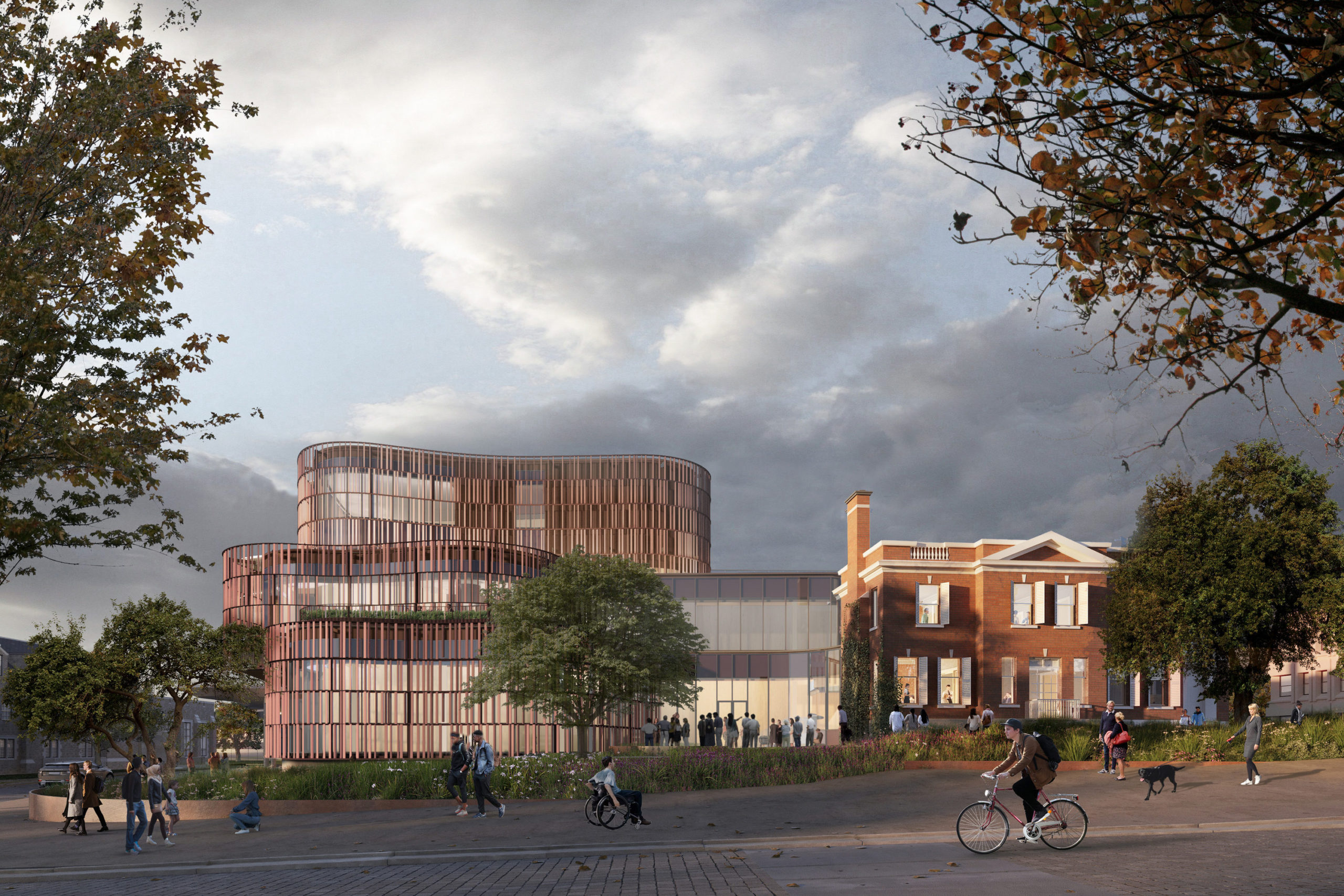
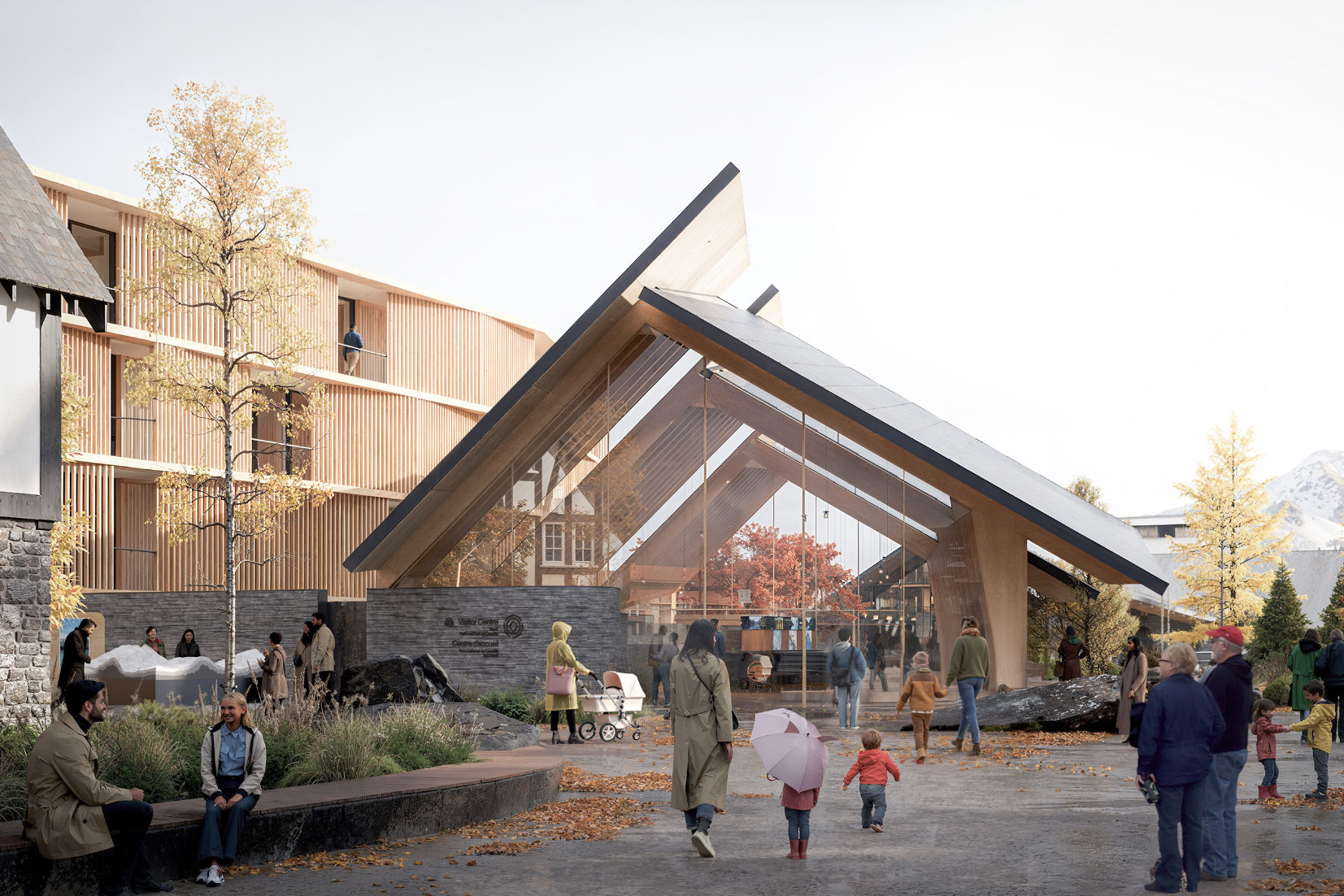
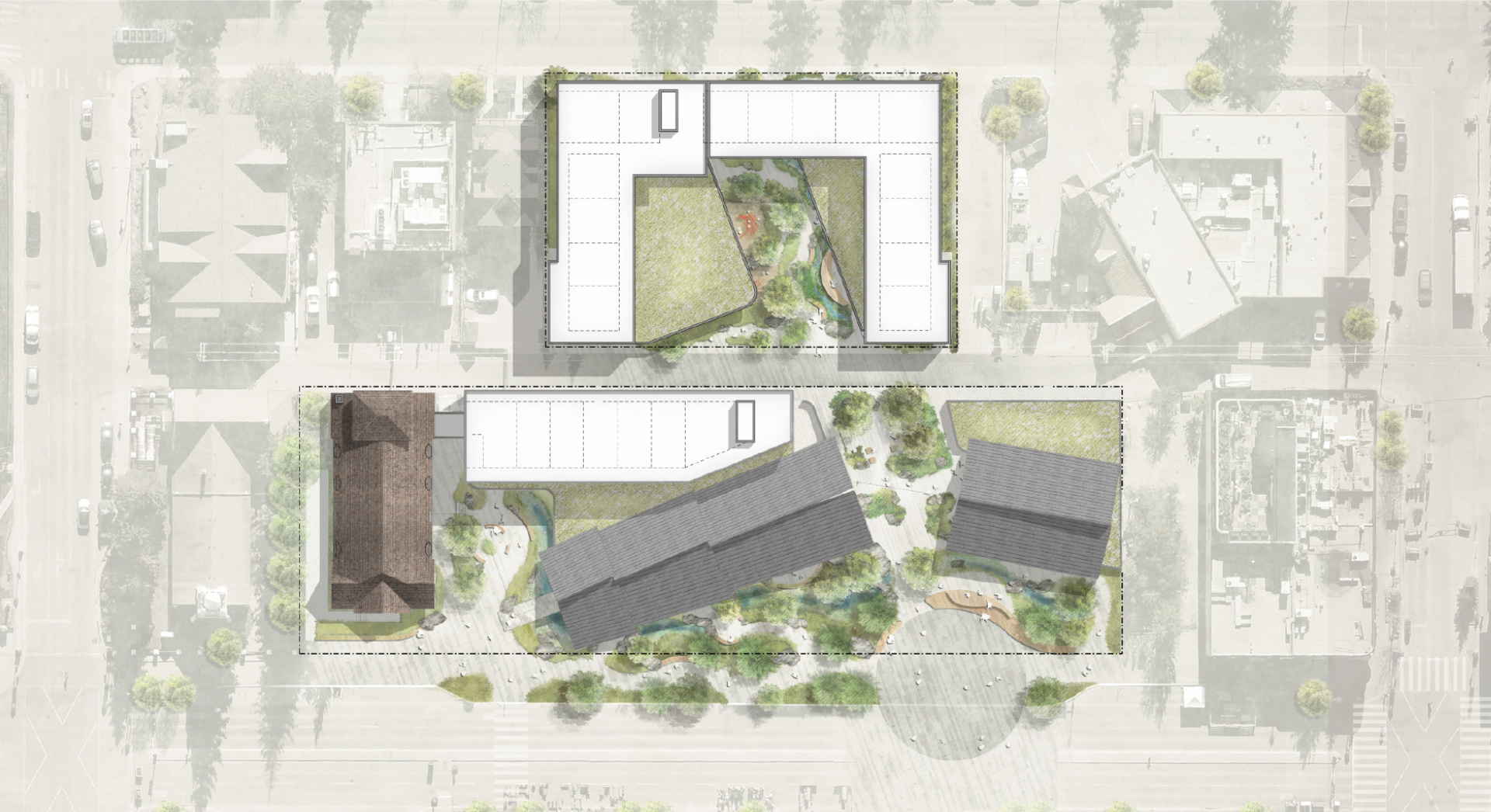
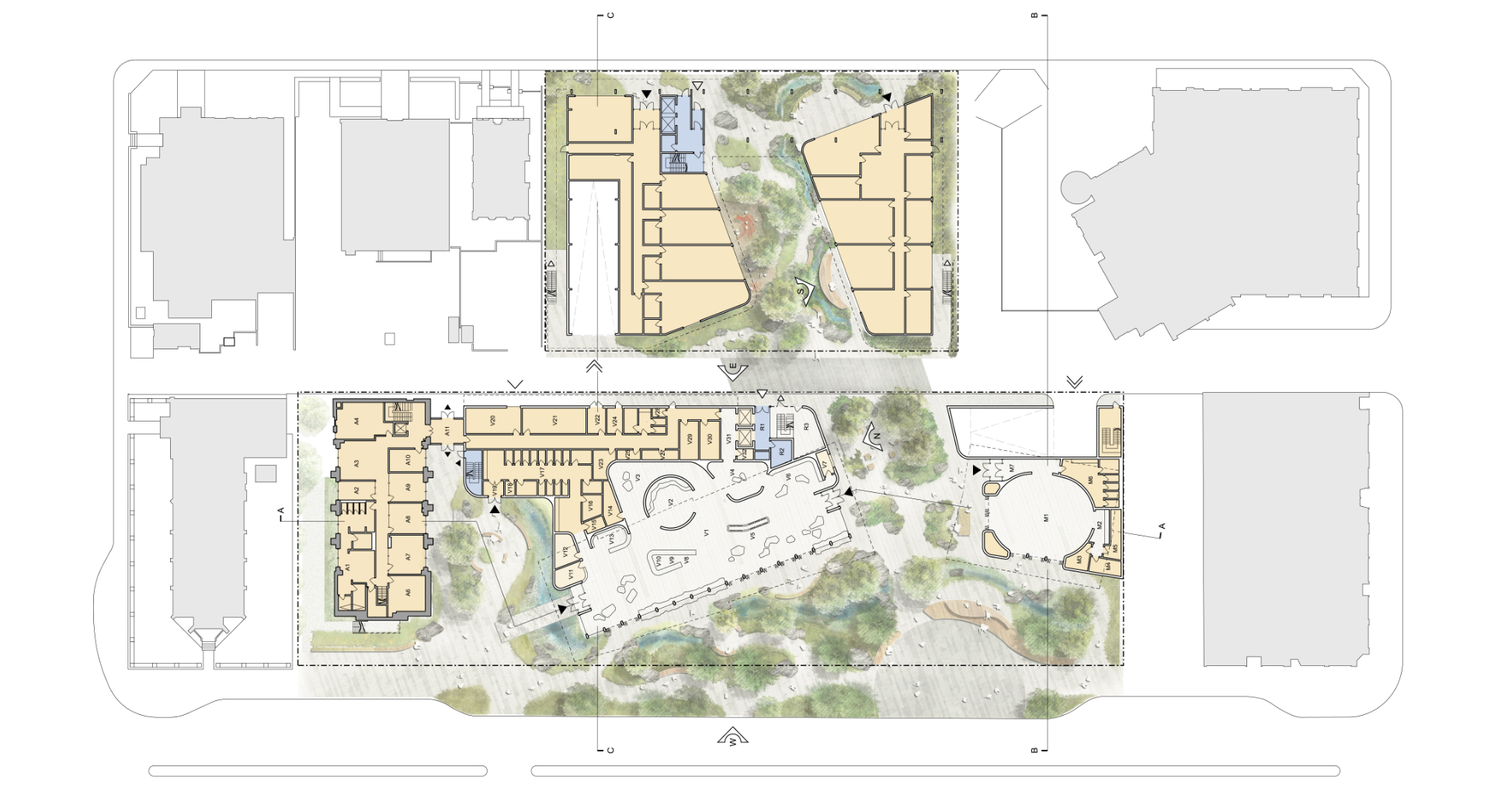
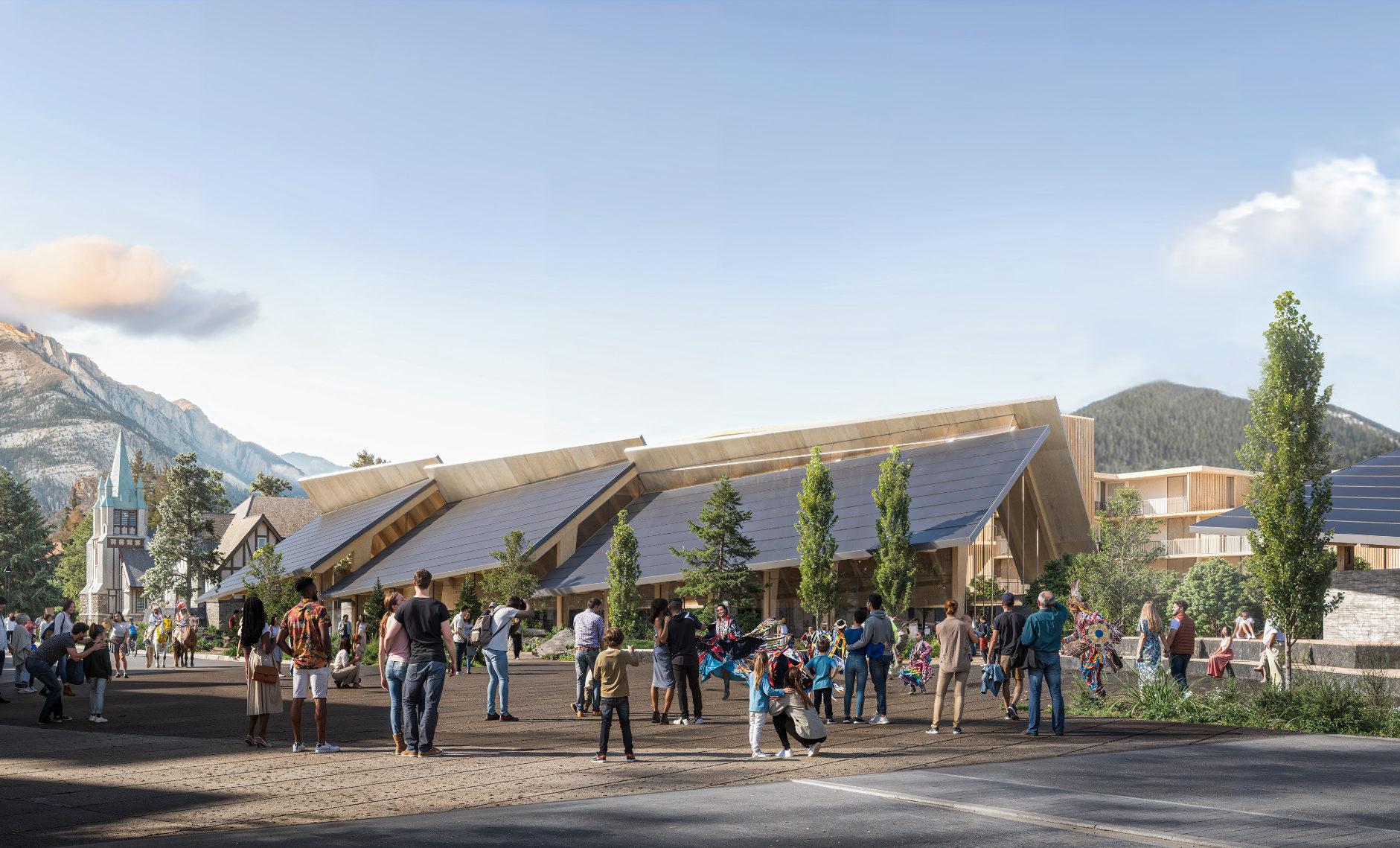
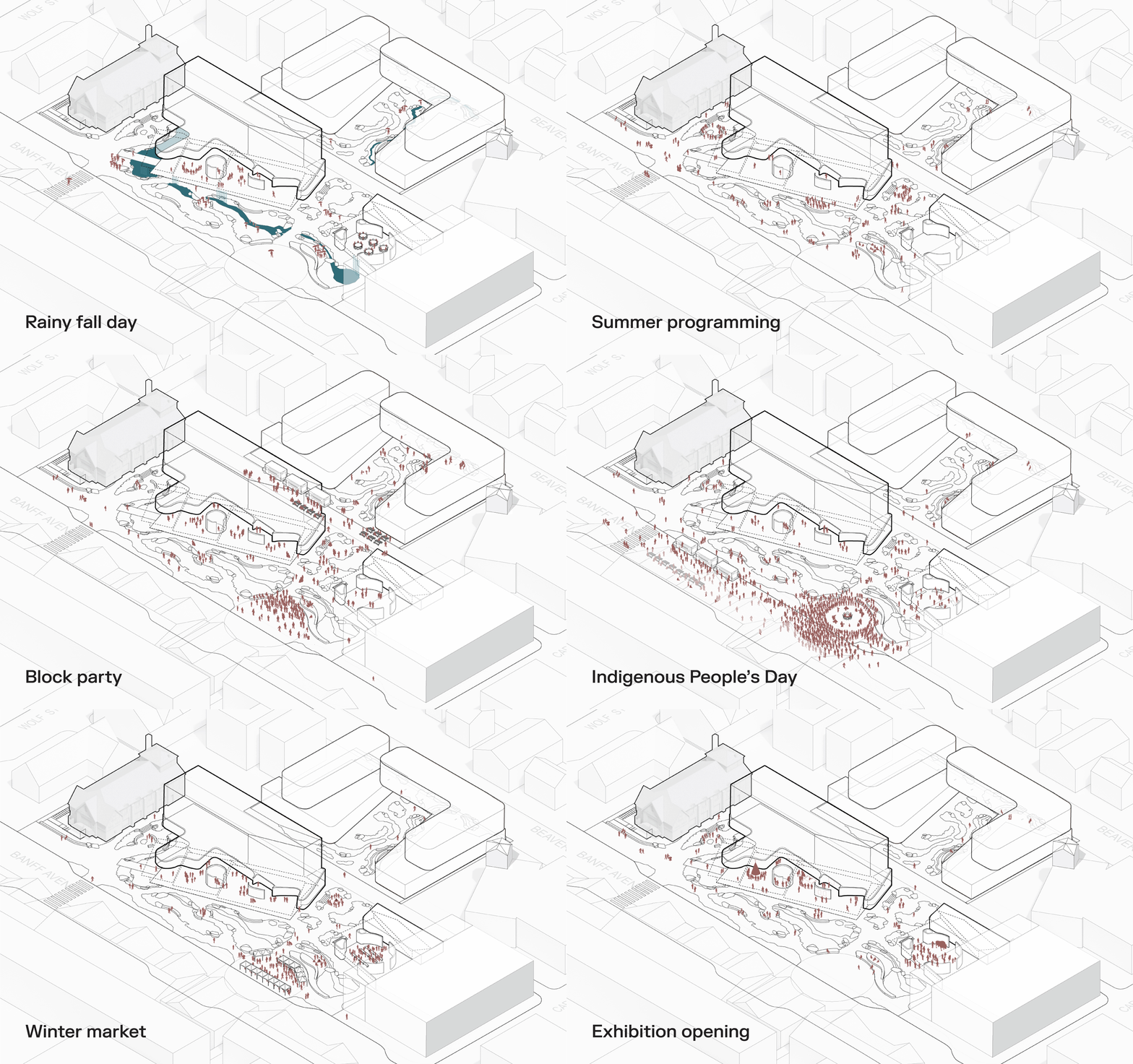
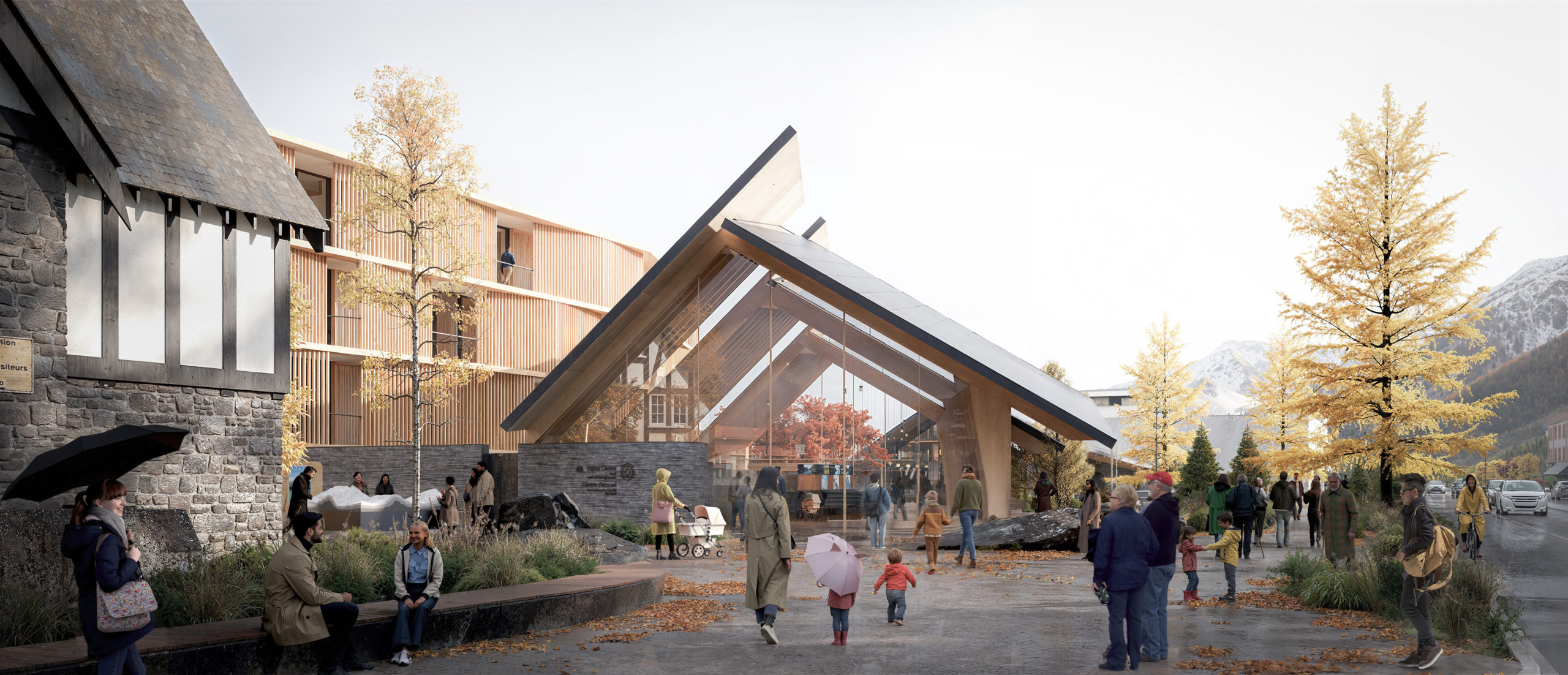
Located on the western portion of the 200-Block of Banff Avenue, the Visitor Centre spans a repurposed heritage building and several new asymmetric timber structures, including a main hall and a multipurpose space connected by a web of open-air plazas. Together, they create flexible indoor-outdoor spaces for learning, gathering, and special events that connect visitors and residents to nature.
Responding to the same forces that shaped the National Park’s mountains and waterways, the Visitor Centre’s design, performance, and programming stem from a central question: what if we invited nature back into town?
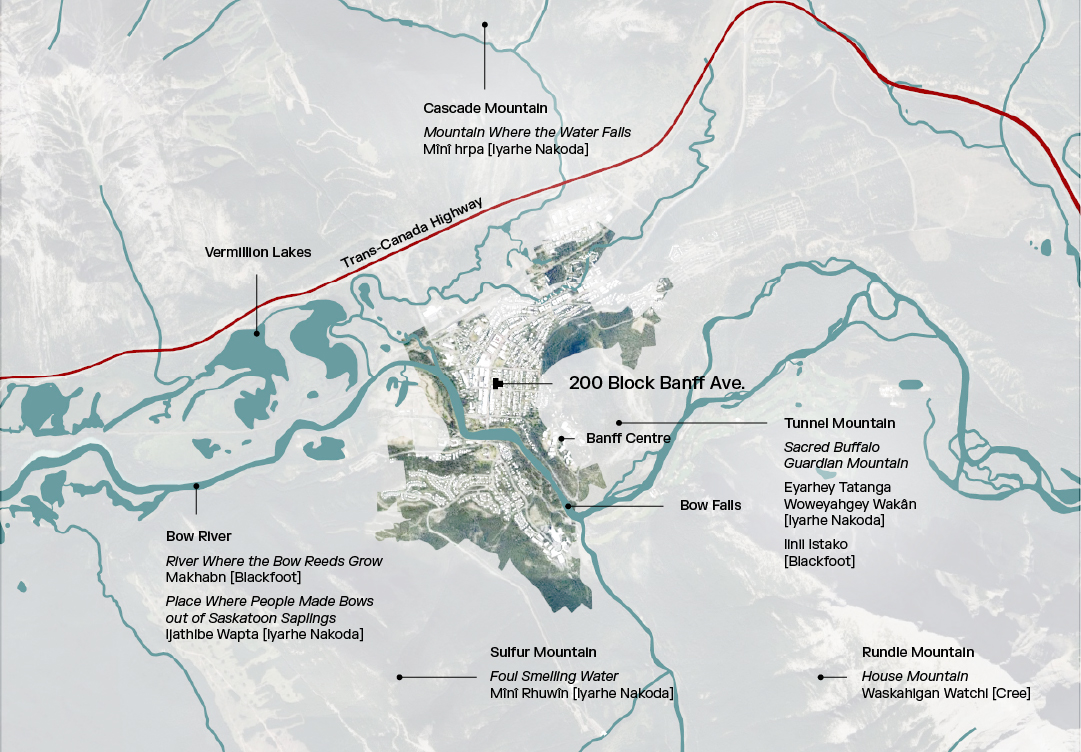
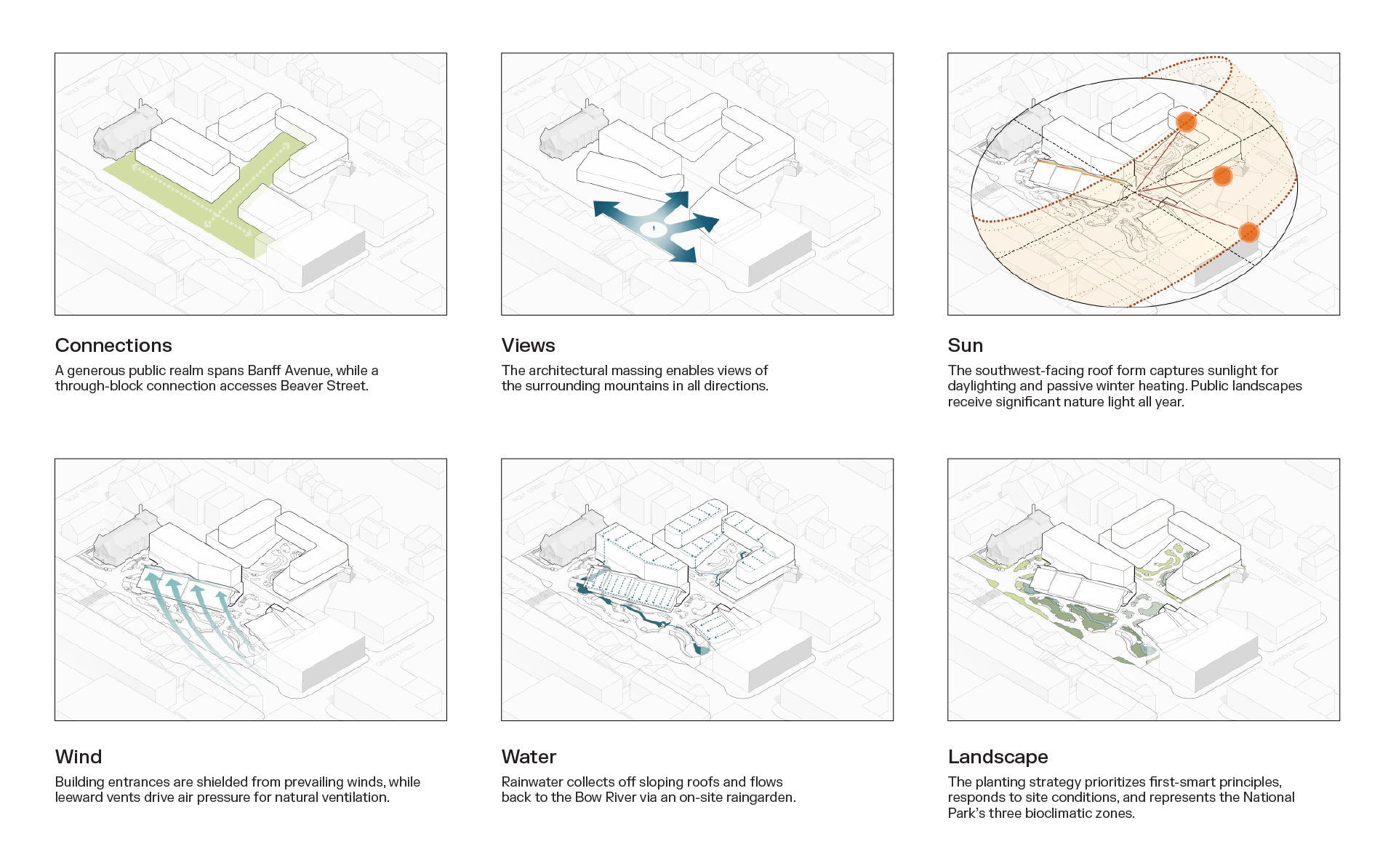
The timber structures step back from Banff Avenue, establishing a generous public realm and view corridors to the surrounding mountains. Their massing and orientation stray from the town’s urban grid to better align with the path of the sun, prevailing winds, and flow of water.
Conceived as a flexible extension of the landscape, the Visitor Centre is designed to adapt to the changing seasons, offering visitors a deeper understanding of Banff’s natural processes and rhythms.
The approach to heritage conservation extends beyond the existing colonial architecture to prioritize Indigenous cultural landscapes and traditional knowledge.
Spaces for land-based learning and storytelling weave throughout the site. They are frequently contained by a winding wall of Rundle stone — a reference to the Cave and Basin, Banff’s original heritage site and a sacred Indigenous place — that defines the building’s exterior and articulates the spaces within its column-free interior.
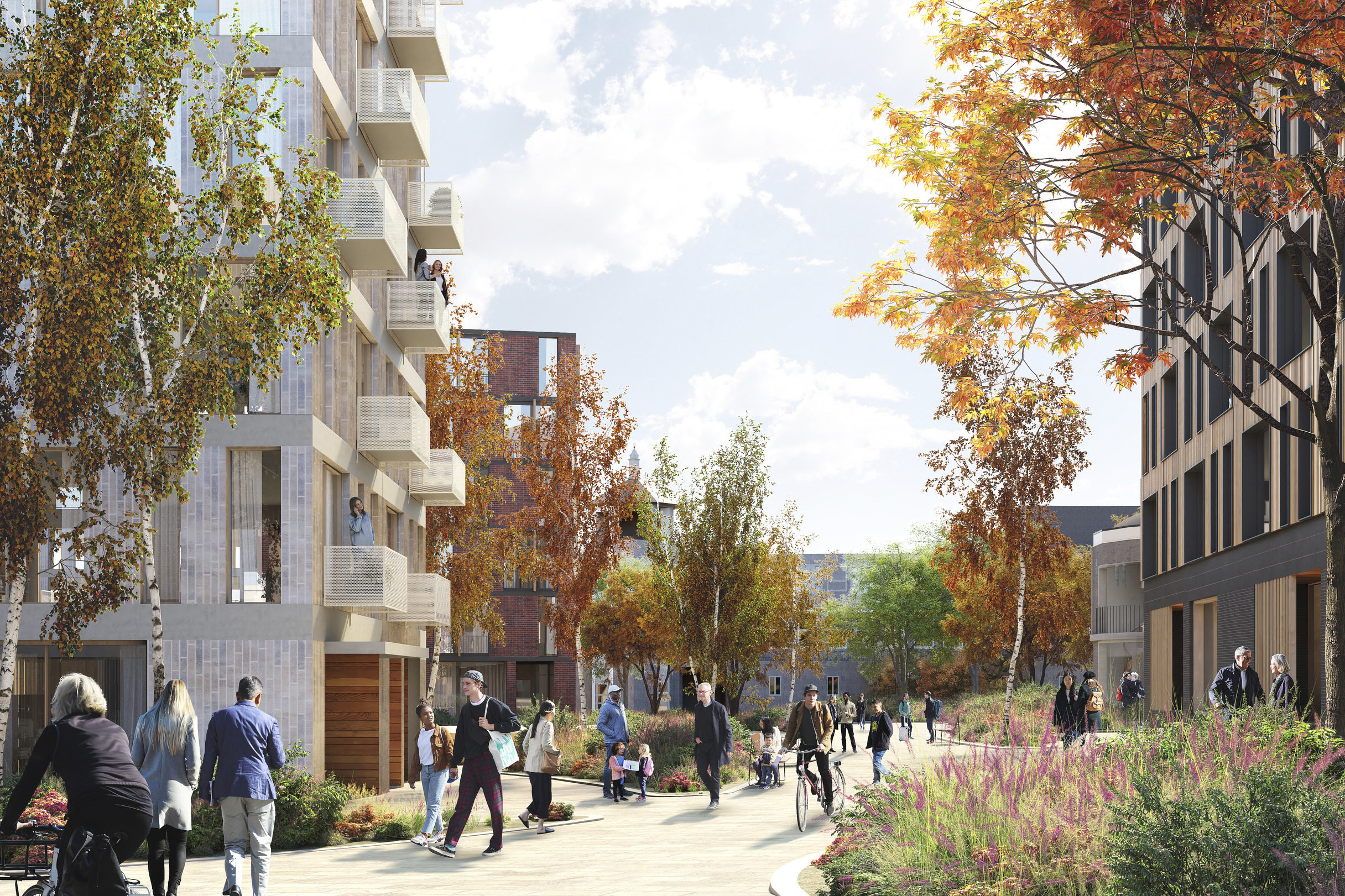
The landscape strategy reintroduces native plants into the town centre, while rainwater is redirected to the Bow River via a raingarden.
The interior of the Visitor Centre is a transitional environment — neither fully outdoors nor indoors — supplemented by efficient mechanical systems only when required.
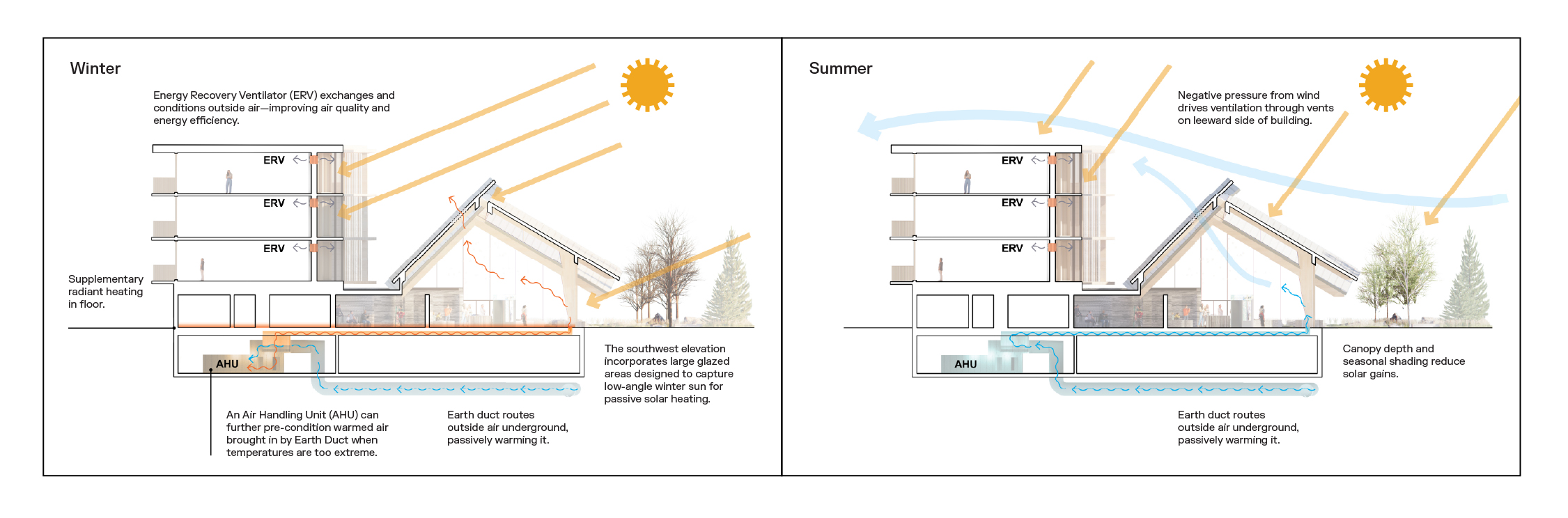
To reduce operational emissions, the clerestories of the peaked roofs face southwest to capture the low-hanging sun during winter, while deep overhangs mitigate solar gain in summer. The building is oriented to harness prevailing winds, drawing geothermally conditioned air through an earth-duct for passive heating, cooling, and ventilation.
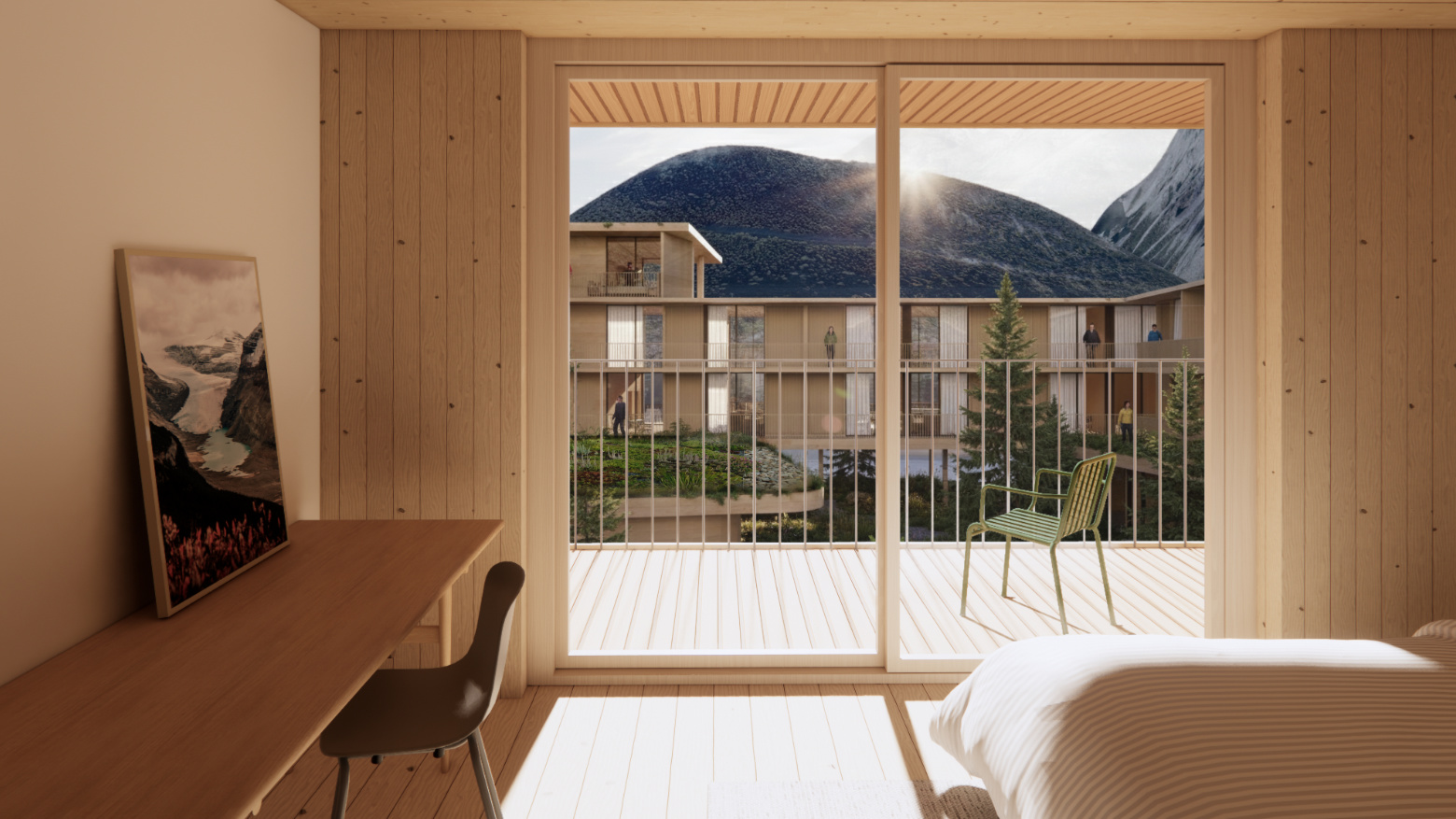
To the east of the Visitor Centre, a series of mass-timber residential blocks introduce needed housing to the town, while also accommodating community spaces for childcare and adult learning. These simple bar buildings feature exterior circulation and courtyards, ensuring all units receive ample natural light and cross-ventilation.
The design of the 200-Block prioritizes passive-first design principles, intrinsic flexibility, durable materials, and strategies for wildfire resilience and land regeneration. Both the Visitor Centre and residential blocks minimize embodied carbon with simplified forms, efficient construction systems, and low-carbon materials that authentically express the region’s material vocabulary.