Remembering Barton Myers
Article content
September 9, 2026
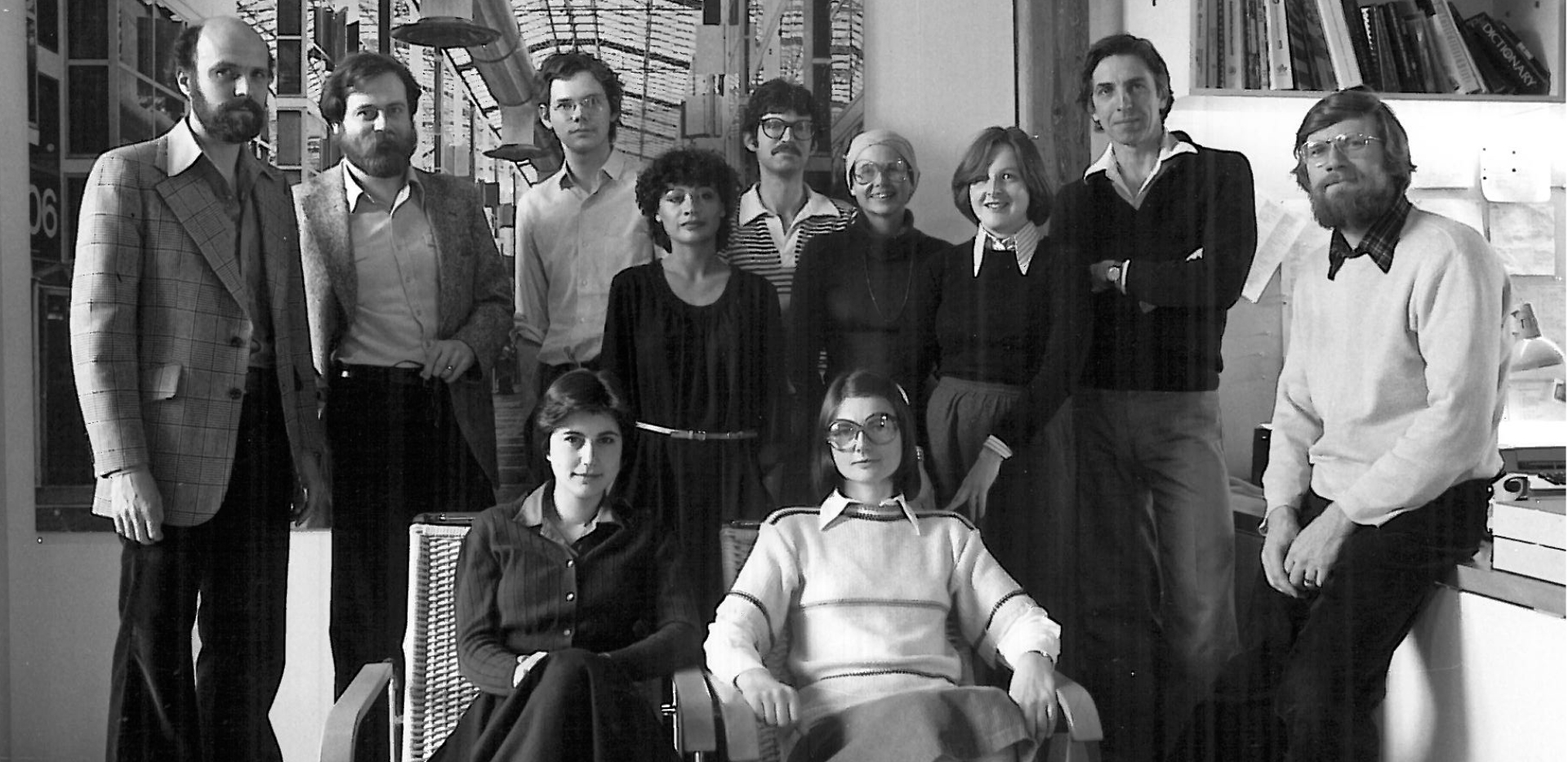
Barton Myers died last month in Connecticut at age 91.
The Virginia-born architect established himself as a leading force in North American design throughout a career that spanned Philadelphia, Toronto, and California.
In 1975, he founded the eponymous Barton Myers Associates (BMA) in Toronto, where Bruce Kuwabara, Thomas Payne, Marianne McKenna, and Shirley Blumberg first worked together as associates. Following Barton’s move to California in 1987, the four architects established their own practice.
Below, Bruce, Marianne, and Shirley reflect on Barton’s enduring influence on both KPMB and Toronto.
Bruce Kuwabara:
“I had two mentors early in my career: George Baird and Barton Myers. George was my connection to European history and the architects that he admired: Aalto, Rietveld, Van Eyck, Chareau, and Wagner. But what Barton did was expose me to the history of American architecture, offering a deep dive into Louis Kahn, Mies in America, Ray and Charles Eames, and the Philadelphia School.
I first met Barton in 1968, when he was my professor. Jack Diamond, who had been his classmate at the University of Pennsylvania, had invited him to teach at the University of Toronto’s School of Architecture and together they formed Diamond and Myers.
During the mid-1970s, I wrote an article for City Magazine that essentially said Diamond and Myers were the best architects in Toronto. They were outsiders, and they were bringing new ideas from Penn, which was a major architectural force. Louis Kahn, who Barton had worked for, was a graduate. Robert Venturi was a faculty member when he wrote Complexity and Contradiction in Architecture.
Unlike most of the corporate architectural practices in Toronto at the time, Barton and Jack brought advanced thinking on topics like infill housing and incorporating heritage buildings into their work. York Square — a rare project that preserved Victorian houses and juxtaposed them against circular windows and Super Graphics — was an important piece of architecture. In it, you could see the influence of the Beaux Arts-trained Paul Philippe Cret via Louis Kahn, with its quietness, interior courtyard, and what Barton called ‘space positivity’.
When I look back on KPMB, I see Barton’s influence in how we approach plans, express materials, and look to history as a platform for ideas. His legacy is, of course, also in the work that survives. The Seagram Museum, which Shirley worked on, was excellent. The Housing Union Building is an amazing, ambitious project that architects like Fumihiko Maki and Mario Botta visited Edmonton to see.
I used to house sit 19 Berryman when Barton and Vicki travelled, which they did often during the 12 years that we worked together. As soon as they’d leave, I’d wait an hour and then go get some wine and start calling up my friends to come over. And it was always great, because it’s such a beautiful house to be in.
Some years ago, I told the Toronto Star that ‘It is impossible to reflect on Toronto architecture without thinking of Barton.’ That remains true. As the city evolves, the ideas he brought are as rich and relevant as ever.”
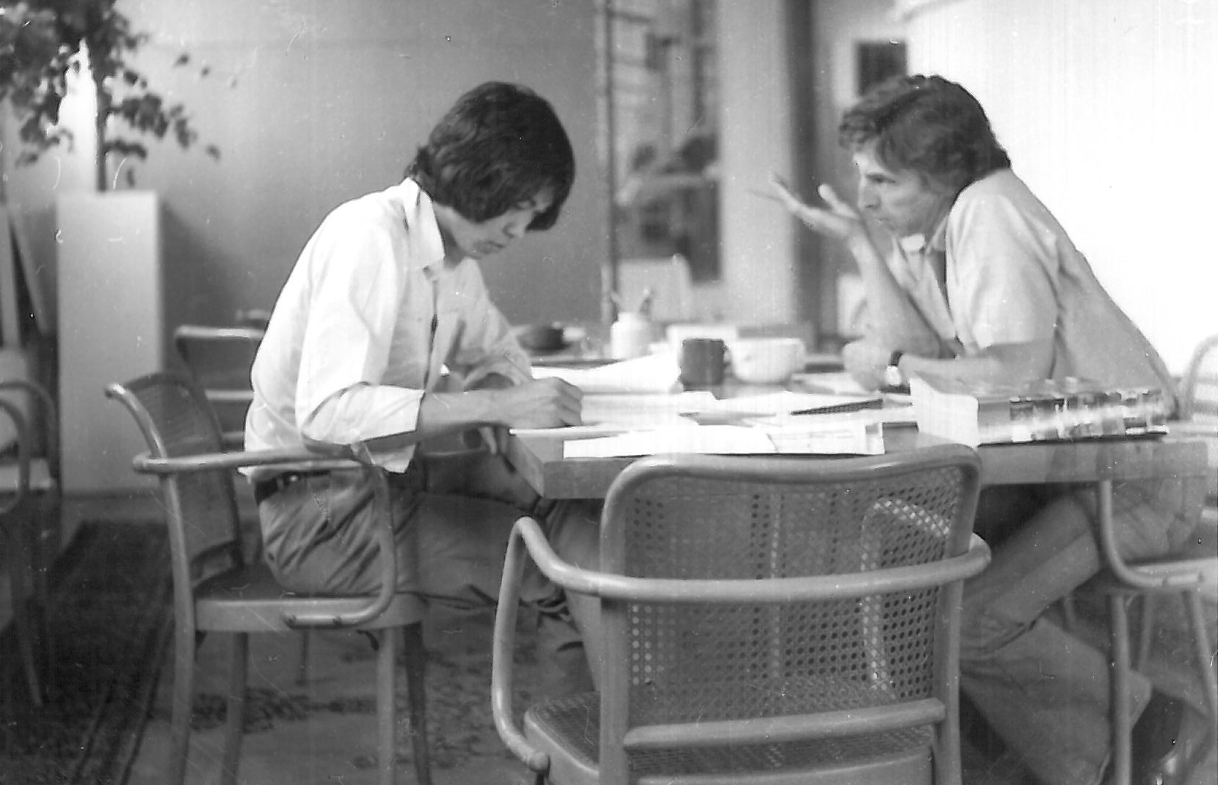
→ Bruce Kuwabara and Barton Myers.
Marianne McKenna:
“I came to Toronto in 1980, drawn by the boldness of Barton’s work. The Housing Union Building in Edmonton was on the cover of Progressive Architecture the year I graduated from Yale. I was also intrigued to see York Square and Dundas-Sherbourne Housing emerge from Barton’s commitment to public housing, preserving scale, and introducing juxtapositions with the existing building fabric. He loved flexible and adaptable spaces, with sliding panels that re-proportioned rooms and houses built to the lot line with natural light from above.
Barton graduated from the University of Pennsylvania in 1964 and went to work for Louis Kahn for two years, followed by another two at the Philadelphia firm Bower and Fradley. Like many of his contemporaries, he was deeply influenced by Kahn and planner Edmund Bacon. These influences still resonate within KPMB, extending to our focus on structure, scale, materials, and the social responsibility of architecture.
Barton was our mentor and teacher; a tough taskmaster who engaged in all aspects of the practice. In the evening, he would return to the office at 322 King Street after dinner to draw with us and, on the weekend, he might even defrost the tiny office fridge. He and Vicki often hosted us and a community of architects, writers, artists, and critics for parties at their Berryman home. He said that the firm was the right size when we could all have lunch together at the long maple meeting tables. He offered me a richly imagined future when he hired me, and, after one year, made me an associate at BMA.
Kahn’s influence extended to Barton’s interest in ordering a building, the simplicity and veracity of materials, and doing more with less. His ‘hair shirt’ palette transformed tight budgets into spatial richness and emphasized the simple beauty of exposed steel connections. He loved the plan and the section, and the rigour of exposed mechanical systems.
My fascination with theatre and performance came from travelling with Barton, particularly on one trip to the U.K. It taught me how the intimacy of a room, small or large, was everything. These lessons have extended into my own projects, including Koerner Hall.
The work of BMA is foundational to our practice: increased density, mixed uses, adaptive reuse, infill, and the juxtaposition of old and new. Barton gave us a vocabulary and methodology for working through a project. Everything is translated into our own time, but the bones remain similar. Toronto was his laboratory, and in many ways, it continues to be ours.”
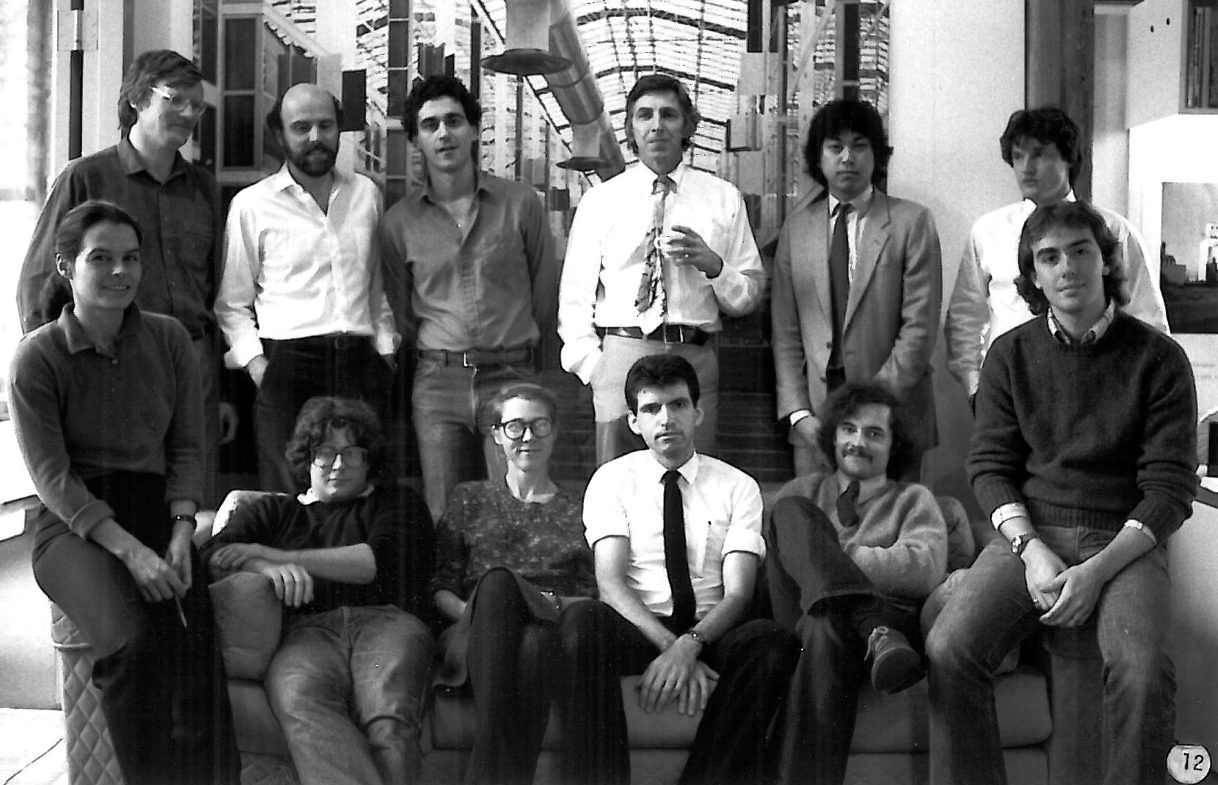
→ Barton Myers Associates, circa 1981.
Shirley Blumberg:
“When I graduated from university, Barton was the only architect I wanted to work for. He was a very talented designer and a committed urban activist.
He was also a great teacher and mentor. Working in the studio with him was an excellent learning experience that evolved into a robust foundation for our practice as KPMB. He entrusted my partners and me with a level of responsibility beyond our experience and years. We called it the ‘youth investment program’.
Barton instilled in us a rigorous work ethic and design process. He would often sit down with us at the end of the day, and informally share his thoughts on architecture, history, and city-building. The office functioned as a true studio.
Then there was the tradition of inspiring lunches with his architect and artist friends, where the entire office staff gathered around the conference table. The Christmas parties at his house on Berryman Street were legendary.
In his architectural practice, Barton was influenced by Louis Kahn, who taught him at the University of Pennsylvania, as well as Charles and Ray Eames. He designed several buildings of lasting significance in Canada. York Square was a striking adaptive reuse project, as was the Seagram Museum. HUB at the University of Alberta was a game changer. His house at 19 Berryman Street was very innovative at the time.
An urban activist, Barton had an intense interest in and influence on urban planning. Famously, he and George Baird co-authored Vacant Lottery, a special issue of Design Quarterly magazine in 1978. One of the topics it focused on was how to increase population density within cities while preserving existing residential fabric. This led to Dundas-Sherbourne, a seminal project and Toronto’s first infill housing development.
I have so many memories and deep appreciation for what we learned in his studio. It was foundational to all that followed.”
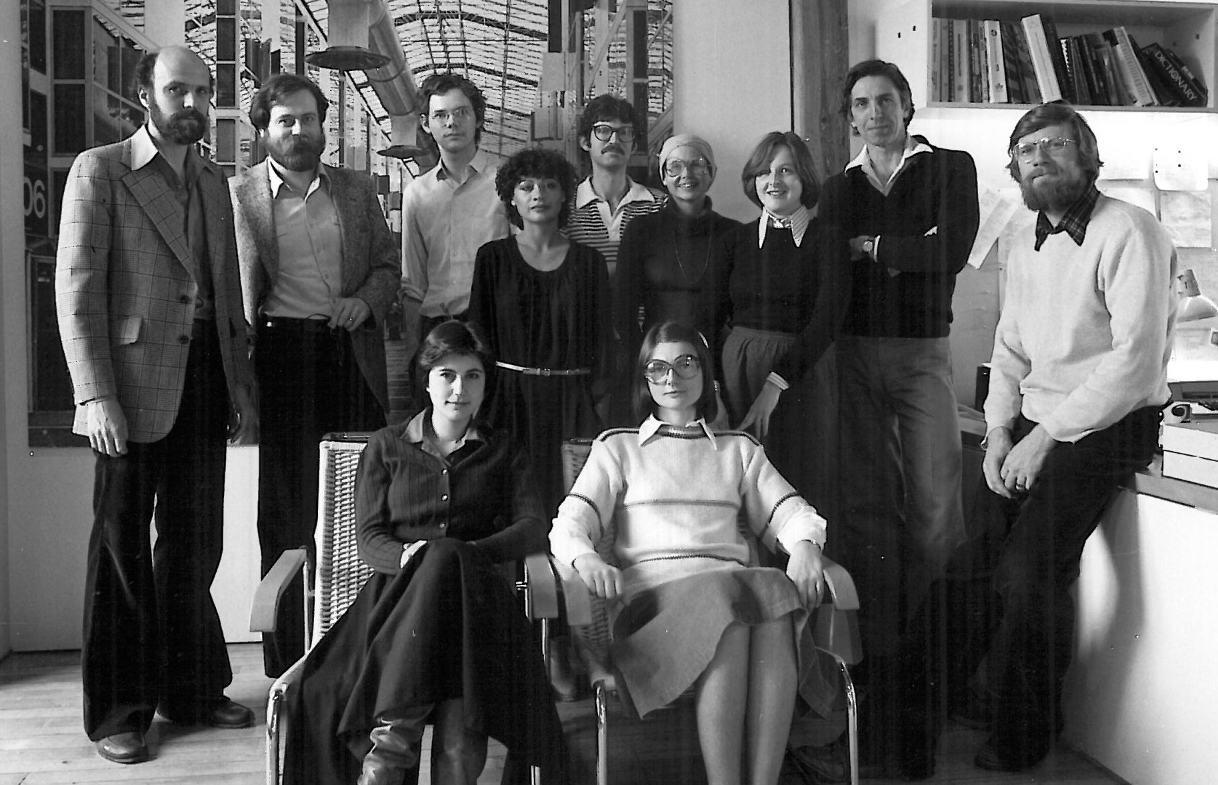
→ Barton Myers Associates, circa 1978.
Related News
Remembering Barton Myers
September 9, 2026)
KPMB earns Ontario Living Wage certification
September 2, 2026)
Duan Family Center receives third-party zero-energy verification
August 27, 2026)