Japanese Canadian Monument officially opens in Victoria
Article content
October 22, 2026
The Japanese Canadian Monument in Victoria, British Columbia officially opened to the public earlier this month.
Years in the making, the monument honours the 22,000 Japanese Canadians who were uprooted from their homes, forcibly displaced, and interned during the Second World War, along with 3,000 children born after their displacement and before April 1, 1949.
Led by the Japanese Canadian Legacies Society and administered by the Province of British Columbia, the monument — a place of reflection, education, and reconciliation — is part of an ongoing effort to redress the historical injustices committed against Japanese Canadians.
Hundreds of survivors and family members gathered at the site for the opening ceremony on October 3, while communities across the country joined by livestream. During the ceremony, 14 elders read the names of the 195 communities where Japanese Canadians lived prior to internment, and KPMB founding partner Bruce Kuwabara delivered remarks.
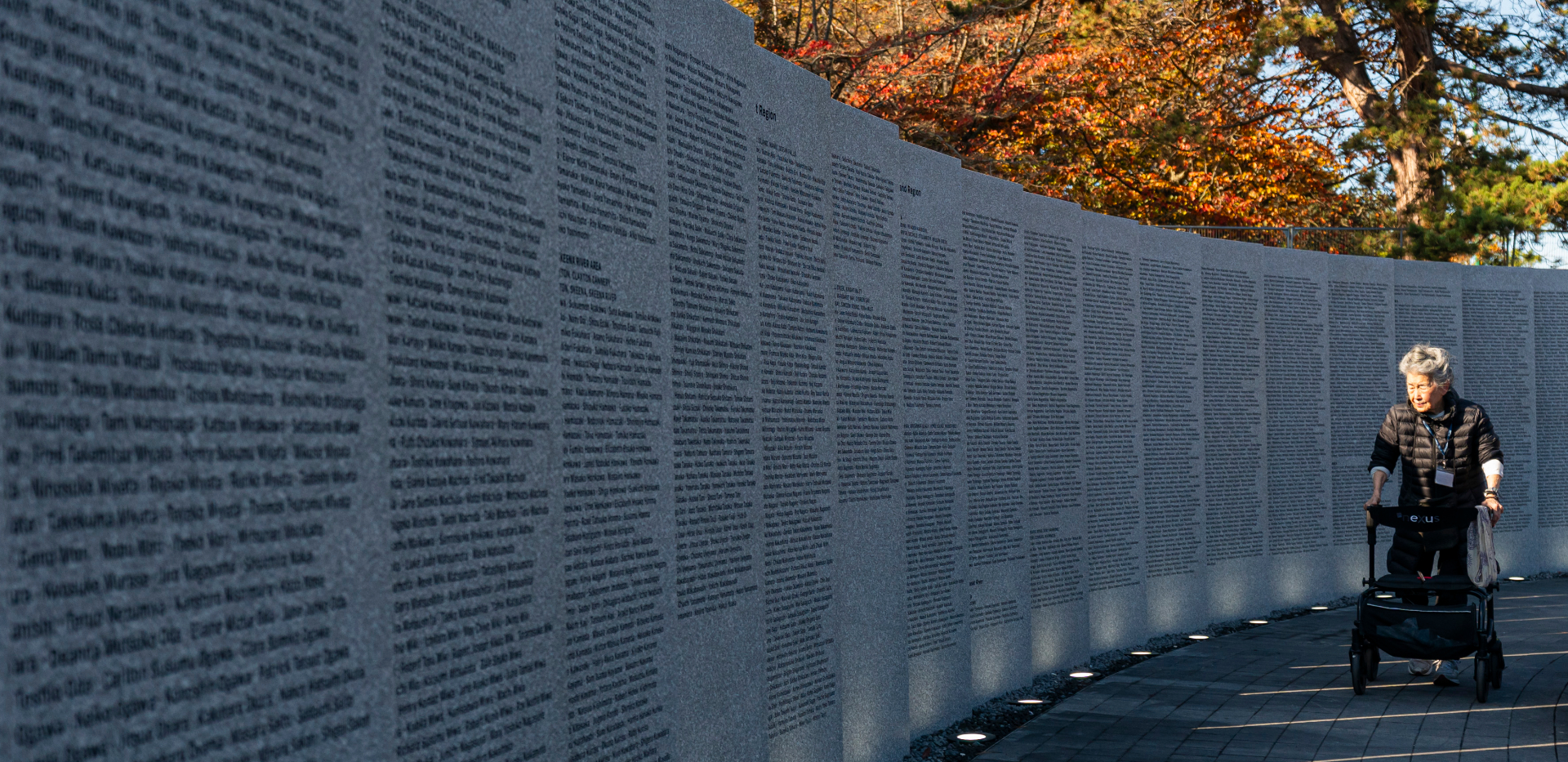
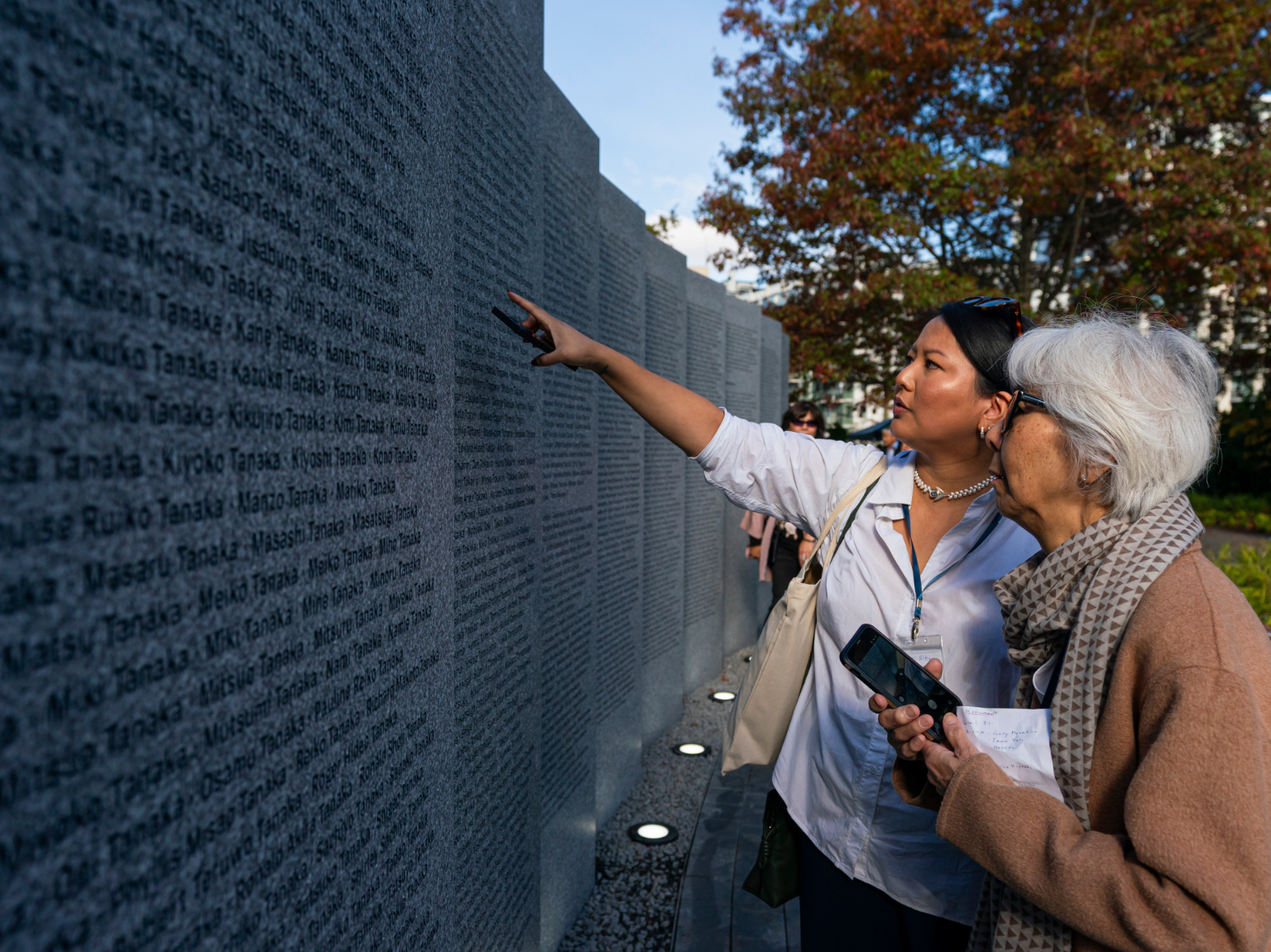
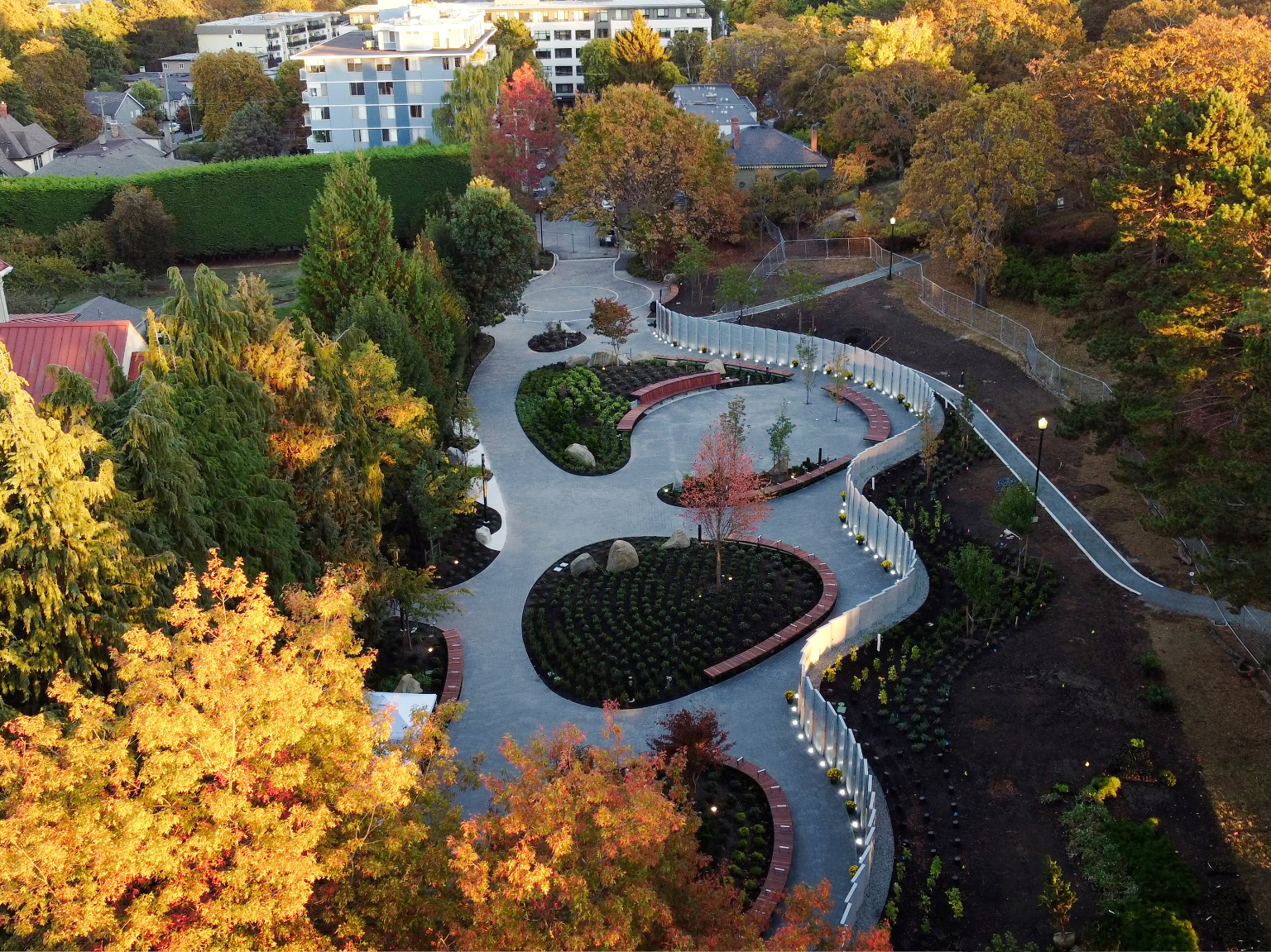
The one-acre monument and its Japanese garden-inspired landscape create a place for remembrance and learning. A 300-foot-long wall bears the names of survivors on 100 granite panels, while engraved boulders trace the history of Japanese Canadians throughout the planted landscape.
→ Credit: Rich Lam
Designed by KPMB and PFS Studio, the monument and its landscape draw inspiration from water because of its significance in both Japanese and British Columbian cultures and in rituals of healing. Rather than relying on scale for emotional impact, the wall’s wave-like form creates a series of intimate bays for contemplation and gathering.
“In the Buddhist view of life, each individual is like a wave upon an ocean, and as one wave passes, another is forming,” said Bruce. “This wall is certainly about the past, but it is also about the future.”
→ Credit: Matt Koeleman
KPMB is grateful to everyone who brought this project to life, including Susanne Tabata and the Japanese Canadian Legacies Society for their leadership, project vision, and interpretive design, and the research team at the University of Victoria’s Humanities Computing and Media Centre (HCMC) for compiling the names of uprooted Japanese Canadians from thousands of archival records and organizing them into pre-war communities.
We also deeply value the collaboration of Kelty McKinnon and PFS Studio; Jack Kobayashi and Kobayashi + Zedda Architects, who established the foundational principles that informed the design; Tamotsu Tongu and Toko Garden Design; Susan Mavor and Lost & Found Design; and Chandos Construction.
Read more about the monument’s design and the ideas that shaped it.
(Header image: Rich Lam)
Related News
Japanese Canadian Monument officially opens in Victoria
October 22, 2026)
Mouna Naoui to co-lead LeBreton Flats walking tour in Ottawa
October 20, 2026)
Blaine Lepp to co-deliver architecture keynote at BUILDEX Alberta
October 14, 2026)