Royal Conservatory of Music Master Plan
- Location Toronto, Ontario
- Client Royal Conservatory of Music
- Architects KPMB Architects
- Completion 1991
- Size 205,300 ft² / 19,100 m²
- Project type Planning & Urban Design, Culture, Education
Shaping the future of Canada’s leading music institution
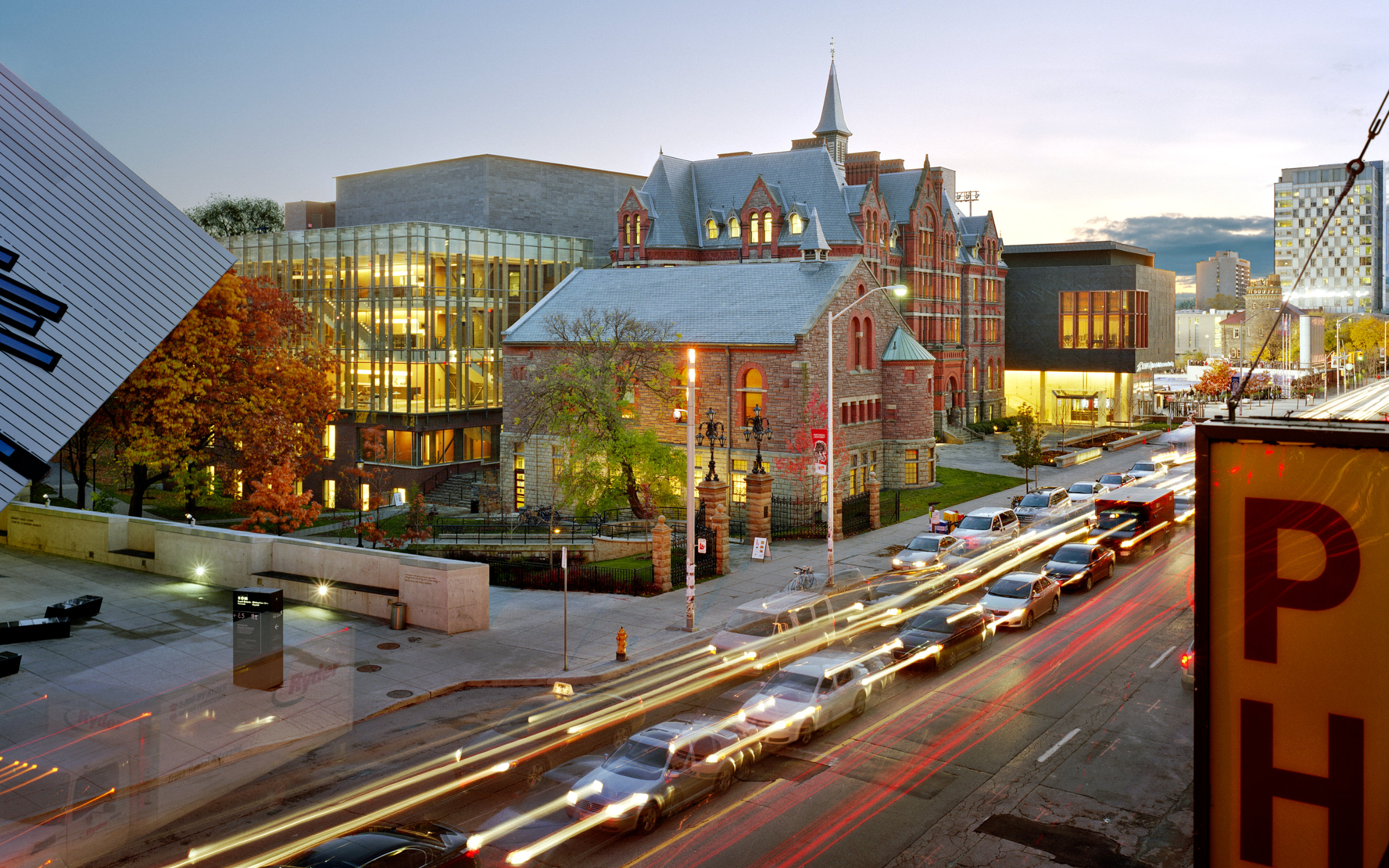
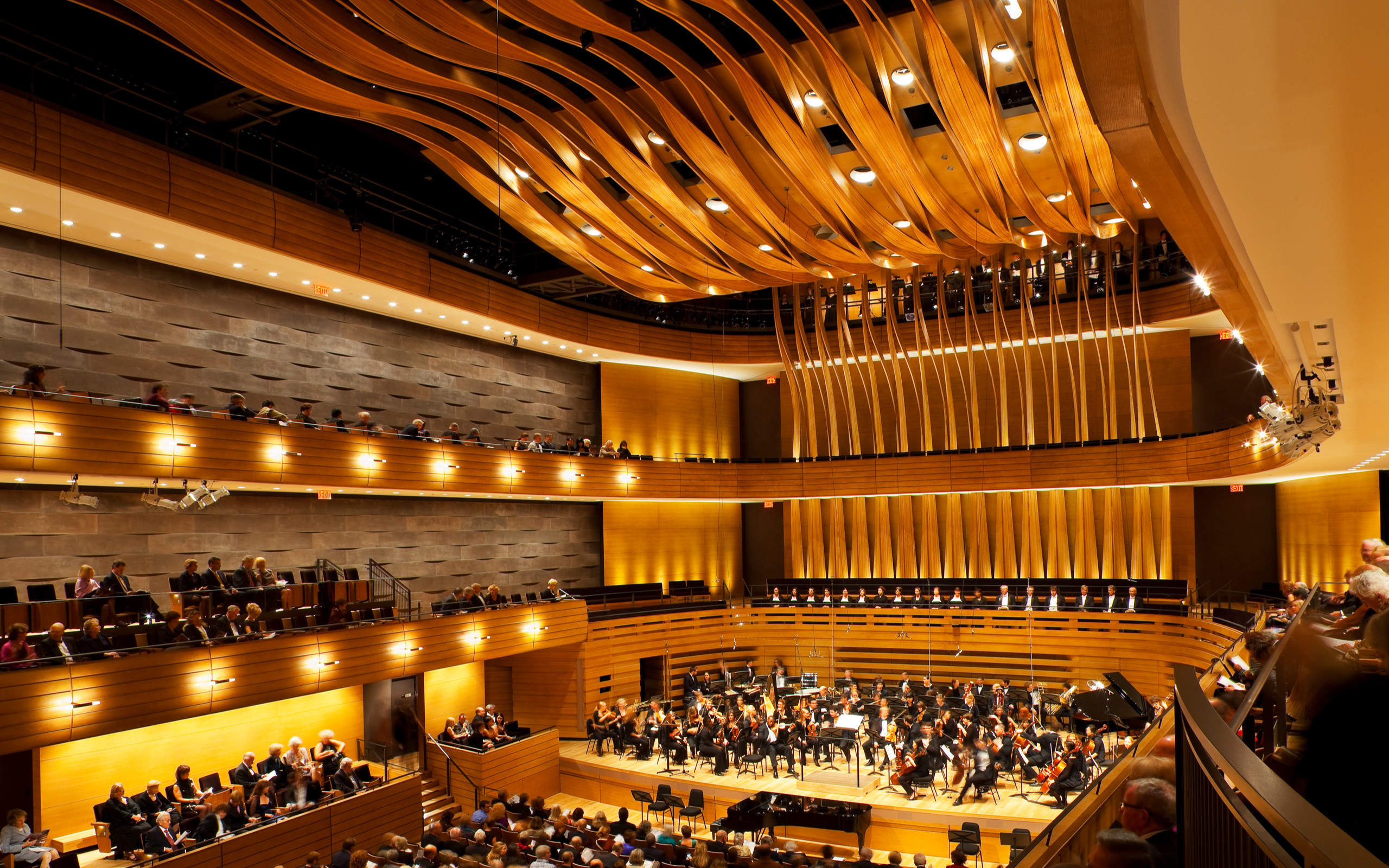
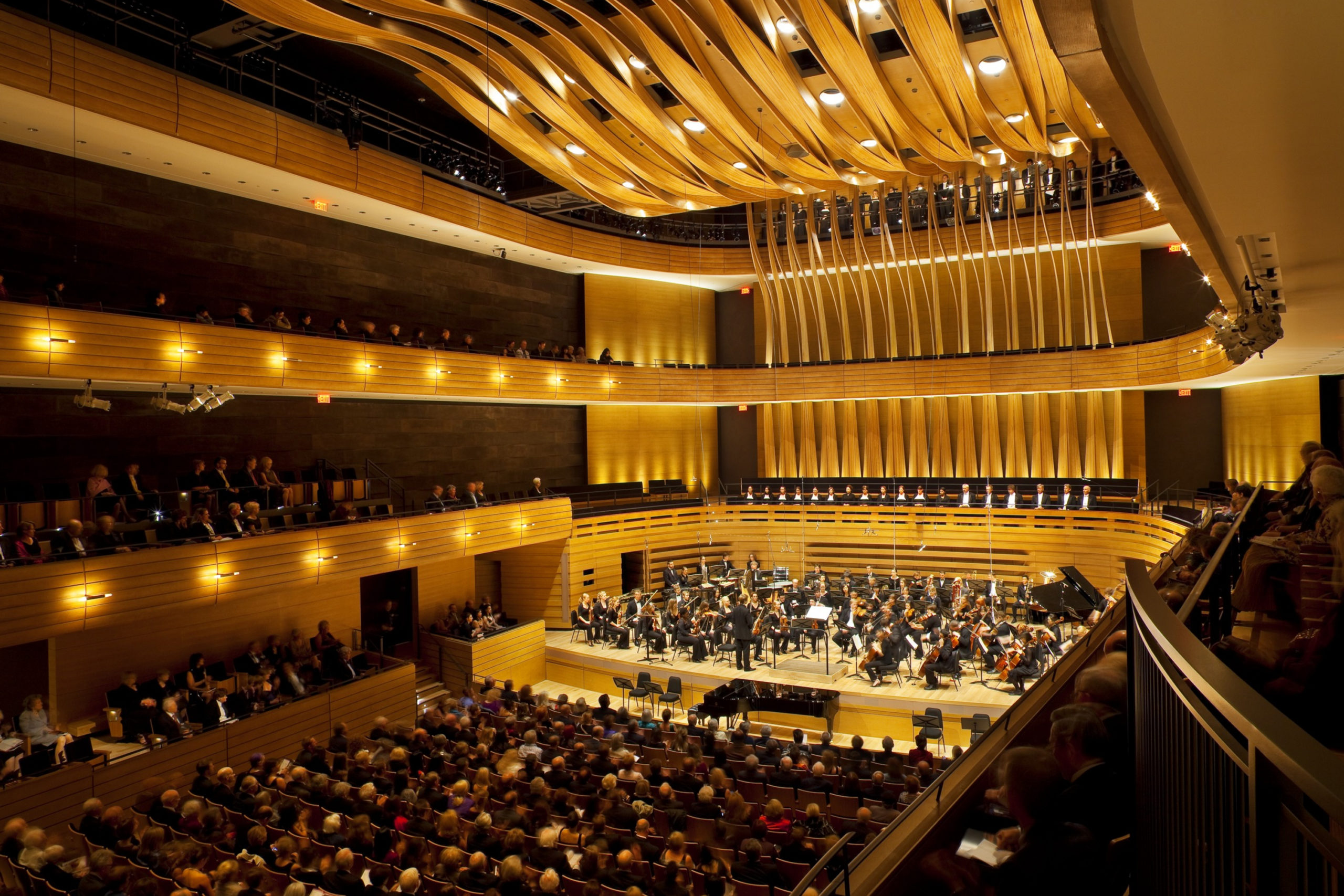
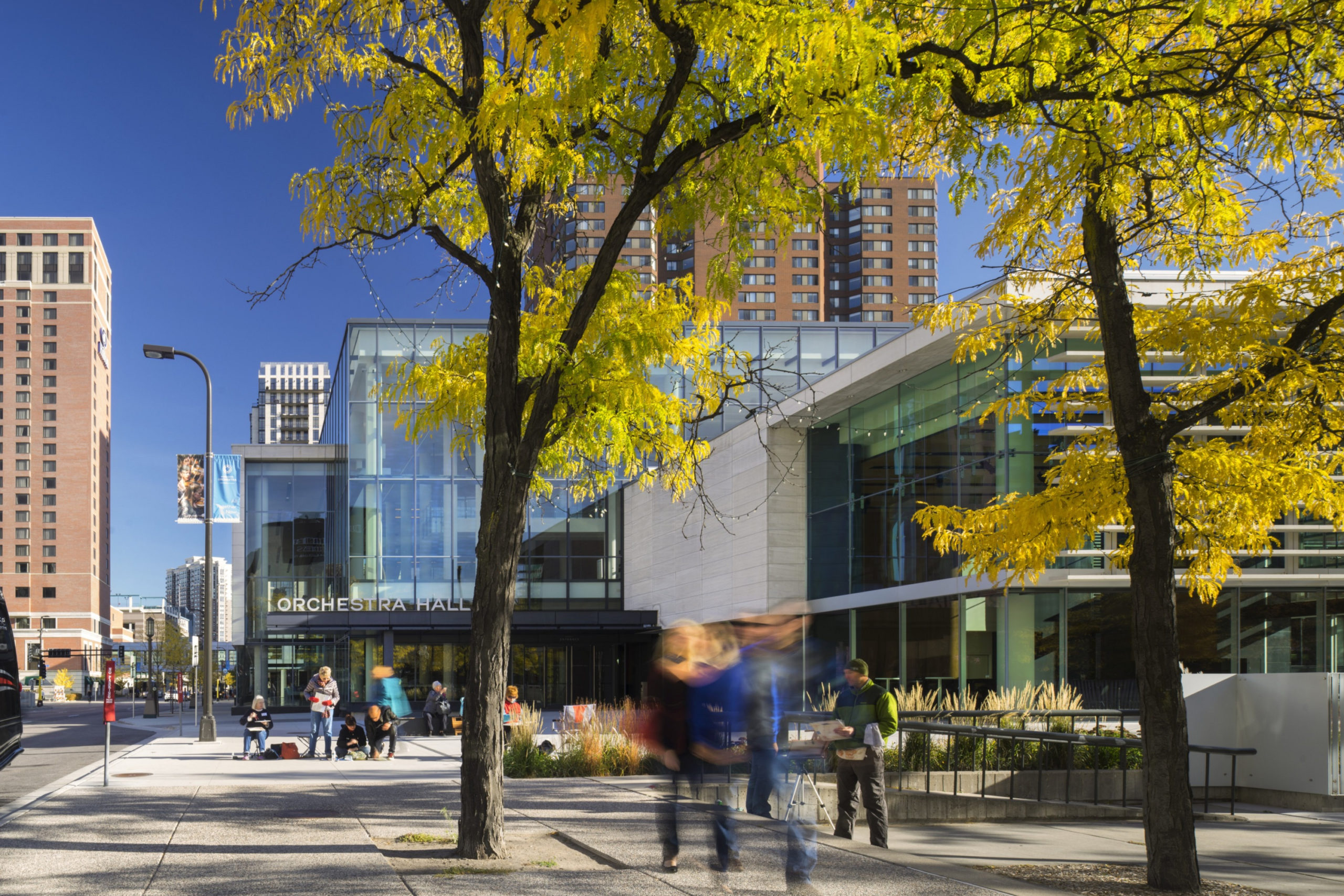
Decades before the TELUS Centre for Performance and Learning and Koerner Hall opened in 2009 to acclaim from musicians and architectural critics alike for its acoustical excellence and architectural intimacy, KPMB developed a comprehensive master plan to restore and expand the Royal Conservatory of Music’s historic campus in Toronto.
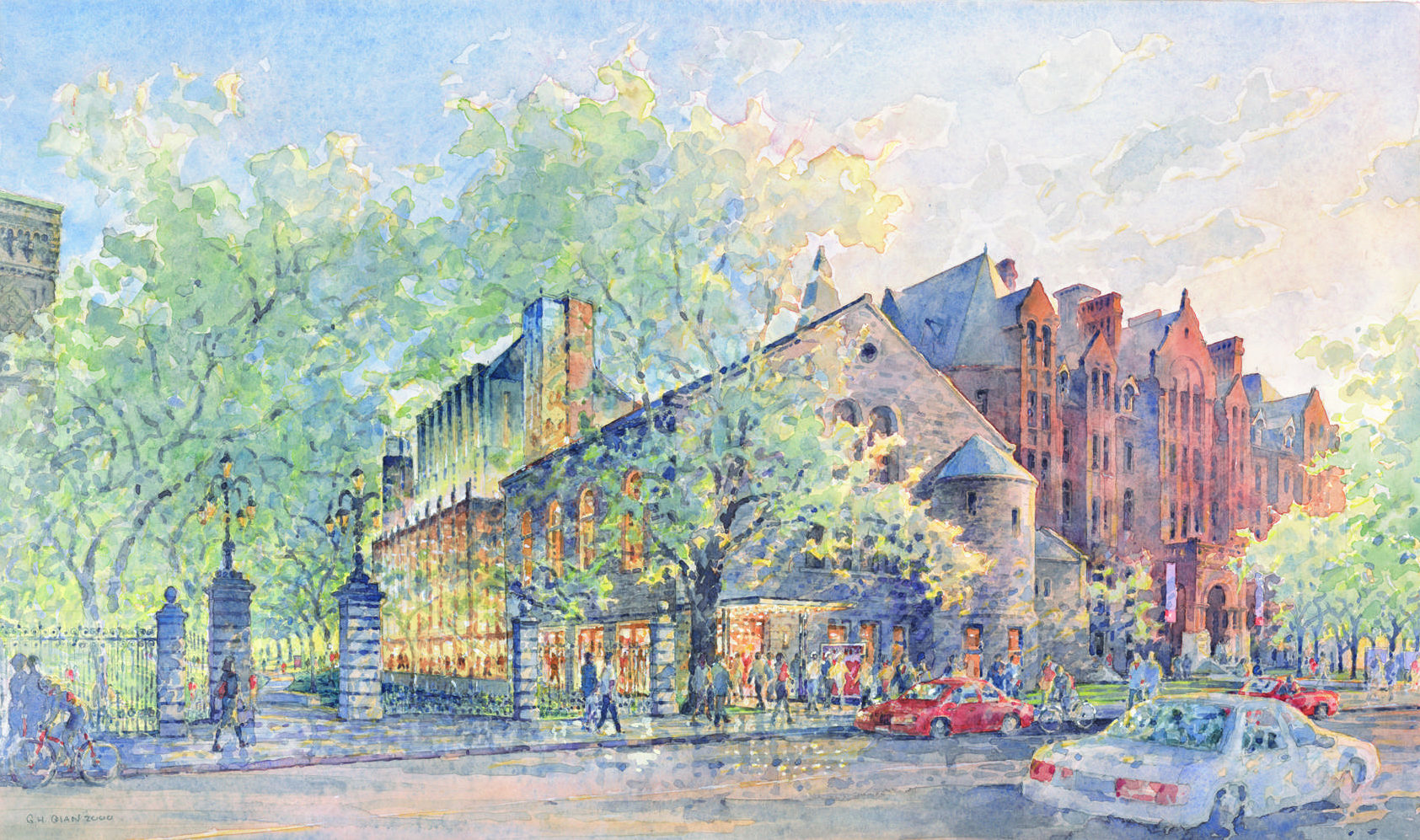
Since 1963, the Royal Conservatory has been housed in McMaster Hall — a Romanesque Revival building constructed in 1881 by architects Langley, Langley & Burke for the Toronto Baptist College. In 1991, KPMB’s master plan articulated a long-term vision for how the 205,000-square-foot property could flourish as a world-class centre for music education and performance, and as a cornerstone of Toronto’s cultural life.
While the completed campus evolved from the framework established 20 years prior, the 1991 plan established a zoning framework and defined principles that proved vital to the project’s success. These included determining how the site could integrate diverse programs for a wide range of users and how heritage and contemporary architecture could coexist on the tight urban site anchored by McMaster Hall.
A home for education and performance
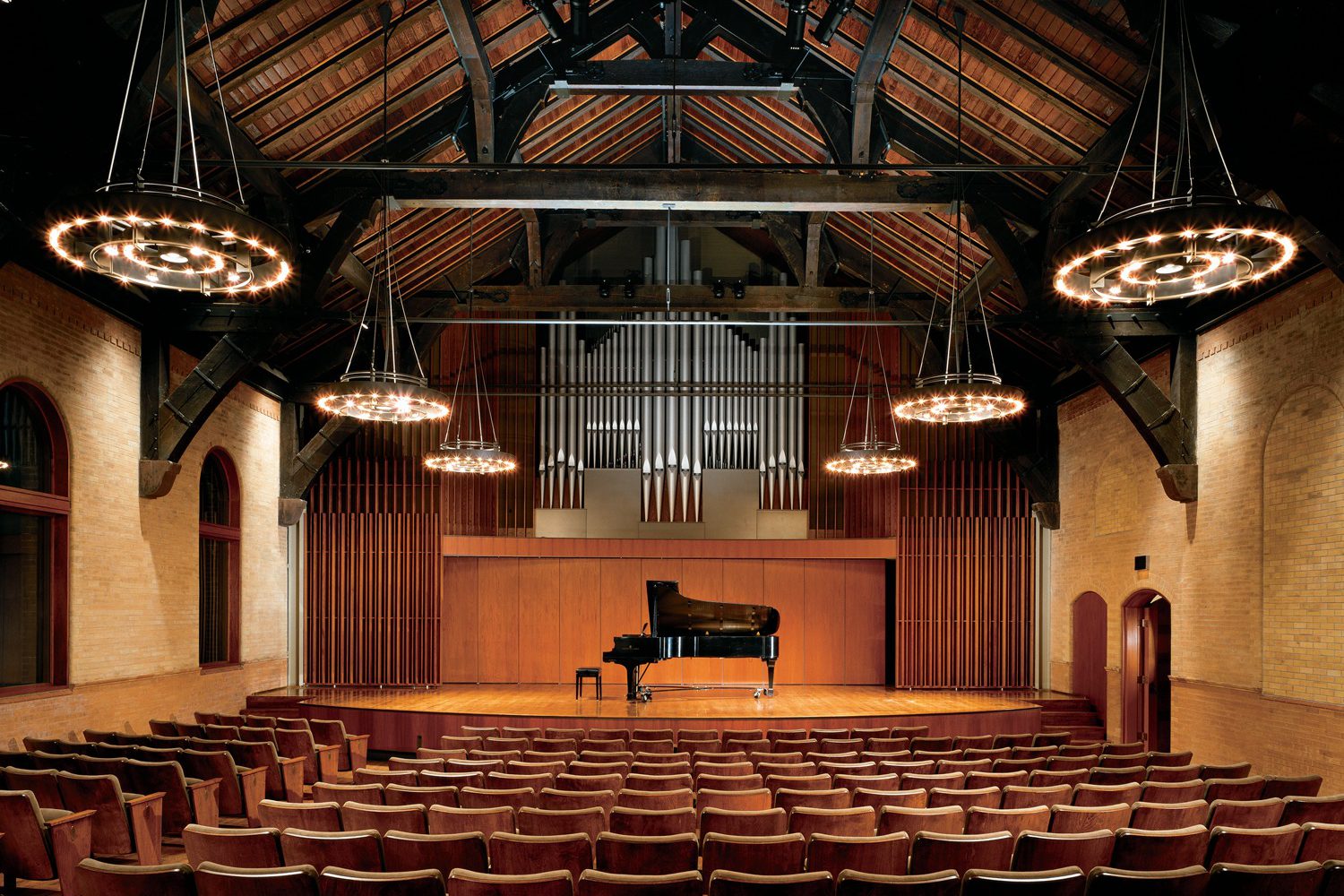
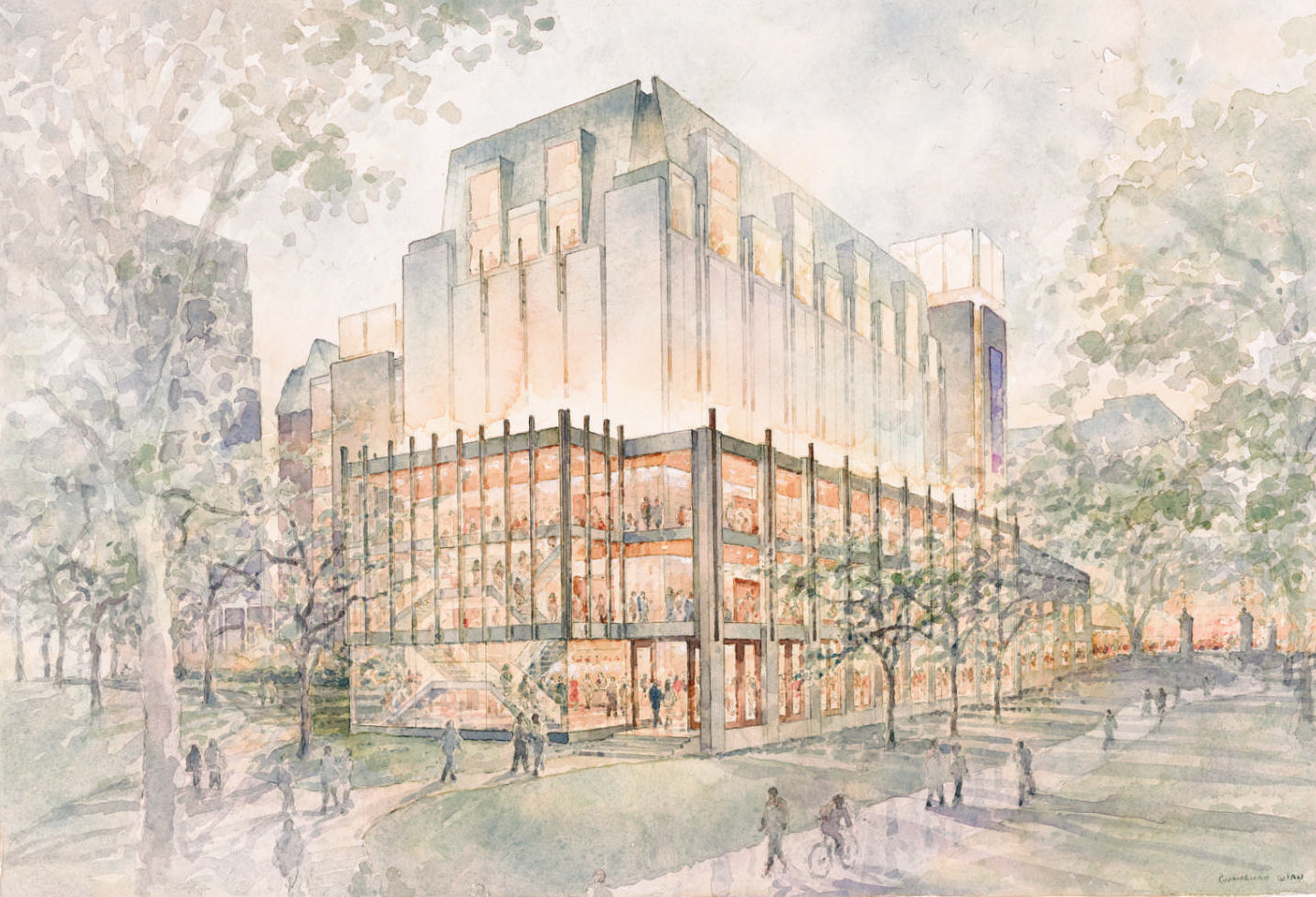
The master plan emphasized creating indoor and outdoor “great rooms” for performance, complemented by fine-grained spaces for teaching, practice, and socializing.
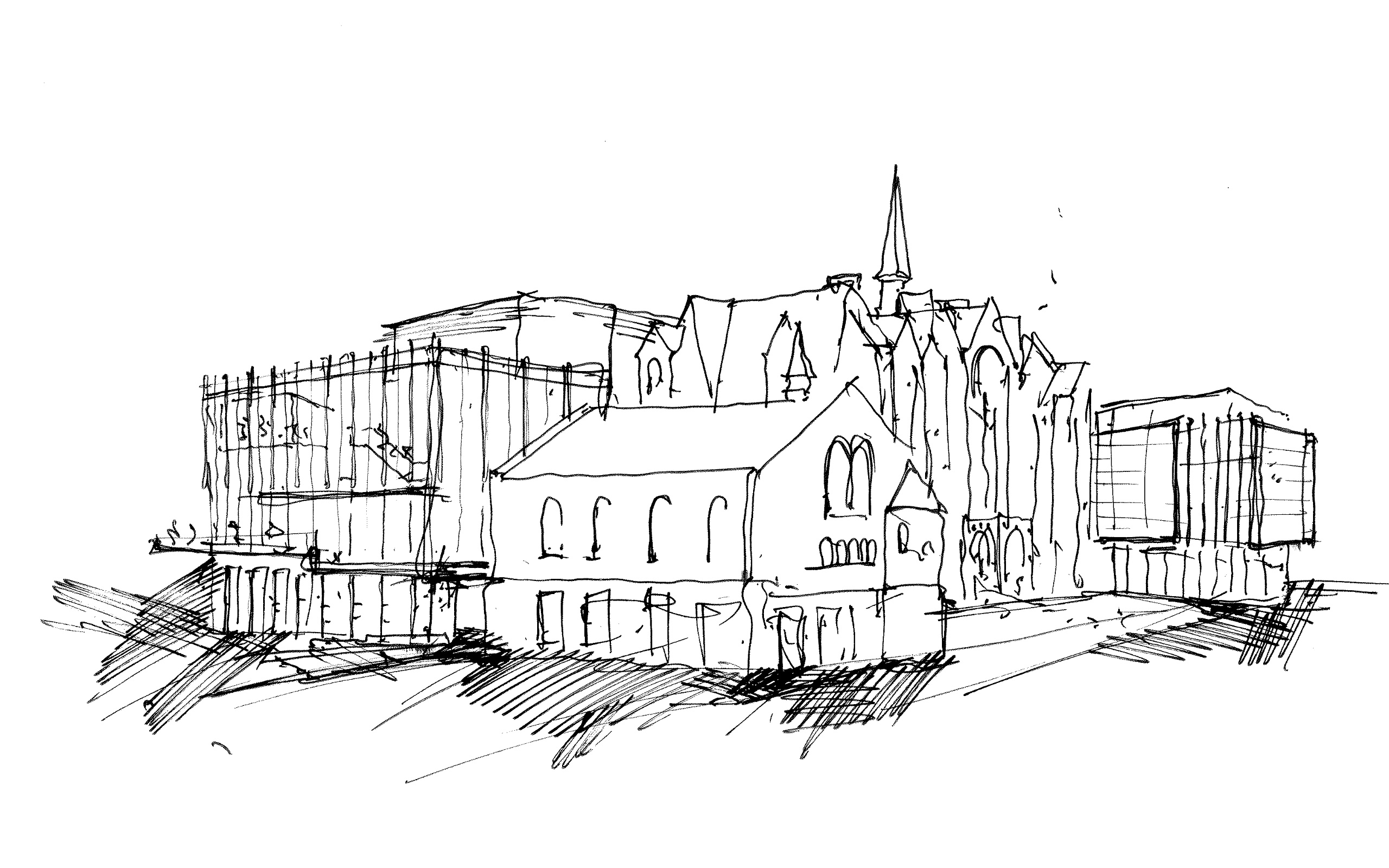
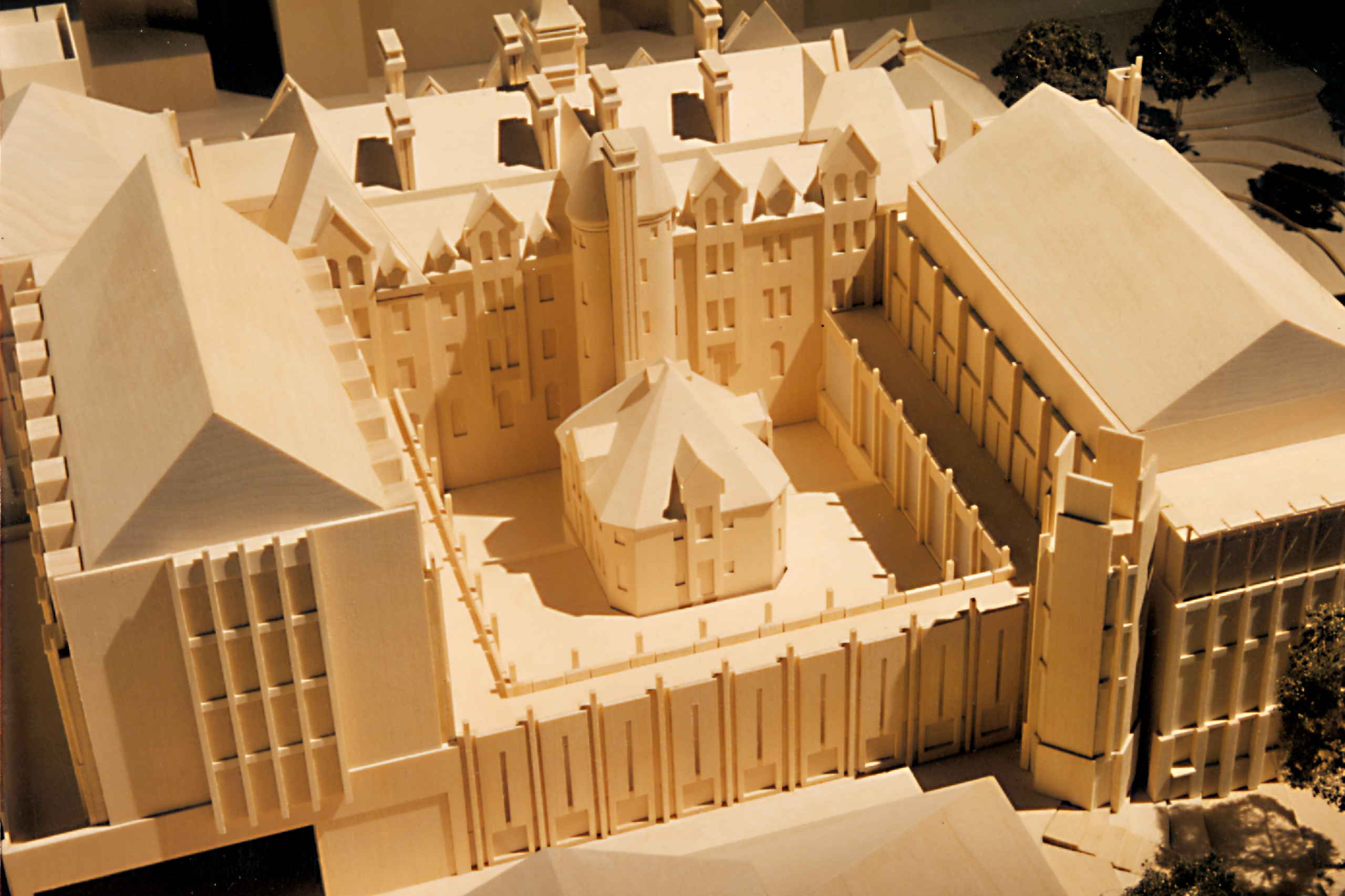
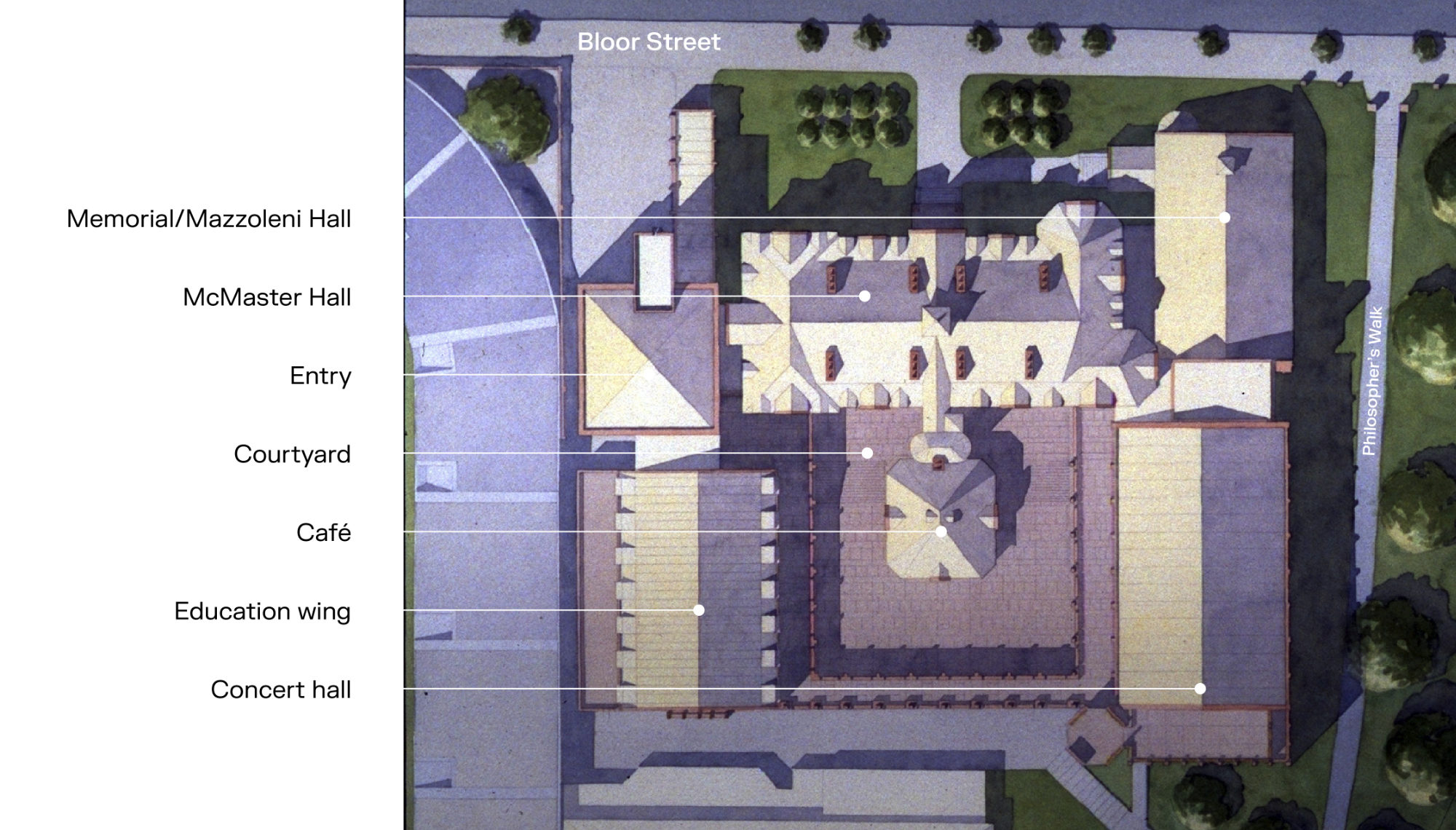
As part of this approach, McMaster Hall was repurposed for gathering, learning, and administration. To the south, two proposed additions — a 550-seat concert hall and an educational wing — were organized around a cloistered courtyard. The existing Memorial Hall was reimagined as a recital venue (now known as Mazzoleni Hall), while the South Pavilion was envisioned as a café.
A contextual architectural response
Conceived as a composition of distinct elements, the master plan’s architectural interventions were designed to be contemporary in expression, while their vertical proportioning and material palettes resonated with the campus fabric.
Although the built scheme was ultimately adapted — largely a result of the primary concert hall doubling in size — the siting, massing, and articulation of the new architecture retained the original plan’s sensitivity to its context.
The primary mass of the completed addition was positioned behind McMaster Hall, while the recurring emphasis on transparency contrasts the historic rusticated masonry.