In memoriam: Michael Koerner
Article content
April 27, 2026
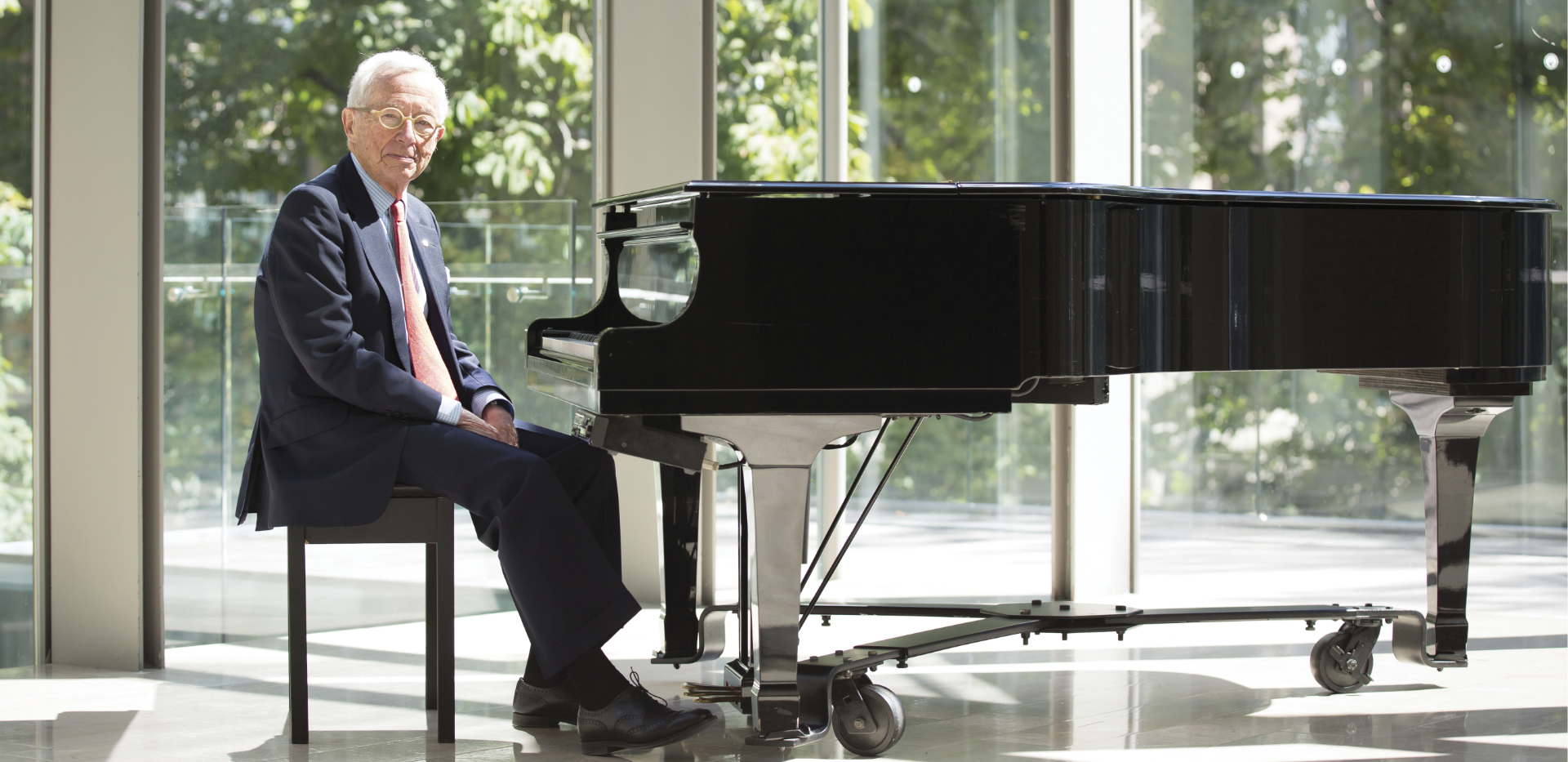
We are saddened by the passing of Michael Koerner, the Royal Conservatory of Music’s first chancellor and one of its most ardent champions. Throughout his life, Michael was an exceptional patron of the arts, committed to investing in cultural infrastructure for the benefit of current and future generations of Torontonians.
KPMB, led by founding partner Marianne McKenna, had the privilege of working closely with Michael throughout the revitalization of the Royal Conservatory’s heritage home. Michael and Sonja Koerner led major fundraising campaigns, inspired others to contribute, and frequently consulted on key elements of the design. Michael and Sonja’s appreciation for architecture, their understanding of materials, and their recognition of the primacy of acoustics culminated in the concert hall that now bears their name, Koerner Hall, where Michael’s vision and generosity continue to inspire artists and enrich the lives of visitors.
To celebrate Michael’s life, we are pleased to share a reflection from Marianne, originally published in the exhibition catalogue accompanying Michael’s extensive collection of historic instruments, which is housed at the Royal Conservatory:
“I have met a few true collectors over the years, and I have always marveled at the intensity with which they engage with the objects in their collections. Michael Koerner’s collection of historic musical instruments, acquired over more than three decades, is deeply personal. The thrill and thread of music is deeply woven into his soul.
I remember during the design process, when the idea of placing Michael’s collection in the new Royal Conservatory first emerged, we scrambled to find a location that would honour it yet not compete with the challenges of accommodating the Conservatory’s expanding program for learning and performance on the very tight site. Michael had a very clear notion about integrating his musical instruments into the everyday life of the place. Inspired by his idea of making the instruments very visible and accessible to visitors, students, and performers, we quickly found locations that would be part of the public’s movement through the atrium, splitting the large collection into two parts. The larger case at the atrium floor would house the bureau organs and harpsichords, which demanded more generous room around each instrument. The smaller instruments — the flutes, early stringed violas and decorative fragments — required more contained and intimate cases. These would be located on the Promenade to Koerner Hall, so visitors could see the detail of each piece at close range.
Walking the collection with Michael in his home was a lovely experience. Our creative team consisted of Bob Sims, who designed the cases; Brian Gravestock, who curated and installed the collection; and me. At each meeting, Michael shed his more formal manner and took us on a narrative journey, sharing the tales of how he had found and acquired these remarkable objects, which ranged from the Han dynasty in c. 200 B.C. China, through medieval times, to the Renaissance in Italy, and 18th and 19th century London. Michael has extraordinary aesthetic discernment, and his collection now stands on its own, as he would have it, exuding an incredible presence. For the most part, the instruments are displayed in their found state, bearing the traces of handling and use by musicians through time. The patina tells the story.
When I first visited Michael in his home to view this collection, he played many of the instruments for me so that I could hear them and connect the unique sound of each instrument to the tale of its provenance. On the day that the large instruments were delivered for installation in the atrium of the TELUS Centre, Michael was there. He climbed into the large cases which housed the large instruments and as each piece was installed on its pedestal, he stepped up and played each one — an elegant gesture of farewell.”
“Even when one is no longer attached to things, it’s still something to have been attached to them; because it’s always for reasons other people didn’t grasp,” — Marcel Proust in À la recherche du temps perdu
We are deeply grateful for Michael’s contributions to Canada’s artistic and cultural life. At the Koerner family’s request, the Royal Conservatory is accepting donations to The Fund for Classical Programming in his memory.


(TELUS Centre for Performance and Learning/Koerner Hall images: Eduard Hueber. Catalogue images courtesy of Bhandari & Plater.)
Related News
Japanese Canadian Monument officially opens in Victoria
October 22, 2026)
Mouna Naoui to co-lead LeBreton Flats walking tour in Ottawa
October 20, 2026)
Blaine Lepp to co-deliver architecture keynote at BUILDEX Alberta
October 14, 2026)