The Harvard Crimson
- Client The Harvard Crimson Trust II
- Architects KPMB
- Completion 2026
- Size 17,000 ft² / 1,580 m²
- Project type Office, Education
Recalibrating a historic newsroom for digital journalism
Until March 2020, The Harvard Crimson printed five hard-copy editions every week from its basement pressroom. The COVID-19 pandemic halted the presses and precipitated the university newspaper’s embrace of digital-first publishing.
Following this operational transformation, The Crimson’s headquarters — a Neo-Georgian red-brick building dating to 1910 and last expanded in 1991 — no longer met the organization’s needs. The building suffered from the cumulative underutilization of space with significant square footage dedicated to printing presses, film darkrooms, and other outdated media technologies.
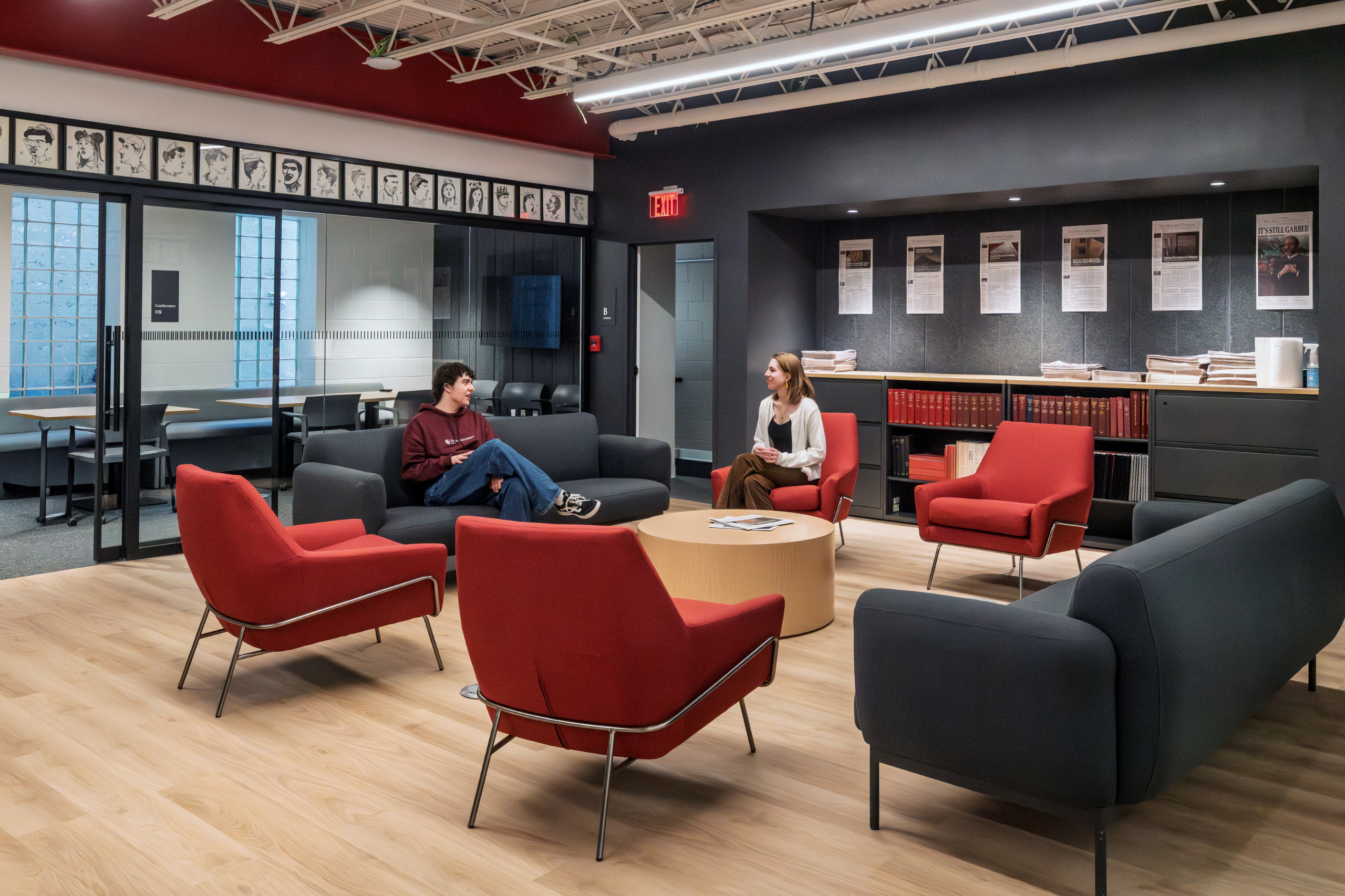
A renovation by KPMB re-aligned The Crimson’s home with its production process. Sensitive but impactful interventions modernized operations, expanded open work areas by nearly 30 percent and meeting spaces by 65 percent, improved the user experience, and addressed modern accessibility standards.
Modernizing the primary newsroom
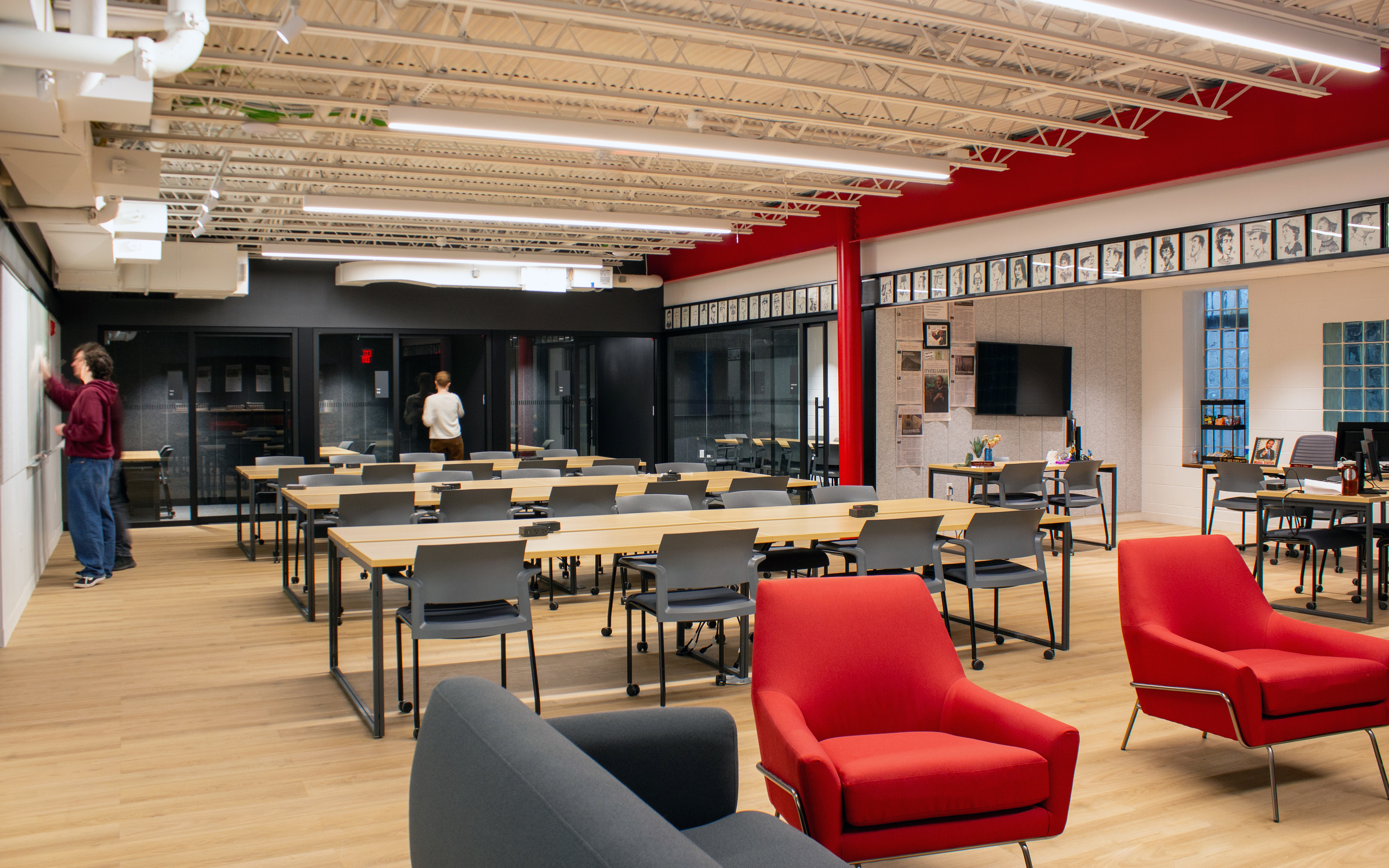
The ground-floor newsroom was subtly reconfigured to address key challenges identified by The Crimson’s leadership and staff: a lack of natural light, acoustical privacy, and appropriately scaled meeting spaces. A series of glass-enclosed meeting rooms line the newsroom, with glazed dividing walls allowing borrowed light to filter into the previously dim space.
Transforming the pressroom into a multifunctional hub
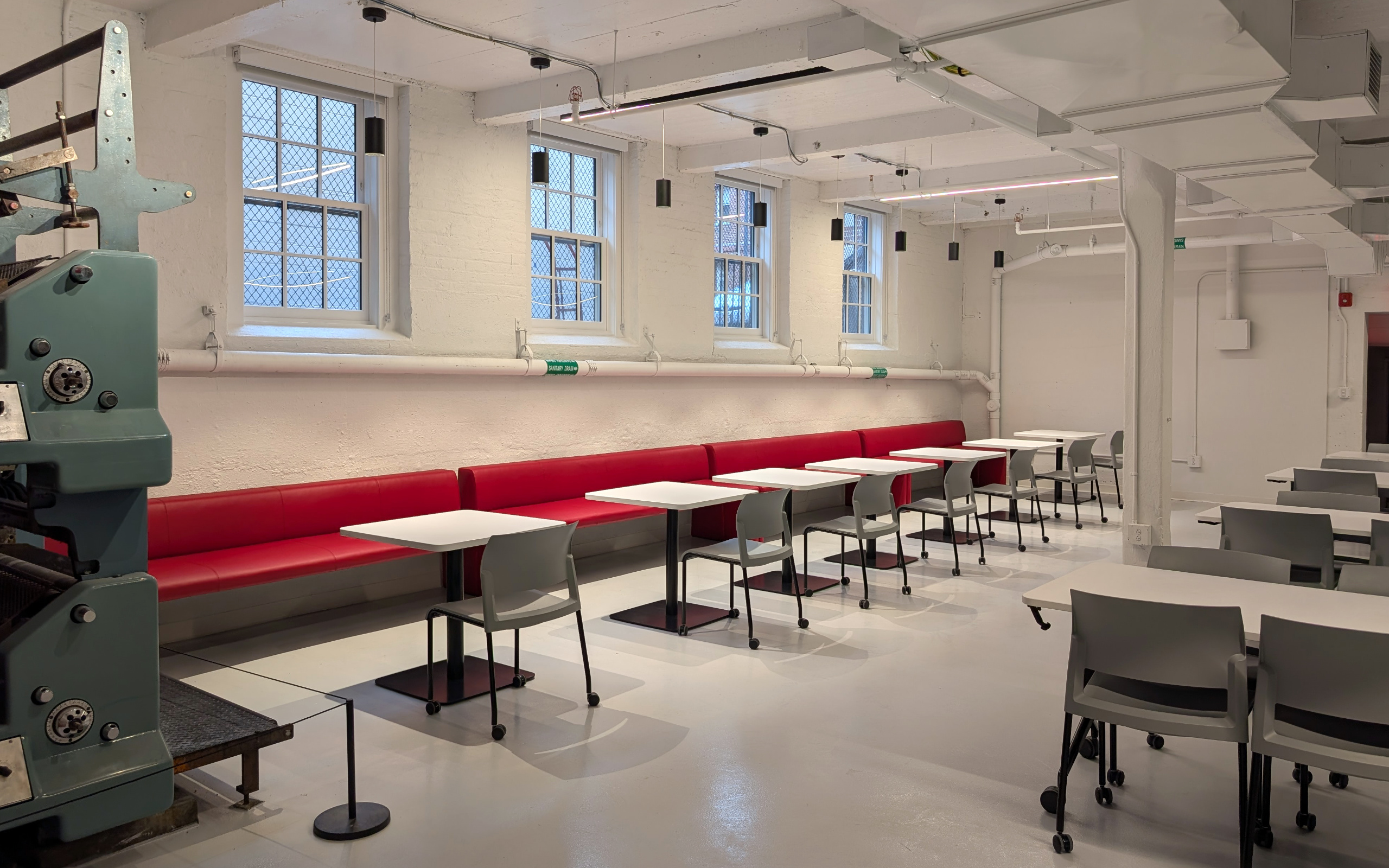
After ceasing in-house print production, The Crimson’s basement pressroom became ambiguously defined and sporadically used. Its reconfiguration into an overflow newsroom, a boardroom for large gatherings, and the newspaper’s primary events space solved new needs and relieved pressure on other areas of the building.
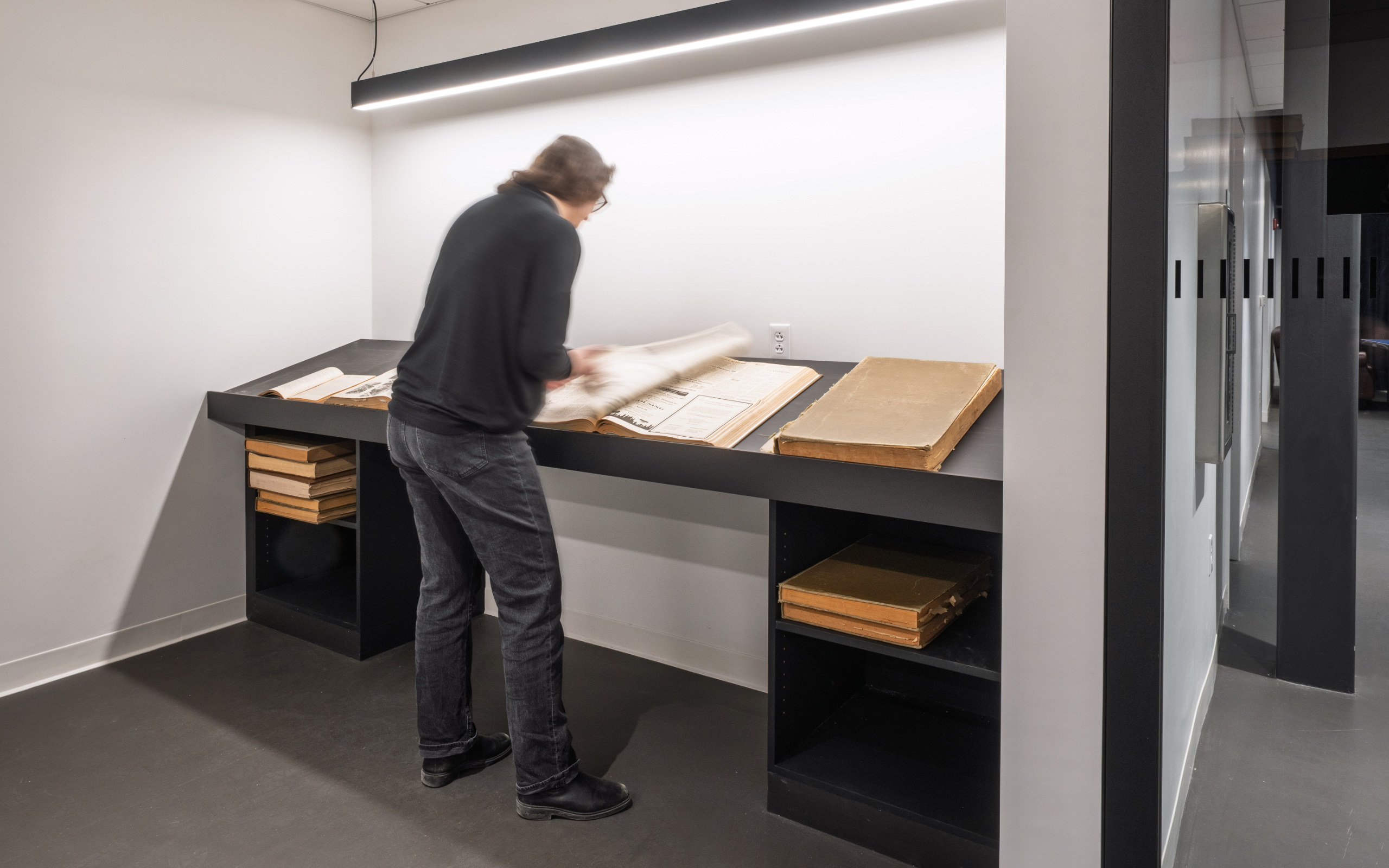
Nearby, a new multimedia production suite with podcasting and video studios supports The Crimson’s journalistic evolution, and a new climate-controlled archive and reading room preserves its extensive print archives.
A new stair has simplified access to the basement by repurposing a loading dock that was once used for heavy printing equipment and rolls of newsprint into a landing.
Achieving barrier-free access
Wheelchair users now have barrier-free access to the historic second-floor Sanctum — the newspaper’s ceremonial meeting space — due to the addition of a 300-square-foot pavilion that also accesses the building’s rooftop terrace.
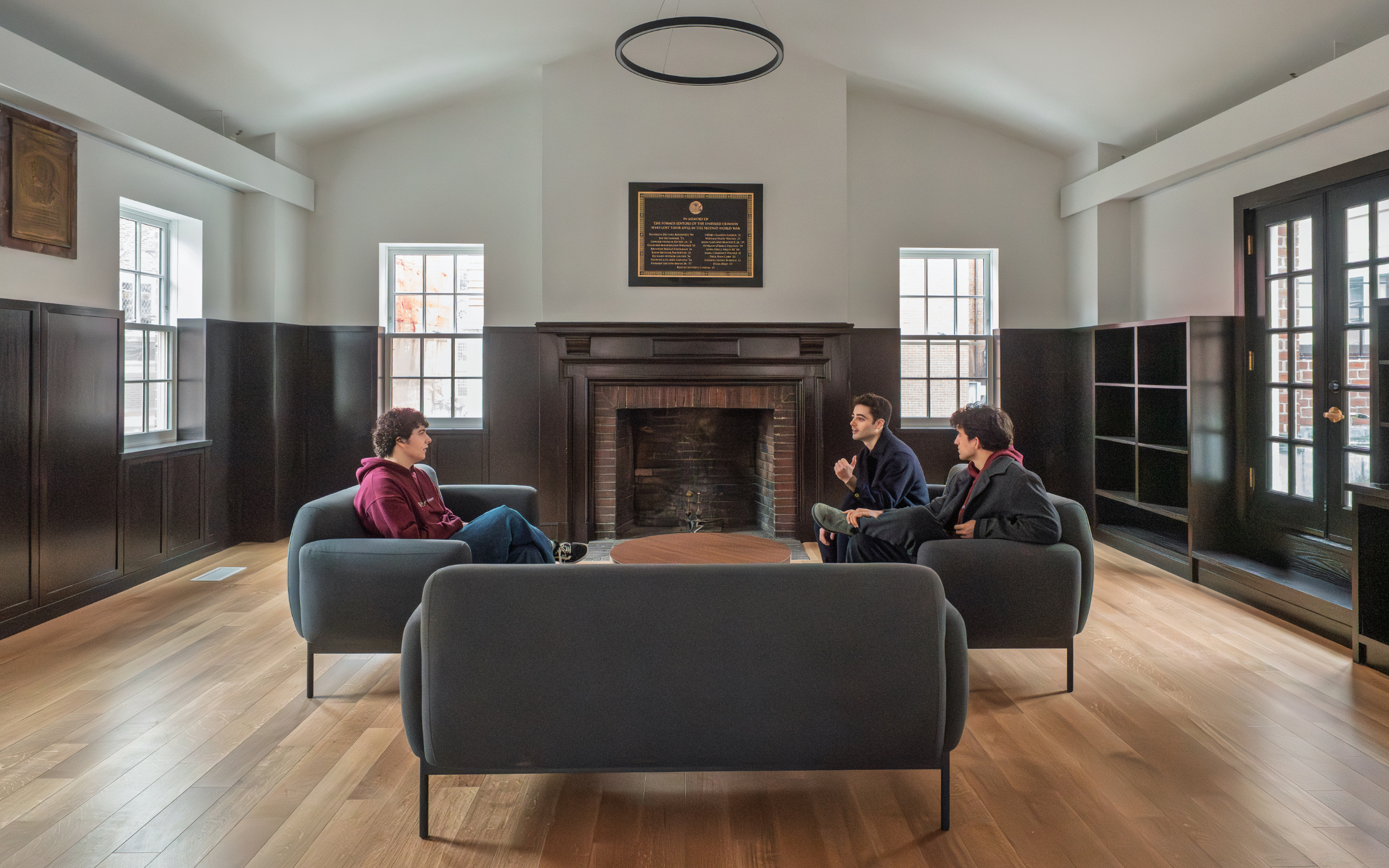
No longer required to serve as the newspaper’s de facto event space, the Sanctum hosts board meetings, alumni gatherings, and quiet contemplative work. New lighting and wood panelling refreshed the interior while preserving its historic character.
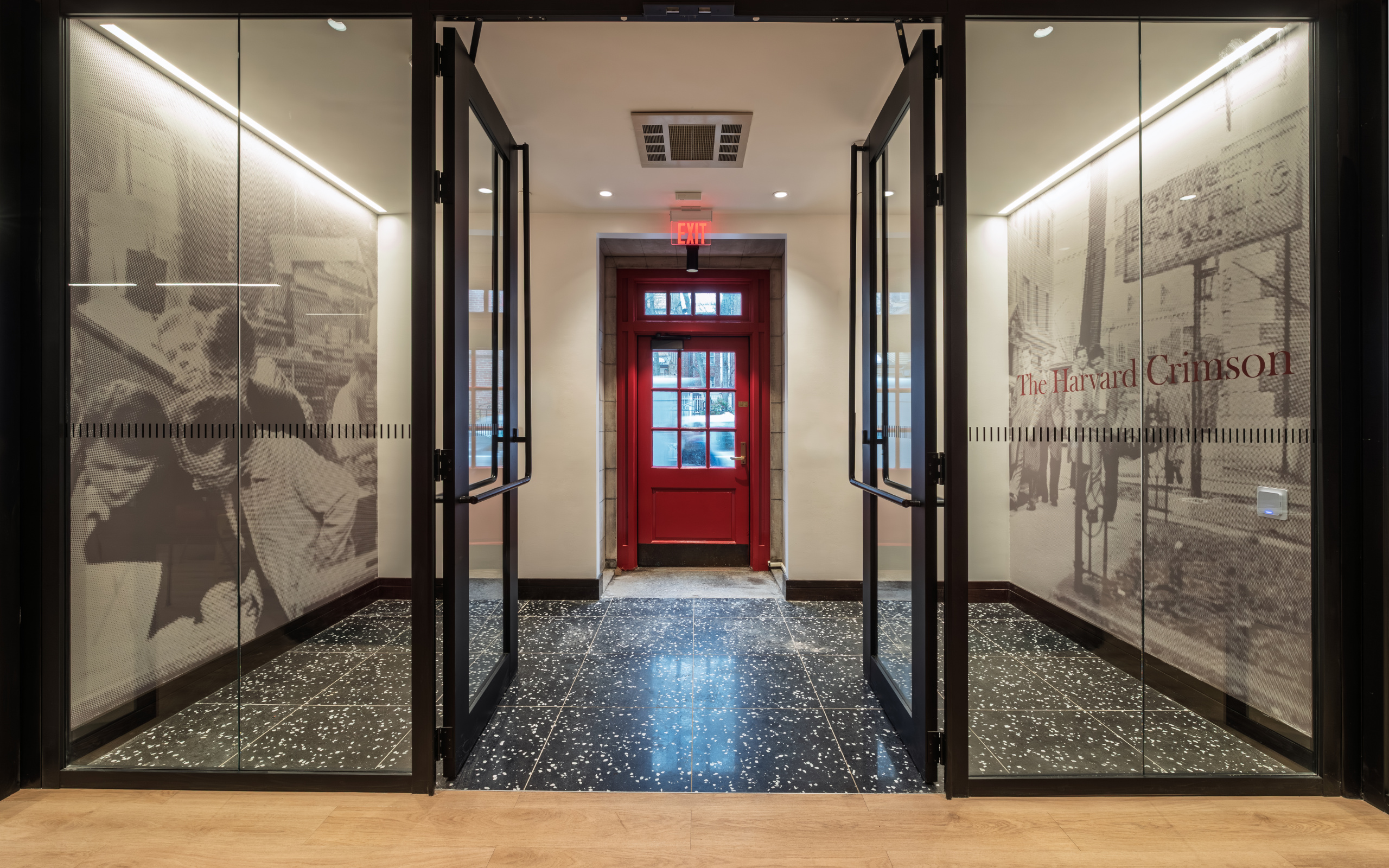
KPMB developed wayfinding, graphics, and signage that reinterpret the newspaper’s brand assets and archival materials.