Princeton Building Energy Vision
- Location Princeton, New Jersey
- Client Princeton University
- Architects Team: Transsolar KlimaEngineering (Lead), KPMB Architects, Behnisch Architekten
- Completion 2016
- Project type Master Plan, Education
Building a path to carbon neutrality for one of the world’s iconic universities
In 2008, Princeton University published its first comprehensive Sustainability Plan. It set goals for campus greenhouse gas reduction, resource conservation, research, education, and civic engagement.
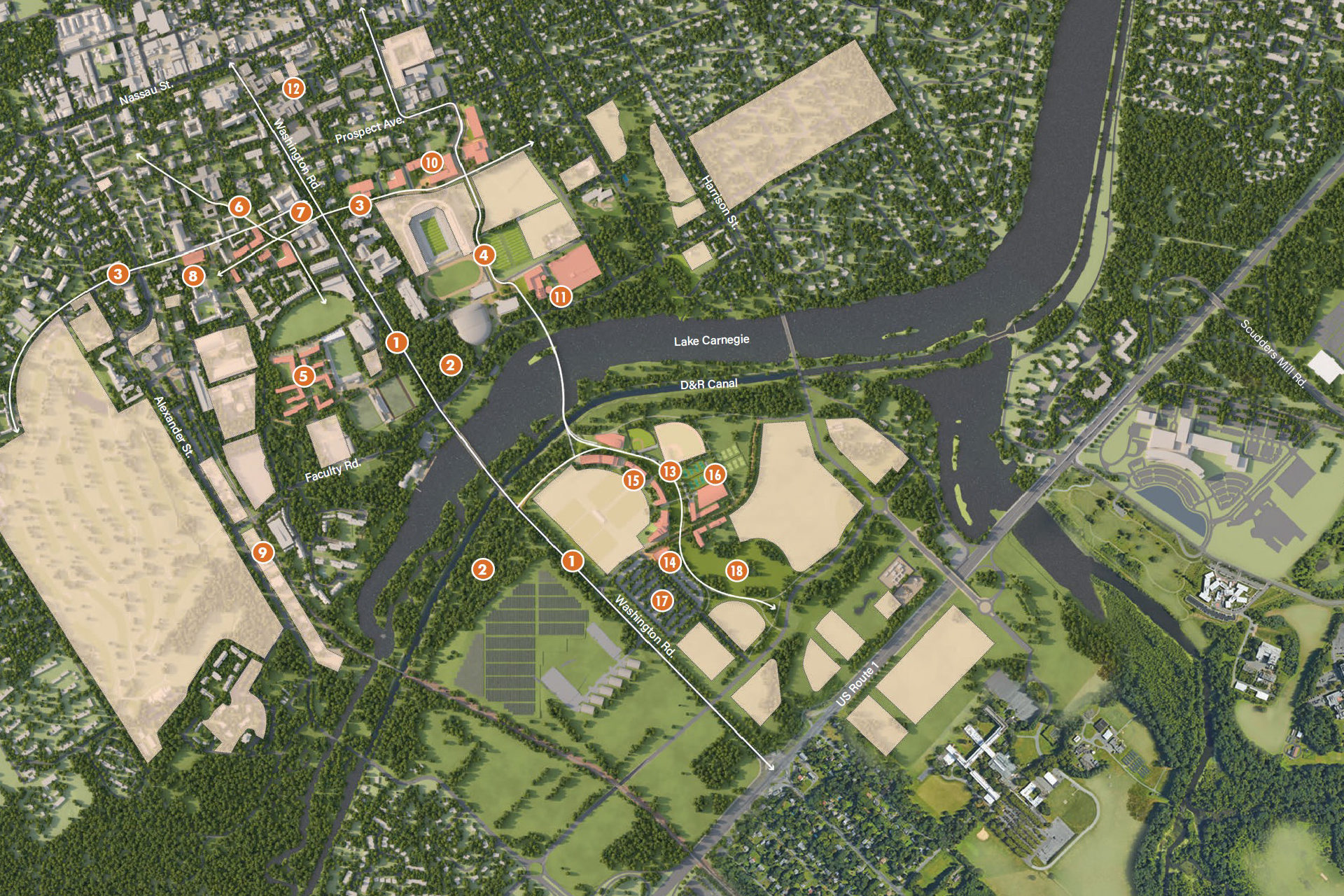
Nearly a decade later, an integrated project team led by Transsolar Klimaengineering and KPMB, with Behnisch Architekten, collaborated on the Princeton Building Energy Vision (PBEV). The study was undertaken to guide the University’s campus-wide energy reduction strategies and goal of achieving carbon neutrality by 2046 — the year of Princeton’s 300th anniversary.
After conducting an exhaustive energy analysis and thorough review of all aspects of building design, construction, and operations, we developed a set of measures that detailed the necessary transformations. These energy reduction measures were organized around four major “dimensions of influence”, including passive design, active systems, design decisions, and behavioural changes.
Defining an architectural vision
The PBEV established guidelines for both future construction, written by Behnisch, and the retrofit of existing buildings, led by KPMB. This study was conducted in parallel to the 2026 Campus Framework Plan, for which KPMB served as architect.
The PBEV recommended that all future campus buildings become climate positive by prioritizing renewable energy sources, passive systems, and high-performance envelopes. Further, future buildings should implement smart heating, cooling, ventilation, and lighting systems, while establishing new standards for building configuration and the efficient use of space.
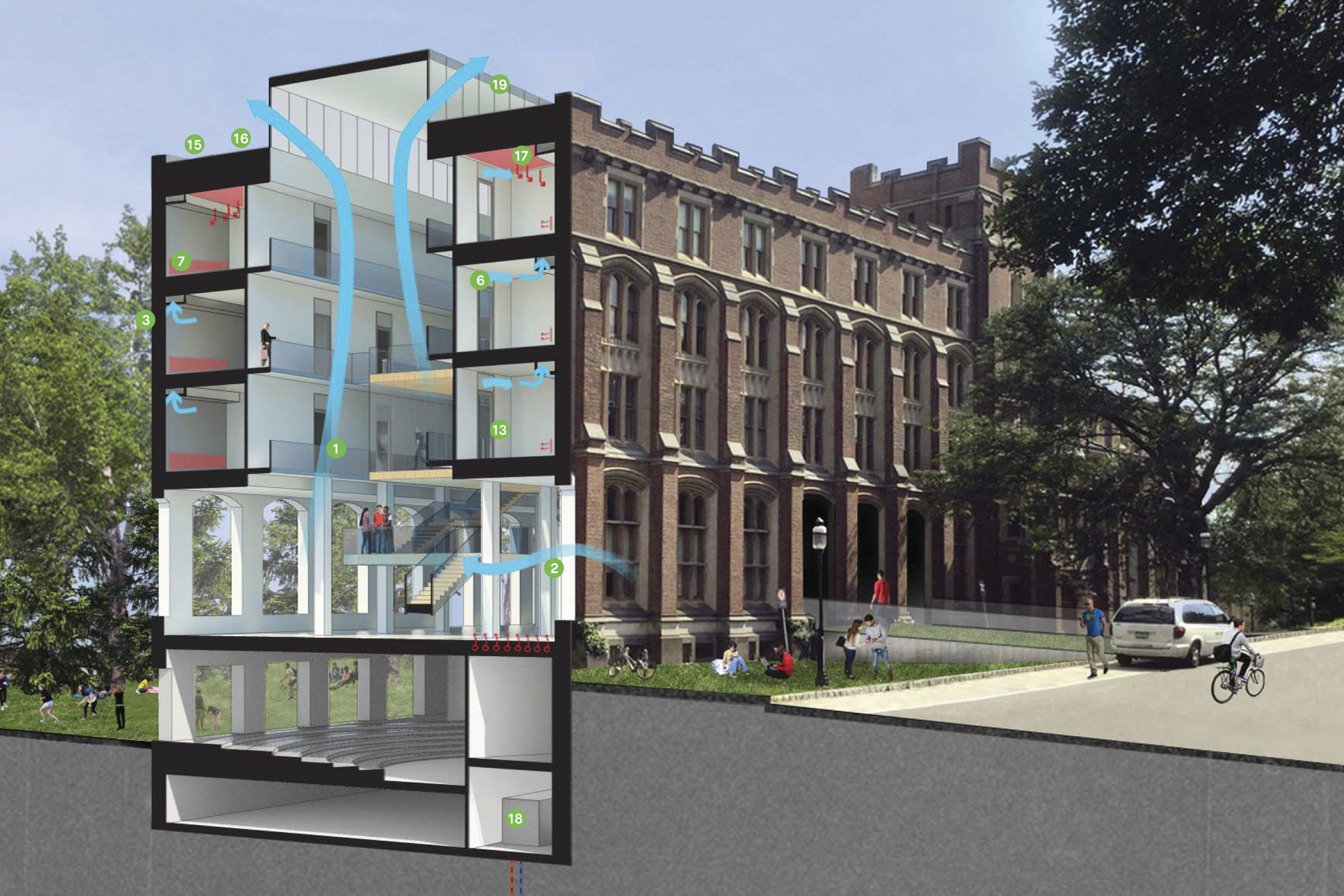
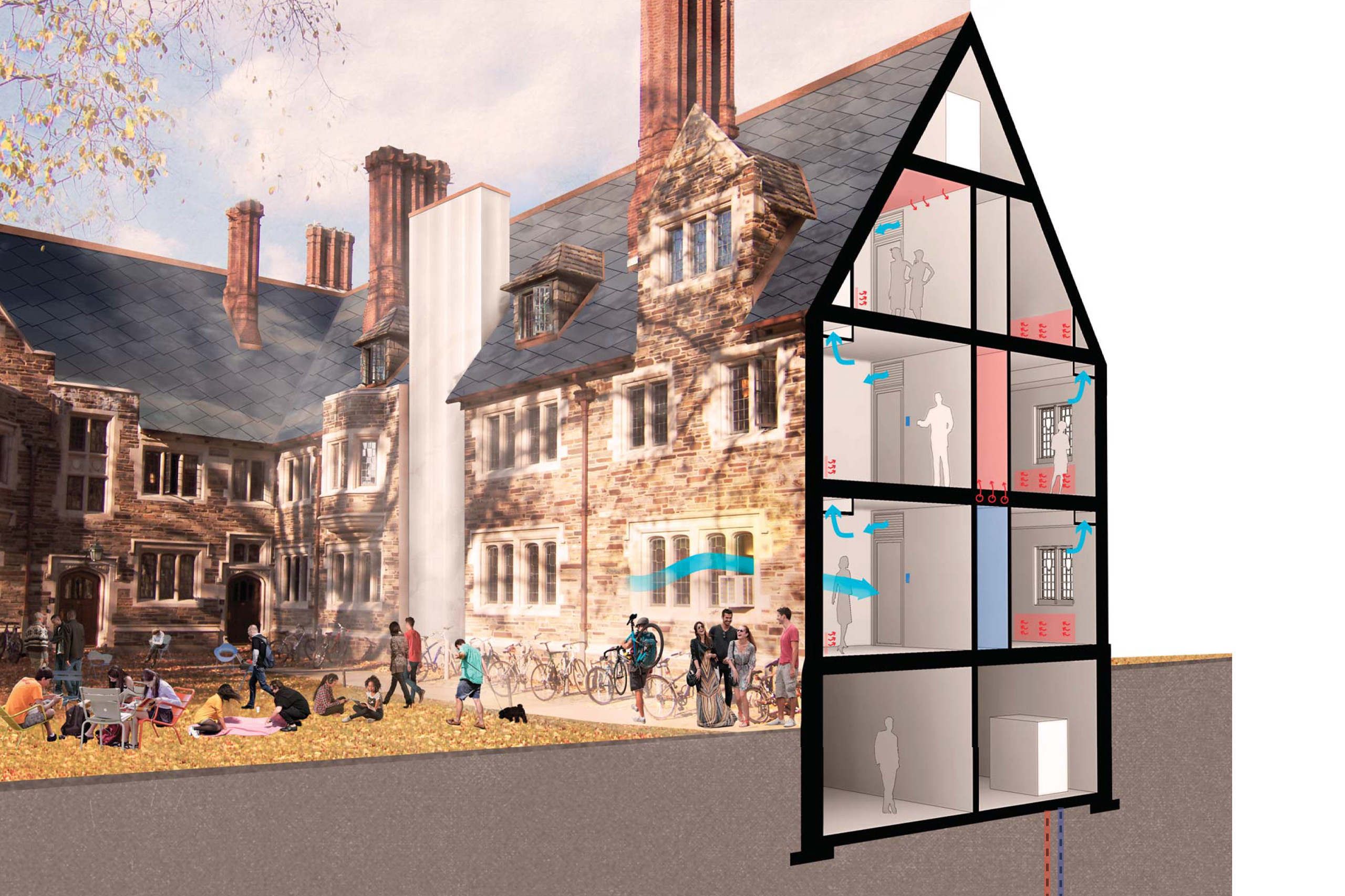
Focusing on Princeton’s collection of early 20th century Collegiate Gothic architecture, KPMB developed and tested retrofit and upgrade strategies through two case studies: one residential building and one student life facility. Energy reduction modifications included thermally enhancing masonry facades, replacing heritage roofs with solar tiles when needed, upgrading to efficient systems such as geothermal or heat exhaust recovery, and installing vacancy sensors to reduce power consumption in unoccupied spaces. KPMB developed a strategy to make all the residential buildings universally accessible, enabling the conversion of redundant stair towers into passive solar chimneys.
Revising design processes
Creating a sustainable campus also requires rethinking procurement, design, construction, and evaluation processes. The PBEV introduced new procedures and roles within the University’s design and construction departments, including the appointment of an Executive Sustainability Advocate on every project.
Establishing key metrics
The PBEV established an extensive list of metrics to accurately evaluate the performance and cost of individual projects and the wider campus expansion.
For early project evaluation, key performance indicators included considerations such as human health, wellness, climate response and environmental impact, and economic efficiency. Additional recommendations included metrics for evaluating operational and embodied energy over a building’s lifetime, tracking impacts on occupant health and wellness, and assessing behavioural shifts in campus culture.
More than an energy reduction plan, the PBEV is a framework to guide decision-making, educate stakeholders, and cultivate sustainability-minded citizens and leaders at Princeton.