Princeton 2026 Campus Framework Plan
- Location Princeton, New Jersey
- Client Princeton University
- Architects Team: Urban Strategies Inc. (Urban Planning Lead), KPMB Architects (Architecture), Michael Van Valkenburgh Associates Inc (Landscape Architecture)
- Completion 2016
- Size 500 acres
- Project type Master Plan, Education
Guiding the largest campus expansion in Princeton University’s history
The 2026 Campus Framework Plan has guided the growth of Princeton University’s historic campus for nearly a decade. Since being delivered in 2016, the plan has supported strategic University objectives, such as growing the student body, building new facilities to meet institutional needs, and achieving net-zero emissions by Princeton’s 300th anniversary in 2046 — all while flexibly positioning the University to respond to new needs that might emerge over a 30-year horizon.
As the 2026 Campus Framework Plan’s architects, KPMB designed and tested various massing options for future development. Our role, in collaboration with Urban Strategies Inc and Michael Van Valkenburgh Associates Inc, was to assess the implications of planning strategies under consideration and demonstrate built form options. This has enabled Princeton to make informed decisions regarding the development of the Campus Framework Plan.
Supporting institutional growth
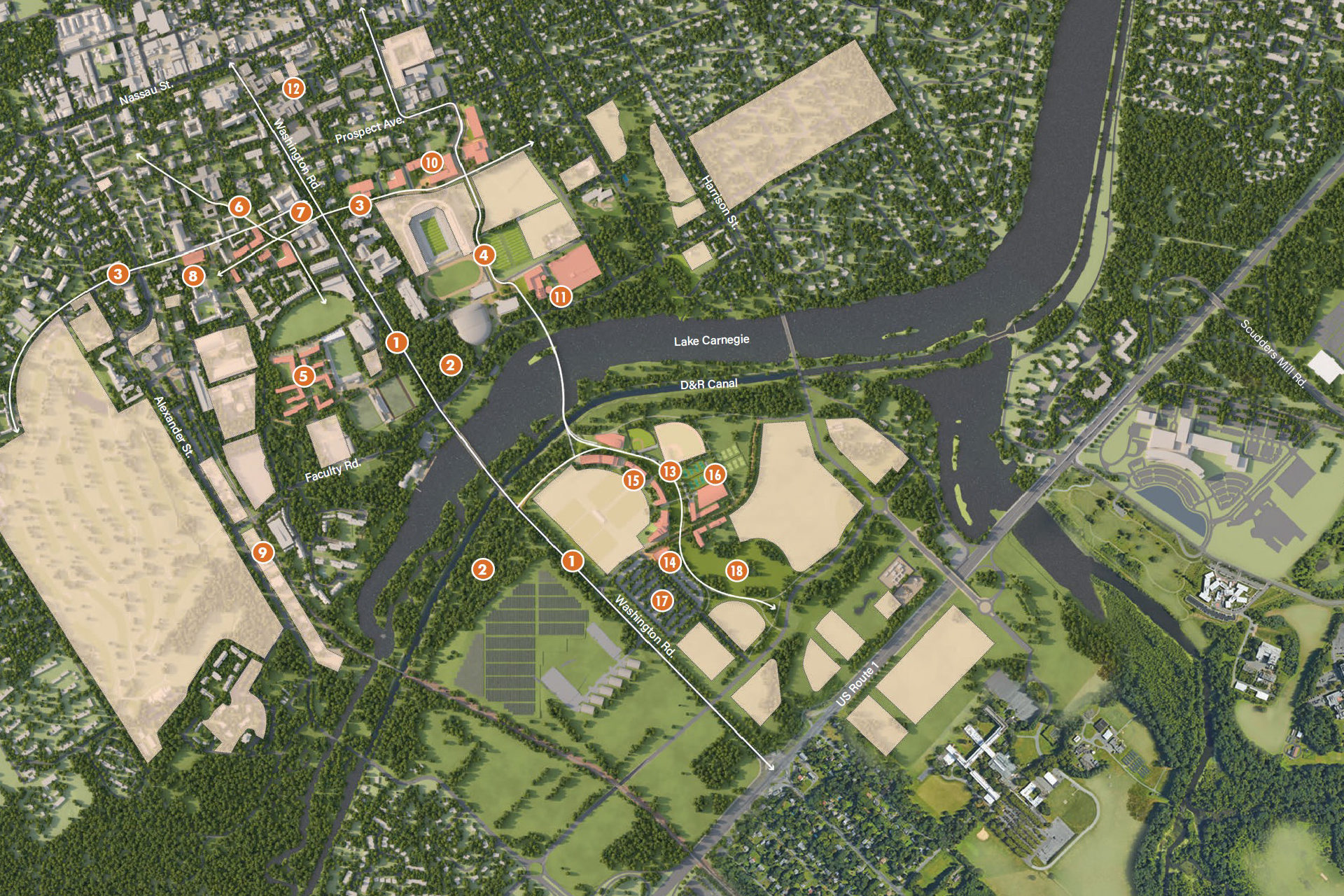
The plan defined both locations and strategies for the University’s priority initiatives. These included creating two new residential colleges to support a 10 percent increase in undergraduate enrollment, building new facilities dedicated to engineering and environmental studies, and constructing new buildings to support academic research partnerships with the corporate, government, and non-profit sectors.
The Framework Plan detailed how these goals could be achieved with the flexible stewardship and renewal of the existing campus, along with a vision for an entirely new campus. The latter, located south of Lake Carnegie on lands that Princeton purchased more than a century ago, is an integrated extension of the existing campus.
Advancing sustainable architecture
A key pillar of the 2026 Campus Framework Plan was supporting Princeton’s sustainability objectives, which include reducing greenhouse gas emissions, promoting efficient land use, enhancing resilience, and identifying strategies to promote walking and cycling.
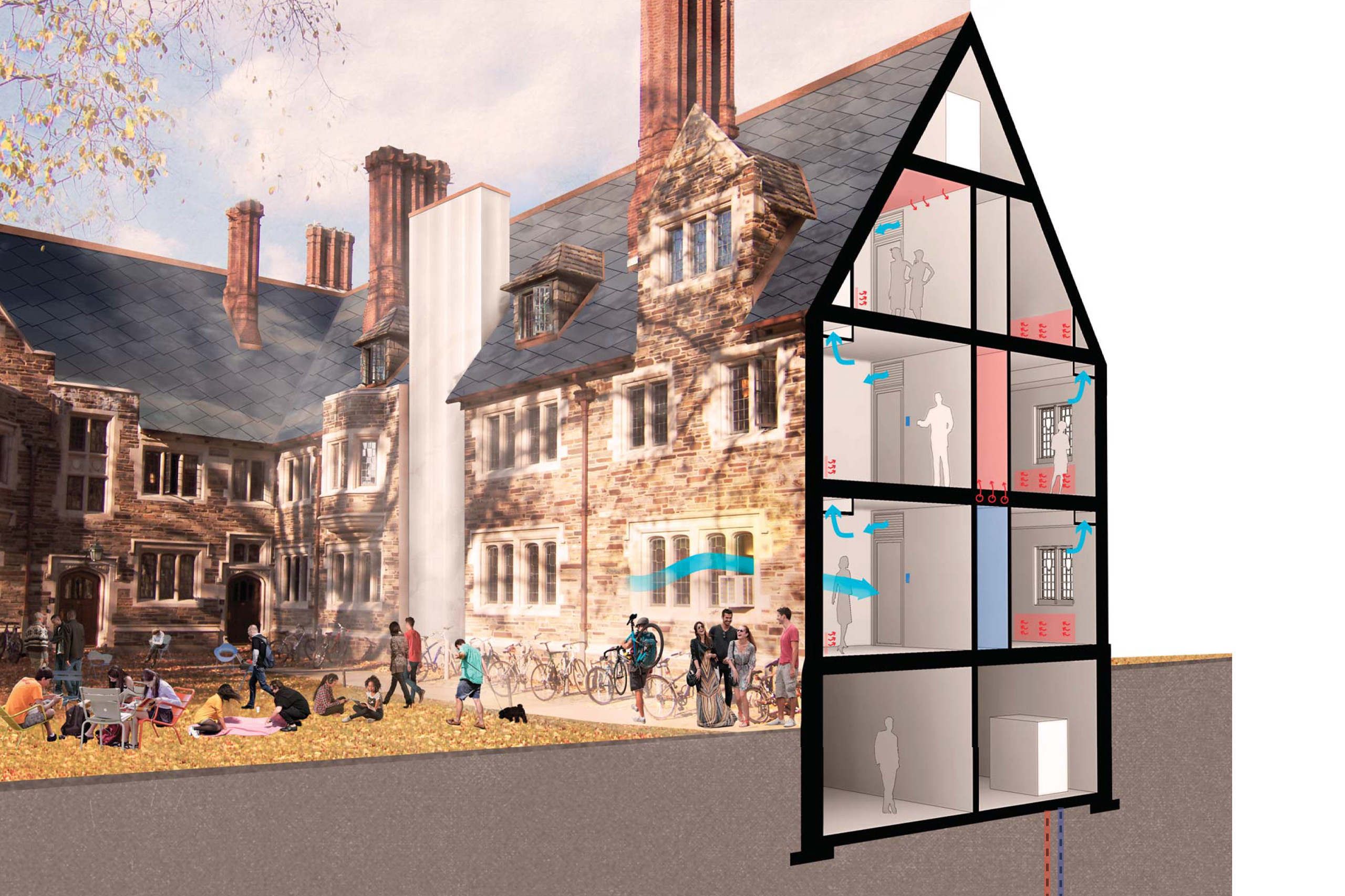
In parallel with the framework plan, KPMB, Transsolar KlimaEngineering, and Behnisch Architekten conducted a campus-wide energy study that continues to support the University’s goal of achieving net-zero emissions by 2046. As part of the study, KPMB developed and tested retrofit and upgrade strategies aimed at reducing energy usage across Princeton’s historic campus buildings.
Extending the campus character
Guiding the generational growth of a campus requires thoughtful negotiation between innovation and continuity. While the framework plan established a vision for development, it was essential that the character and quality of Princeton’s architecture and landscape and its distinct sense of place be extended.
Before the creation of the 2026 Campus Framework Plan, Princeton’s largest campus expansion occurred in the early 20th-century, when architect Ralph Adams Cram designed its collection of Collegiate Gothic buildings. The campus’s unique dynamic between architecture and landscape is fostered by the informal geometry of Cram’s buildings, which are set in partly enclosed landscaped courtyards and contribute to the unique woodland setting.
A key project challenge was devising architectural strategies that would accommodate the university’s strategic objectives, while maintaining the scale, experience, and intimacy of the historic campus.