We owe the future better data: why BIM is a generational responsibility
August 31, 2026
Adapting and renovating buildings starts with knowing them. For too long, architects and owners have had to rely on incomplete information about what exists.
By Claudia Cozzitorto
In the face of climate change, extending the lifespan of our buildings is a necessity. Adaptive reuse and renovation projects reduce embodied carbon, minimize waste, and produce unique spaces that no ROI analysis can fully capture. Yet they consistently expose one of the industry’s most persistent weaknesses: a lack of reliable information about what exists.
Early in my career as an architect, I worked on a project converting a vacant, decades-old high school into a community centre. At the outset, we received a drawing package of only twenty or so sheets for the entire 120,000-square-foot building. We began the project with hundreds of unanswered questions about the building’s condition despite countless site visits, selective demolition, and mountains of photographs.
We did what many teams would have done at that time: make assumptions and add a healthy contingency to the construction budget. In such a situation, construction becomes a sequence of surprises, each one introducing scheduling and cost risk. There were nights I could barely sleep, worrying about what issue would surface next and how much contingency remained.
The project was ultimately a major success for the community. But from an information management perspective, it repeated a common failure. We handed the owner piles of drawings and a data dump of everything accumulated over years in formats that were fragmented and disconnected.
In the end, we began the project starved for information and closed it by inundating the owner with information they could never effectively use. Decades from now, when another architect needs to renovate that building, they will face the same predicament.
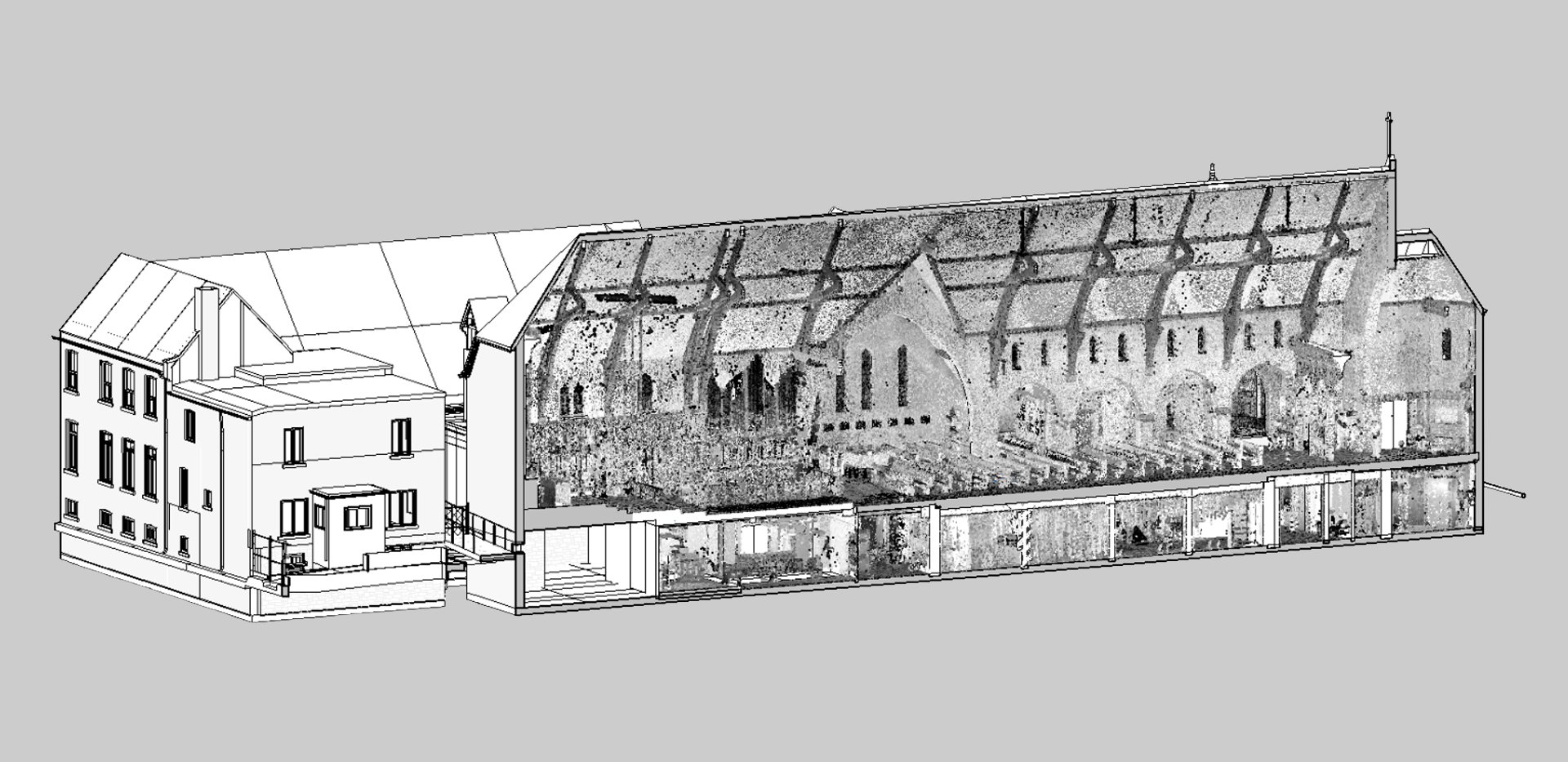
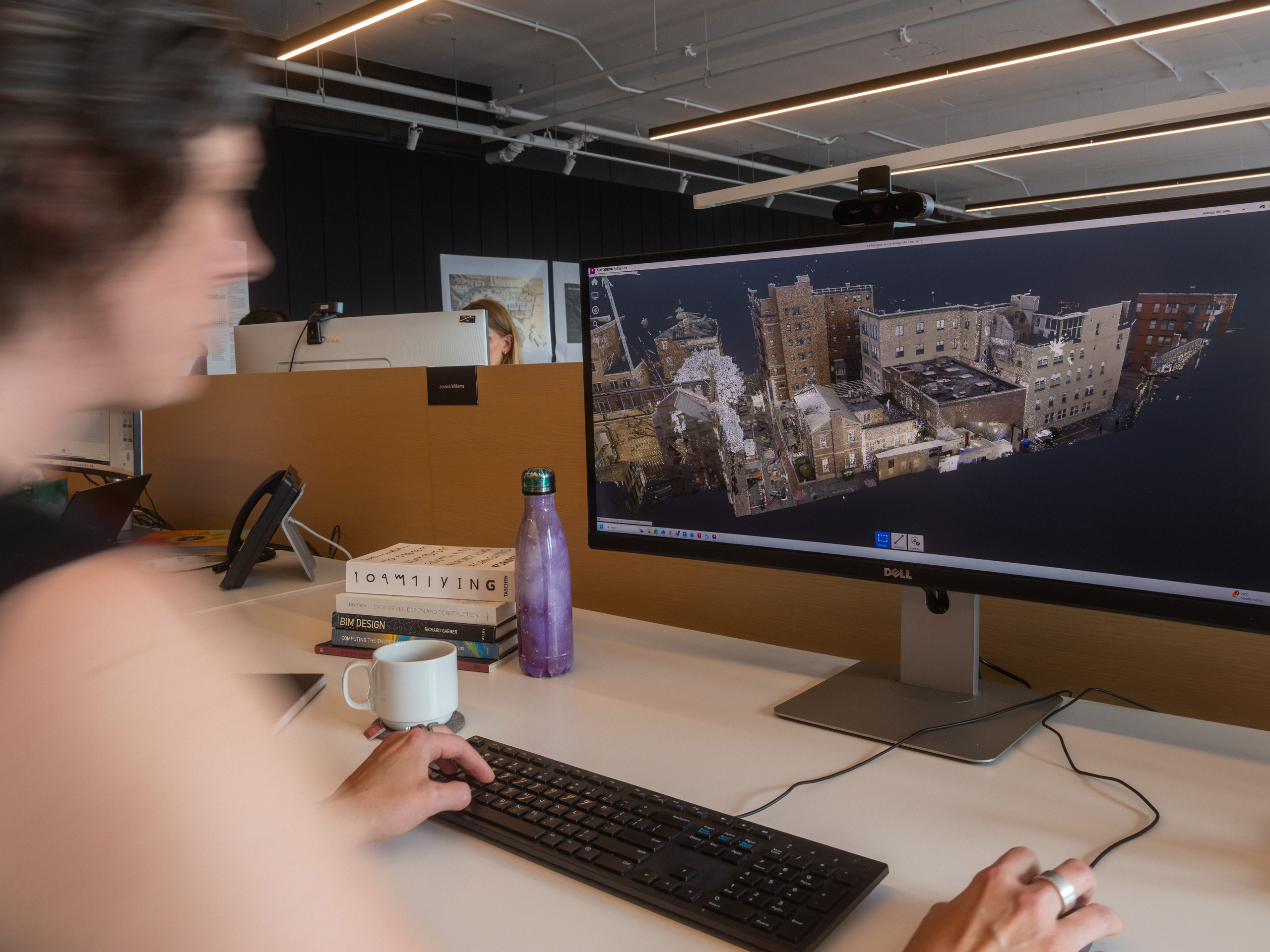
→ The emergence of laser scanning and photogrammetry provide precise measurements and visualizations of existing buildings to reduce risk, support better decision-making, and increase efficiency.
Imagining the alternative: embracing standards
For much of the 20th and 21st centuries, architecture has been preoccupied with newness. While climate change has led to a growing awareness of embodied carbon and underscored the need for widespread adaptive reuse and renovation, working with existing buildings remains complex, which often translates into uncertainty and higher costs. By simplifying the reuse and renovation process, owners may be more likely to invest in their existing buildings.
Much of our industry’s frustration and inefficiency stems from failing to implement coordinated and agreed-upon standards for Building Information Management (BIM). Standards reduce complexity, enable scaling, and create the predictability that allows innovation to flourish. Consider circularity as an example. Designing for disassembly and reusing components depends entirely on having structured, accessible data about what is inside our buildings. Without effective BIM, circularity remains an aspiration.
KPMB’s digital practice team applies rigorous data standards to ensure building information remains usable throughout design and construction and can be relied upon for operations after closeout. Crucially, the owner ends a project holding an Asset Information Model: a structured digital record of the building’s condition, materials, and systems. It is stored in open data formats that ensure longevity and accessibility as the world changes around it.
Creating two assets — the physical building and a virtual representation that can be relied upon for decades — is not a byproduct of design work, but an important discipline of its own. Most building owners begin a project unaware of what information they will need in the future. As a result, our role entails defining owners’ information requirements, structuring the data for long-term use, and running the quality control needed to ensure that the information is trustworthy.
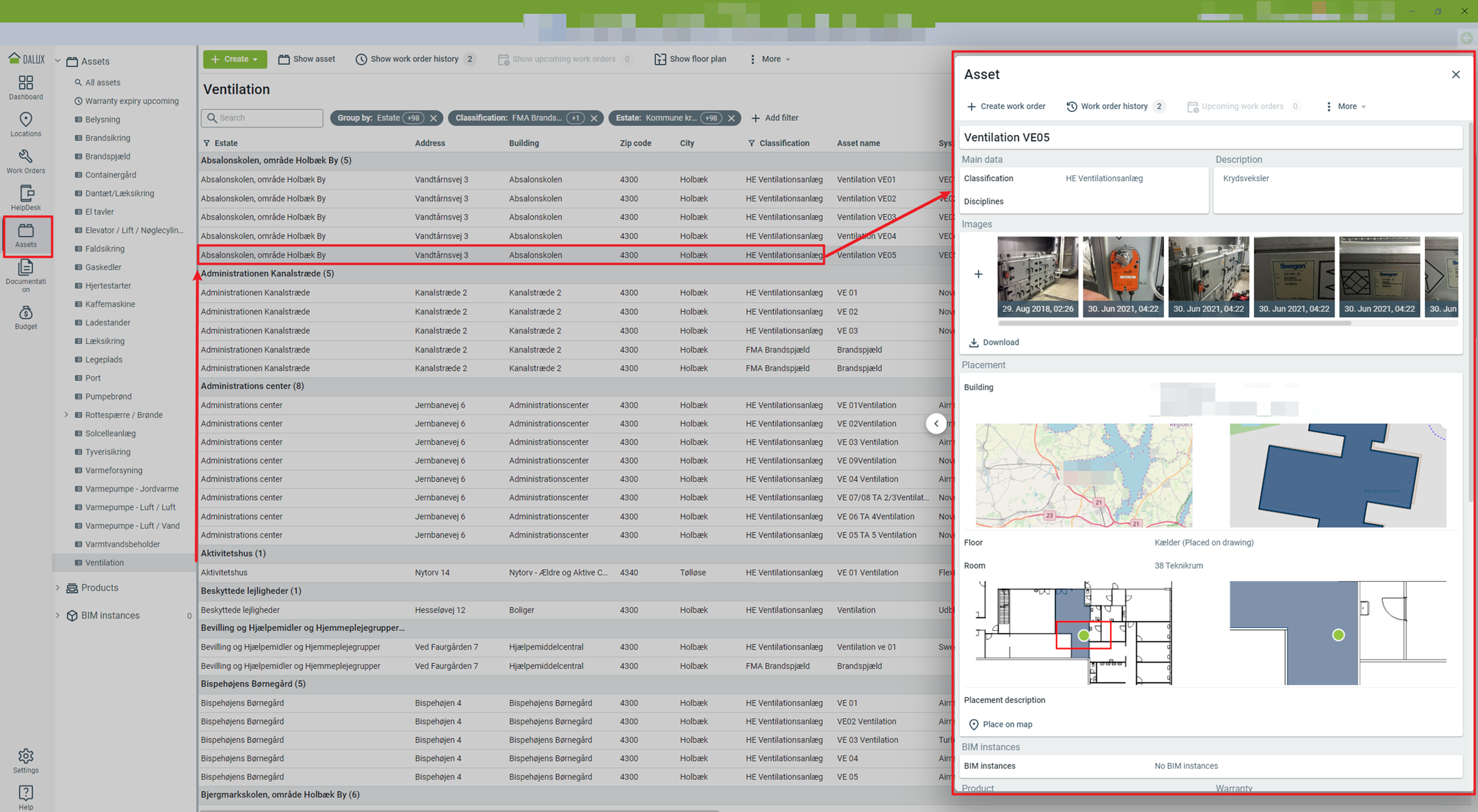
→ Platforms such as Dalux FM provide owners and consultant teams with convenient access to asset information including locations, images, maintenance histories, and details of building systems.
Demystifying existing building conditions
Working this way means that an absence of reliable building information may one day be a thing of the past, but what can architects do in the meantime when approaching existing buildings?
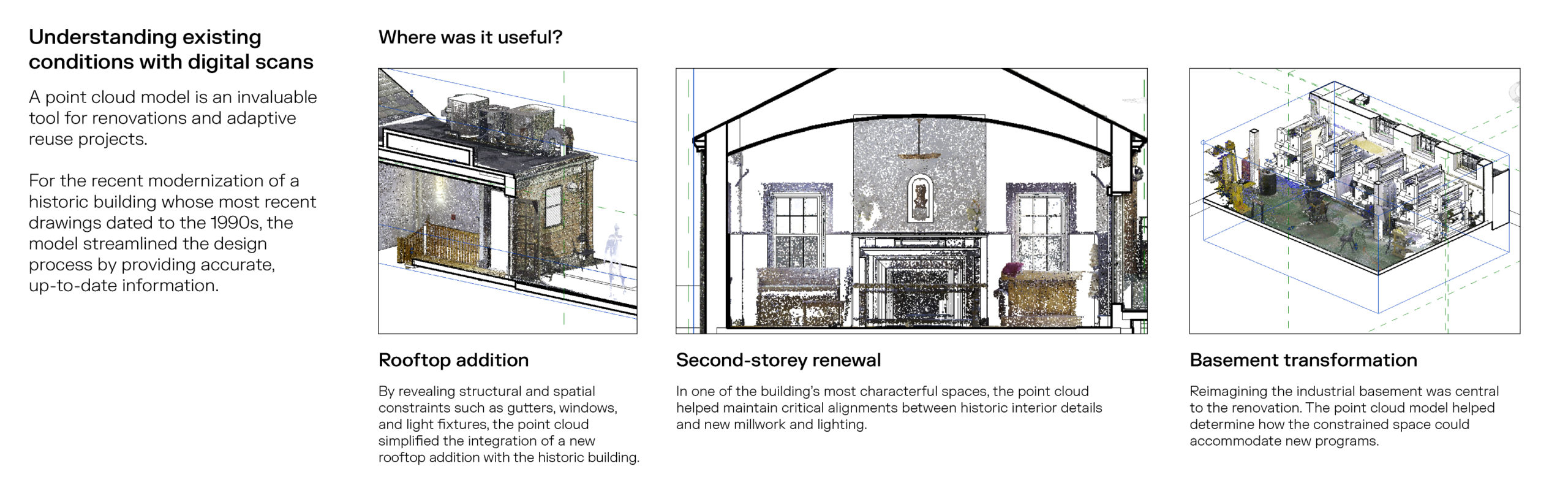
Today, we use a variety of strategies that help create a searchable and validated data set, reducing our reliance on partially accurate drawings. When beginning a project, we gather as much information as possible to understand the building’s condition, including drone photography, historical documentation, and using reality capture technologies such as laser scanning. This process ultimately removes risk by organizing building data as the basis for reliable decision-making.
Throughout design and construction, information is then exchanged between disciplines and platforms through common data environments. Our processes and tools provide a universal language for communicating issues tied directly to the model, rather than burying them in email threads and disconnected PDFs. Most importantly, it culminates in an Asset Information Model that is ready to serve operations and future renovations.
The generational chain
When we talk about building data, the question is whether the documentation we create today will serve future generations or be lost in obsolete file formats or scattered across boxes in a basement.
Effective BIM and digital practice are integral to addressing some of the most pressing challenges facing the built environment. The information we create today should live beyond project closeout, becoming part of a generational chain of knowledge that informs how future buildings are maintained and transformed.
The resilience of our built environment depends on the resilience of our information: buildings must be capable of being understood by people we may never meet. Increasingly, architects must act as archivists and custodians of information, helping prepare future generations to respond to the obstacles they will inherit.
Claudia Cozzitorto is KPMB’s Director of Digital Practice. She is a recognized leader in digital innovation in architecture, with more than 20 years of experience in design, BIM, and digital transformation. Before joining KPMB in 2025, Claudia founded and served as the principal of BIM DnA Group, a consultancy focused on digitalization for the built asset industry.
(Header image: Kian Tang)